Owner’s manual
 Error Codes


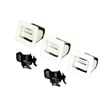
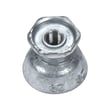
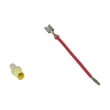
Can I replace a dryer heating element myself?
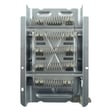
Yes, for Kenmore electric dryer model 11066512694, replacing the heating element is a common DIY repair if you’re comfortable working around wiring and sharp metal panels. Disconnect power first, follow the steps in the 11066512694 owner's manual, and replace any heat-safety parts that test bad.
Safety first (do this every time)
- Unplug the dryer (or switch off the breaker) before removing any panels.
- Let the dryer cool completely; the heater housing can stay hot.
- Wear cut-resistant gloves; cabinet edges are sharp.
- Label wires or take a photo before disconnecting terminals.
- Keep the lint screen and venting clean to prevent overheating issues.
What you’ll typically replace and why
In this model, “no heat” or repeated overheating often involves the heater circuit and its safety devices.
| Symptom | Most common cause | Parts to consider |
|---|---|---|
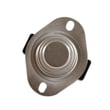
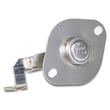
| Runs but no heat | Open heater or blown thermal cut-off | Dryer element 279838, cut-off kit 279816 |
| Heats then stops | Overheating from restricted airflow | Vent cleaning, thermostat checks |
| Long dry times | Poor airflow or crushed vent | Lint screen, exhaust duct, outside hood |
Basic DIY replacement overview
- Disconnect power.
- Remove the rear access panel.
- Locate the heater housing and disconnect the element wires.
- Remove mounting screws and pull out the heater assembly.
- Install the new element, reattach wires firmly, and reassemble.
- Run a timed heat cycle and confirm strong airflow at the outside exhaust hood.
Why it matters
A failed heating element can be the only problem, but restricted airflow can also overheat the dryer and repeatedly trip safety cut-offs. The manual’s troubleshooting guidance emphasizes cleaning the lint screen and checking for strong exhaust airflow to restore normal drying performance.
Last updated: February 2026
How to tell if a dryer heating element is bad?
A bad heating element in your Kenmore electric dryer model 11066512694 usually shows up as a dryer that tumbles normally but produces little or no heat, so loads take much longer to dry. We confirm it by running a heated cycle test, then checking the element for electrical continuity.
Quick checks before testing parts
- Run a heated cycle (not Air Dry) for 5 minutes, then open the door and feel for heat (this is a normal first check in the 11066512694 owner's manual).
- Make sure the cycle is set to a heat setting (Timed Dry or an Auto Dry heat cycle).
- Clean the lint screen and confirm strong airflow at the exhaust.
- Avoid overloading; clothes must tumble freely to dry correctly.
- If you smell a slight “burning” odor on first use after service, that can be normal for the element’s first heat cycle.
Definitive test: multimeter continuity (power off)
Unplug the dryer (or switch off the breaker) before any electrical test.
- Access the heater housing and disconnect at least one wire from the element terminal.
- Measure resistance across the element terminals.
- Check for a short to ground by measuring from an element terminal to the metal heater housing.
Typical results for many electric dryer elements:
| Test | What you should see | What it means if you do not |
|---|---|---|
| Terminal-to-terminal resistance | Usually around 8 to 20 ohms | Open circuit (no reading) indicates a broken coil |
| Terminal-to-housing (ground) | No continuity | Continuity indicates the coil is shorted to the housing |
If the element fails either test, replacement is the fix; for this model, the correct heater is the dryer element 279838.
Why it matters
A weak or failed heating element can mimic venting problems and can also lead to repeated high-heat shutdowns. Confirming heat output and testing the element helps you avoid replacing the wrong part and restores normal dry times.
Last updated: February 2026
Is it worth repairing an old Kenmore dryer?
Yes, repairing an older Kenmore electric dryer like model 11066512694 is usually worth it when the failure is a common wear item (belt, thermostat, thermal cut-off, door switch) and the cabinet and drum are still in good shape; these repairs are typically far less than replacing the dryer.
Quick decision checklist
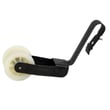
- The drum turns, but it squeals or slips: replace the belt and inspect the idler pulley.
- The dryer runs but won’t heat: check the heating circuit parts (element, thermostats, thermal cut-off).
- The dryer won’t start: confirm the door fully closes and the start circuit is working.
- You have good airflow (strong exhaust outside) after cleaning lint and venting.
- The repair is a single-part fix, not multiple major assemblies.
Common “worth it” repairs for this model
These are frequent, straightforward fixes on Kenmore 110-series electric dryers:
| Symptom | Likely fix | Example part for 11066512694 |
|---|---|---|
| Drum won’t tumble | Replace belt | Drum belt 341241 |
| No heat, tumbles normally | Replace heating element | Dryer element 279838 |
| Overheats or no heat after overheating event | Replace thermal cut-off kit | Cut-off kit 279816 |
| Runs only with door held shut | Replace door switch or latch parts | Door switch WP3406105 |
When replacement makes more sense
- The dryer needs multiple high-cost parts at once (for example, motor plus timer plus heating circuit parts).
- The drum, cabinet, or wiring is damaged, or there is heavy internal lint buildup that requires professional cleaning.
- Drying performance is poor due to chronic venting issues you cannot correct.
Why it matters
A well-vented dryer with basic maintenance can run for years; the 11066512694 owner’s manual also emphasizes keeping lint and the exhaust vent clear, which directly affects drying time, heat safety, and part life.
Last updated: February 2026
What are common problems with Kenmore dryers?
Common problems we see on Kenmore electric dryers like model 11066512694 are no heat, long dry times, the drum not turning, and unusual noises. Most of these trace back to airflow restrictions (lint buildup or a kinked vent) or normal wear on drive and heating components; see the 11066512694 owner's manual for operating and care basics.
Most common symptoms and likely causes
- Dryer runs but won’t heat: failed heating circuit part (heating element, thermostat, thermal cut-off)
- Long drying times: crushed or kinked venting, lint buildup in venting or internal ducting
- Drum won’t turn: broken belt, worn idler pulley, failed drive motor
- Squealing, thumping, or rumbling: worn moving parts (belt, pulley, blower wheel, drum support components)
- Won’t start or stops when door opens: door switch or start circuit issue
Quick checks we recommend first (fast, no parts)
- Clean the lint screen and confirm strong airflow at the outside exhaust hood.
- Make sure the vent behind the dryer is not crushed or kinked and the dryer is level.
- Try a timed cycle and confirm the door fully closes and latches.
- If drying is slow, clean the vent run section-by-section; the manual outlines safe vent cleaning steps.
Parts that commonly fix these issues on 11066512694
| Symptom | Common part to inspect/replace | Example part for this model |
|---|---|---|
| Drum not turning | Drum belt | Drum belt 341241 |
| No heat | Heating element | Dryer element 279838 |
| No heat or overheating | Thermal cut-off protection | Cut-off kit 279816 |
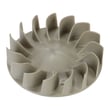
| Loud vibration or poor airflow | Blower wheel | Dryer blower wheel WP694089 |
| Won’t start when door is shut | Door switch | Door switch WP3406105 |
Why it matters
Airflow problems make any electric dryer work harder, increase cycle times, and can cause heat-related parts (like thermostats and thermal cut-offs) to fail sooner. Regular vent maintenance and prompt replacement of worn drive parts keeps drying performance consistent.
Last updated: February 2026
What is the average life of a Kenmore dryer?
Most Kenmore dryers, including the Kenmore 11066512694 electric dryer, last 10 to 13 years with normal household use. Regular airflow maintenance (lint screen and vent cleaning) is the biggest factor in reaching that lifespan and avoiding overheating-related breakdowns; see the 11066512694 owner's manual.
Typical lifespan and what changes it
A dryer’s life is mostly determined by heat stress, airflow restriction, and mechanical wear (belt, rollers, motor).
- 10 to 13 years: typical average lifespan for a residential dryer
- Shorter lifespan: heavy daily loads, long vent runs, crushed or clogged venting
- Longer lifespan: good venting, routine cleaning, prompt repair of noises and heat issues
- Important note for this model: the manual calls out that using plastic venting can affect warranty coverage; rigid or listed metal venting is the safer long-term choice
Maintenance that helps you hit 10 to 13 years
The manual for this Kenmore dryer includes specific guidance for removing accumulated lint in the exhaust vent and notes that lint can build up inside the dryer over time.
- Clean the lint screen every load (improves airflow and drying time)
- Clean the exhaust vent path section-by-section to the outside hood when lint builds up
- Keep the outside exhaust hood opening freely (no screens or blockage)
- Have accumulated lint inside the dryer removed about every 2 to 3 years (more often with heavy use)
- Address new noises early (thumping, squealing) to prevent secondary damage
Quick “repair vs. replace” checkpoints
| Symptom | Most common cause | Typical fix |
|---|---|---|
| Drum won’t turn | Worn belt or idler issue | Replace drum belt 341241 and inspect pulley/rollers |
| Runs but no heat | Heater or thermal safety opened | Check heating circuit; replace dryer element 279838 if failed |
| Long dry times | Restricted venting or lint buildup | Clean venting and lint chute path |
Why it matters
A restricted vent makes the dryer run hotter and longer, which accelerates wear on the heating system, thermostats, and motor. Keeping airflow strong is the simplest way to protect performance, energy use, and the dryer’s overall service life.
Last updated: February 2026
What size is a Kenmore model 11066512694 dryer?
Kenmore electric dryer model 11066512694 is a 29-inch wide dryer. For the exact overall cabinet dimensions (height and depth), we use the measurements listed in the 11066512694 owner's manual because clearances can change the real space you need once the vent and power cord are connected.
What “29-inch wide” means for fit
A 29-inch wide Kenmore dryer is the standard full-size footprint for many Whirlpool-built Kenmore 110-series dryers. Plan for extra room behind the dryer for the exhaust vent and for door swing in front.
Typical planning allowances (common for 29-inch dryers):
- Width: 29 inches (cabinet)
- Height: usually about 43 to 44 inches (varies by leveling legs)
- Depth: usually about 27 to 29 inches (cabinet)
- Depth with vent connection: often 1 to 3 inches more
- Side clearance: enough to avoid rubbing and allow airflow
How to confirm the exact dimensions at home
Use these quick checks to match your laundry space to the dryer you own.
- Read the model and serial plate (commonly inside the door opening) to confirm 11066512694.
- Measure the cabinet width across the widest fixed points (not the door).
- Measure height from floor to the top; include leveling legs as installed.
- Measure depth from the back panel to the front of the cabinet (exclude the door handle).
- Add space for the vent elbow so the vent is not crushed or kinked.
Clearance guide (quick reference)
| What you are fitting | What to plan for | Why |
|---|---|---|
| Closet or alcove | Extra depth behind dryer | Prevents a kinked vent and poor airflow |
| Tight side-to-side space | A little side clearance | Reduces vibration noise and rubbing |
| Stacking or laundry center | Model-specific requirements | Mounting and vent routing differ |
Why it matters
Correct sizing prevents a crushed vent, improves drying performance, and reduces overheating risk. The manual also emphasizes keeping the vent path clear and the dryer level for best operation.
Last updated: February 2026