Owner’s manual


Does my Kenmore Elite washing machine have a filter?
Yes, the Kenmore Elite washer model 11024952300 uses a drain pump system that can trap debris, but it typically does not have a simple, front-access “lint filter” like many front-load washers. We use the 11024952300 owner's manual to confirm your model’s features and access points.
Where “filtering” happens on this washer
On many Kenmore top-load designs like this one, small items and lint are most often caught in the drain path (pump and hoses) rather than a removable filter cup.
Common debris catch points include:
- Drain pump inlet (coins, hair pins, small socks)
- Inner drain hose between tub and pump
- Tub outlet area (lint and fabric strings)
- Agitator area (strings wrapped under the agitator)
How to check for a clog safely
Before you open anything, unplug the washer and turn off both water supplies.
- Bail out as much water as possible (if the tub is full).
- Access the drain components and inspect for blockage.
- If the washer will not drain or drains slowly, the pump is the first place we check.
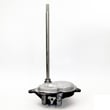
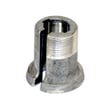
Helpful parts for drain-related issues on this model:
Symptoms and what they usually mean
| Symptom | Most common cause | What we check first |
|---|---|---|
| Won’t drain | Pump jam or failed | Drain pump and inlet |
| Drains slowly | Partial clog in hose/pump | Inner drain hose |
| Leaves lint/debris | Overloading, low water, drain restriction | Drain path and load size |
Why it matters
A restricted drain path can cause poor rinsing, wet loads, and strain on the motor and coupling. Keeping the drain pump and hoses clear helps your Kenmore washer clean better and run more reliably.
Last updated: February 2026
How to force a Kenmore Elite washer to drain?
To force-drain a Kenmore Elite washer model 11024952300, we recommend canceling the cycle and selecting Drain/Spin (if available). If the tub still will not empty, manually drain the water and clear the most common blockage points: the drain hose and the drain pump.
Fast ways to get the water out
- Reset first: Unplug the washer for 1 minute, plug it back in, then try Drain/Spin again.
- Manual drain (safest for a full tub): Unplug the washer, then lower the end of the drain hose into a shallow pan or floor drain to siphon water out.
- Check for a kinked hose: Straighten the drain hose behind the washer; a tight bend can stop draining.
- Clear the pump path: If siphoning is slow or stops, a clog is likely at the pump or hose.
What to check if it still will not drain
A no-drain problem on this style of Kenmore top-load washer is usually a restriction or a failed drain component.
| Symptom | Most likely cause | What we do next |
|---|---|---|
| Hums but does not drain | Pump jam or blockage | Inspect/clear pump and hoses; replace pump if seized |
| Drains slowly | Partial clog in hose or pump | Remove obstruction; verify standpipe is not backing up |
| Will not drain and will not spin | Lid switch issue | Test lid switch operation and wiring |
| Drains but leaves water behind | Drain hose height/installation issue | Confirm correct hose routing and standpipe height |
Parts that commonly fix a no-drain issue
Why it matters
Forcing a drain without clearing the restriction can overheat the pump and leave standing water that causes odors and poor spin performance. Getting the tub empty also makes it easier to diagnose whether the issue is a clog, a lid switch, or a failing pump.
For model-specific cycle and control details, follow the steps in the 11024952300 owner's manual.
Last updated: February 2026
What is the average lifespan of a Kenmore washer?
A Kenmore washer typically lasts 10 to 15 years. For the Kenmore Elite 11024952300, consistent care (correct water level, proper cycle selection, and avoiding chronic overloading) helps you reach the high end of that range; worn drive and drain components shorten it.
Typical lifespan and what affects it
Most top-load Kenmore washers like model 11024952300 land in this range, with longevity driven by load size, detergent use, and how often the machine runs.
- Avoid overloading; it strains the drive system and suspension.
- Use the correct water level and wash/rinse temperature for the load.
- Keep the tub and lid area clean to reduce odor and residue buildup.
- Address draining issues quickly to prevent pump and motor stress.
- Stop using the washer if you hear grinding, loud banging, or repeated no-spin symptoms.
For cycle and control guidance specific to this washer, follow the 11024952300 owner's manual.
Parts that commonly limit washer life
When a washer is nearing end-of-life, the same few systems usually show symptoms first.
| Symptom | Common wear area | Example part for this model |
|---|---|---|
| Won’t spin or agitates poorly | Drive connection | Washer motor coupling 285753A |
| Won’t drain or leaves water in tub | Drain system | Washer drain pump WP3363394 |
| Agitator “ratchets” or won’t move clothes well | Agitation components | Agitator dog 80040 |
Why it matters
A washer that is maintained and repaired early usually costs less to keep running and cleans better. Catching a failing drain pump, coupling, or agitator component early also helps prevent secondary damage (like excessive vibration or motor strain).
Last updated: February 2026
How many cubic feet is a Kenmore Model 11024952300 washer?
The Kenmore Elite washer model 11024952300 is a top-load design labeled “KING SIZE” capacity in the documentation, but the exact tub volume in cubic feet is not specified in the excerpted material. Most Kenmore 110-series top-load washers of this style are typically about 3.2 to 3.5 cu. ft.; confirm the exact spec in the 11024952300 owner's manual.
How to confirm the exact capacity for your washer
We recommend using the model-specific documentation first because capacity can vary by basket and platform.
- Check the Specifications section in the 11024952300 owner's manual
- Look for wording like “capacity,” “basket volume,” or “tub volume”
- If your washer has a replacement basket installed, capacity can differ from the original
- If you are comparing for a replacement washer, measure your laundry needs by load size (small, medium, large) rather than only cu. ft.
Typical capacity range (what most owners can expect)
For Whirlpool-built Kenmore 110 top-load washers with an agitator and “king size” marketing, capacity commonly falls in this range:
| Washer type (top load) | Typical capacity range |
|---|---|
| Standard agitator top-load (older style) | 3.0 to 3.6 cu. ft. |
| Larger “super/extra capacity” top-load | 3.7 to 4.3+ cu. ft. |
Why it matters
Capacity affects how well the washer turns over bulky items (comforters, towels) and how much water is needed for proper cleaning. If loads are consistently overpacked, you can see poor wash results, out-of-balance spinning, and extra wear on drive components.
Last updated: February 2026
What model is my Kenmore Elite washer?
Your Kenmore Elite washer’s model number is printed on the model and serial number plate. On Kenmore Elite model 11024952300, the plate is typically located under the lid opening on the main cabinet; it may also be on the back or side of the cabinet depending on the design.
Where to look on a Kenmore Elite washer
Check these common label locations (in this order):
- Under the lid, around the tub opening (most common on top-load models like 11024952300)
- On the back of the control panel or rear panel
- On the side of the main cabinet near the bottom edge
- Behind the door or in the door jamb (common on front-load washers)
For the exact label location callout and other identification details, use the 11024952300 owner's manual.
What the model tag looks like and what to copy
Write down the information exactly as shown so we can match the correct Kenmore parts and diagrams.
- Model number (example format: 110.24952300 or 11024952300)
- Serial number (helps date and version-match)
- Type or stock number (sometimes listed on the same plate)
Why the model number matters
Kenmore Elite washers can look similar across multiple series, but internal parts like the drive system, lid switch, and drain pump can differ. Using the correct model number helps us match the right replacement parts and avoid returns.
Quick ID checklist
| What you’re checking | What it tells us | Why it helps |
|---|---|---|
| Model number | Exact washer design | Ensures correct parts fit |
| Serial number | Production run details | Helps confirm compatible revisions |
| Label location | Top-load vs front-load clues | Speeds up identification |
Last updated: February 2026
How to reset a Kenmore Elite washing machine?
To reset a Kenmore Elite washer model 11024952300, we power the washer off, disconnect power for a full minute, then restore power and clear the controls (a long-press on Power and Pause/Cancel often restores normal operation). For model-specific control behavior, use the 11024952300 owner's manual.
Quick reset steps (most effective)
- Press Power to turn the washer off.
- Unplug the washer (or switch the breaker off) for 60 seconds.
- Restore power.
- Press and hold Power for 10 seconds.
- Press and hold Pause/Cancel for 10 seconds.
- Select a Drain/Spin or Rinse/Spin cycle and start the washer.
If the washer still will not run
These checks fix the most common “won’t start” or “stuck mid-cycle” situations on top-load Kenmore Elite washers.
- Confirm the lid is fully closed; a failed lid switch can stop agitation and spin.
- If the tub will not drain, check for a clog or a failing pump such as the washer drain pump WP3363394.
- If the motor runs but the basket will not agitate or spin, inspect the washer motor coupling 285753A for cracking or separation.
- Reduce load size and redistribute items if the washer stops during spin due to imbalance.
- Verify the outlet has power; reset the home breaker or GFCI if needed.
What a “reset” does (and does not do)
| Reset method | What it helps | What it will not fix |
|---|---|---|
| Power cycle (unplug 60 seconds) | Clears a control glitch, restarts the cycle logic | Broken lid switch, failed pump, worn coupling |
| Long-press Power and Pause/Cancel | Cancels a stuck cycle, clears some control states | Mechanical drive or drain problems |
Why it matters
A proper reset is the fastest way to clear a temporary control lockup after a power flicker or a paused cycle. If the same symptom returns, the washer usually needs a targeted repair (lid switch, drain system, or drive components) instead of repeated resets.
Last updated: February 2026