Owner’s manual
 Error Codes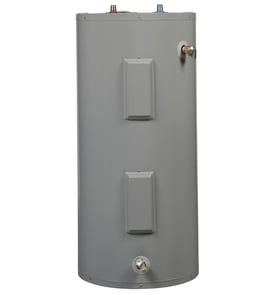



How do I read my water heater model number?
Your Kenmore electric water heater model number is printed on the model rating plate on the front of the tank, located near an access panel (often by the lower access panel). Use the full model number and serial number exactly as shown when ordering parts or service; see the 153329562 owner's manual.
Look for a sticker or metal plate on the tank body (not on the plumbing lines). On this model, the manual describes the rating plate as being near the access panel.
- Check the front of the water heater first.
- Look adjacent to the lower access panel.
- Find the fields labeled MODEL NUMBER and SERIAL NUMBER.
- Write the characters exactly as printed (including any leading zeros).
- Take a clear photo of the plate for reference.
When you contact service or order repair parts, we recommend recording these items from the rating plate.
| What to capture | Why it matters |
|---|---|
| Model number | Ensures parts match your exact Kenmore water heater configuration |
| Serial number | Helps identify production details and correct part variations |
| Voltage and wattage | Helps match electrical parts like a thermostat or heating element |
You can usually ignore most other technical fields unless you are matching electrical parts.
The model rating plate is the quickest way to match the correct replacement parts for your Kenmore 153329562, especially electrical components. For example, replacement heating elements must match the voltage shown on the rating plate and must not exceed the listed wattage.
If you are troubleshooting and the rating plate points you toward an electrical repair, these are common part types for this model:
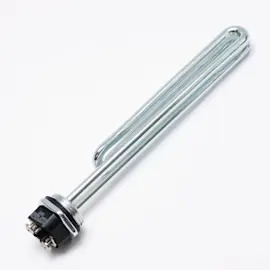
- Heating element (example: element 3800 100108346)
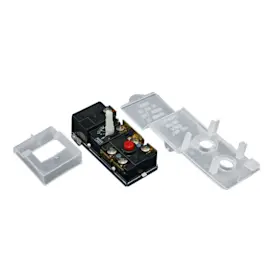
- Thermostat
- Heating element gasket
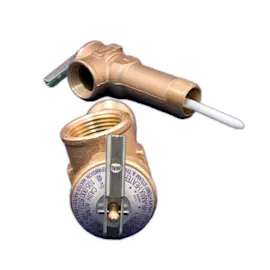
- Temperature and pressure valve
Last updated: January 2026
What is the average lifespan of an electric hot water tank?
Most electric hot water tanks last 10 to 15 years. For Kenmore model 153329562, lifespan depends most on water quality and maintenance; keeping the tank protected from corrosion (especially by maintaining the anode rod) is one of the biggest factors in reaching the upper end of that range. See the 153329562 owner's manual for the maintenance schedule and safety steps.
- 10 to 15 years is the normal range for a standard electric tank water heater.
- Hard water and high mineral content can shorten life by increasing sediment and corrosion.
- Higher hot-water demand (large household, long showers) increases wear on heating components.
- Regular maintenance (anode rod checks, flushing) helps the tank last longer.
- Ignoring leaks, rumbling, or temperature issues often leads to early failure.
The manual explains that the anode rod protects the tank from corrosion and that replacing a depleted anode rod can extend water heater life. A good rule is to inspect it periodically and replace it when heavily corroded.
Common maintenance items for this model include:
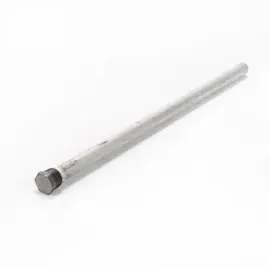
- Inspect and replace the anode rod as needed (example part: water heater anode rod 100108660)
- Flush sediment from the tank periodically
- Verify thermostat settings and operation
- Check for leaks at fittings and element gaskets
- Manually operate the temperature-pressure relief valve as directed in the manual
| Water heater age | What’s typical | What we recommend |
|---|---|---|
| 0 to 5 years | Usually reliable | Start a simple maintenance routine |
| 6 to 10 years | More scale and part wear | Inspect anode rod, watch for noise/leaks |
| 11 to 15 years | Higher failure risk | Plan for replacement; address issues quickly |
| 16+ years | Past average life | Replace proactively if performance declines |
A tank water heater usually fails from internal corrosion or sediment-related overheating. Staying ahead of corrosion protection (anode rod) and sediment buildup helps you avoid sudden leaks and keeps hot water recovery consistent.
Last updated: January 2026
How to tell if an electric water heater element is bad?
On Kenmore electric water heater model 153329562, a bad heating element usually shows up as no hot water, lukewarm water, or very slow recovery. The most reliable confirmation is a power-off multimeter test for correct resistance and continuity at the element terminals, plus a quick check for leaks at the element gasket.
- No hot water (or hot water runs out unusually fast)
- Water is only lukewarm even after a long wait
- Breaker trips or you smell overheated wiring near the access panel
- Popping or rumbling sounds (often from sediment on the element)
- Water leaking around the element opening (gasket issue can mimic an element problem)
Before you remove panels or touch wiring, shut OFF power at the breaker and confirm power is off.
- Remove the access panel and insulation to reach the element terminals.
- With wires removed from the element, measure ohms across the two element screws.
- Check for a short to ground by measuring from each element screw to the metal tank.
| Meter result | What it usually indicates | What to do next |
|---|---|---|
| No continuity or “OL” across terminals | Element is open (failed) | Replace the element |
| Very low resistance across terminals | Element may be shorted | Replace the element |
| Continuity from terminal to tank (ground) | Element is grounded (failed) | Replace the element |
| Normal resistance, no ground fault | Element may be OK | Check thermostats and wiring |
Your manual explains this water heater is factory set to 3800 watts, and the lower element can be convertible to 5500 watts on a 240V system. Replacement elements must match the voltage on the rating plate and must be no greater wattage than listed. See the 153329562 owner’s manual.
- Element 3800 100108346 (common replacement when the heater is set up for 3800W)
- Element 5500 100093526 (used only when properly converted and rated for it)
- Water heater heating element gasket 100108379 (replace if you see seepage after service)
A failed or grounded element can leave you without hot water and can also cause nuisance breaker trips. Also, turning power on before the tank is completely full can damage a new element, so always fill the tank and confirm water flows from a hot faucet before restoring power.
Last updated: January 2026