 Owner’s manual





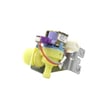
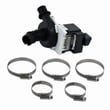
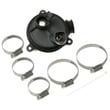
Can you buy parts for a dishwasher?
Yes. For the GE GDT535PSM0SS dishwasher, you can buy replacement parts to fix common problems (not cleaning, not draining, leaking, not heating) instead of replacing the whole unit. Using the exact model number helps ensure the part fits and works correctly; see the GDT535PSM0SS owner's manual.
What parts are commonly replaced on this model
Many repairs on the GE GDT535PSM0SS involve wear items or components tied to specific symptoms.
- Spray arms and related wash components (poor cleaning, noise)
- Filters (gritty dishes, reduced wash performance)
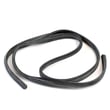
- Door latch and seals (won’t start, leaks)
- Drain components (water left in tub)
- Heating components (poor drying, cool water)
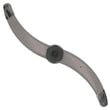
If you’re troubleshooting poor cleaning, a frequent fix is replacing the lower spray arm, such as the dishwasher spray arm, lower WD22X33499.
How we recommend matching the right part
Start with the model number and then match by symptom and location.
- Confirm the model number on the tub wall label just inside the door
- Compare the part name and part ID to what you’re replacing
- Use the symptom (won’t start, won’t drain, leaking) to narrow the part category
- Check for multiple similar-looking versions (especially racks, spray arms, and seals)
Quick examples (symptom to part type)
| Symptom | Often involves | Example part for this model |
|---|---|---|
| Dishwasher won’t start | Door latch/lock, control | Door latch components |
| Not cleaning well | Filters, spray arms, diverter | Spray arm |
| Water won’t pump out | Drain hose, drain pump | Drain components |
| Leaking at door | Tub gasket, vent seal | Door/tub sealing parts |
Why it matters
Dishwashers are built with model-specific mounting points, electrical connectors, and water-path designs. Matching parts to GE GDT535PSM0SS helps avoid fit issues, leaks, and repeat repairs.
Last updated: January 2026
How do you do a hard reset on a GE dishwasher?
To hard reset a GE dishwasher like model GDT535PSM0SS, we recommend doing a power reset: turn the dishwasher’s power off at the breaker (or wall switch, if your installation uses one) for about 5 minutes, then restore power and start a new cycle. See the GDT535PSM0SS owner’s manual for cancel and control-lock steps.
Reset options for GDT535PSM0SS
These are the most common “reset” actions that clear a stuck cycle or re-initialize the control.
- Power reset: Turn power off for ~5 minutes, then back on.
- Cancel/Drain reset: Press and hold Start for 3 seconds, then close the door so it drains.
- Wake the control: If lights go out, close and open the door or press any pad.
- Unlock controls: Press and hold the correct lock combination for 3 seconds (varies by control style).
- Resume after pause: Press Start, then close the door within 4 seconds.
Which reset should I use?
| What’s happening | Best reset to try | What you should see |
|---|---|---|
| Dishwasher won’t respond or seems “frozen” | Power reset | Control re-initializes after power returns |
| You need to stop a cycle and drain | Cancel/Drain (hold Start 3 sec) | Unit drains; cycle light turns off |
| Buttons don’t work but unit has power | Control lock unlock | Lock light turns off; buttons respond |
| Cycle paused because door opened | Resume (press Start, close door) | Cycle continues |
When a “reset” points to a parts issue
If resets work only temporarily, the problem can be a failing control component or a door-latch issue that prevents the dishwasher from starting reliably.
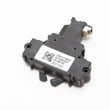
- If the dishwasher acts dead or resets randomly, inspect the dishwasher control board fuse WD21X25696.
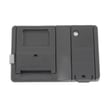
- If the dishwasher will not start because it cannot sense the door is closed, check the GE dishwasher door latch lock WD21X10490.
- If the control powers up but cycles will not run consistently, the dishwasher electronic control board WD21X32160 may be involved.
Why it matters
A proper reset can clear a stuck cycle, drain the tub, and re-initialize the electronic control without replacing parts. If the issue returns quickly, using the right reset helps narrow the problem to power, door latch, or control electronics.
Last updated: January 2026
Is it worth repairing a GE dishwasher?
Repairing a GE dishwasher like model GDT535PSM0SS is usually worth it when the problem is isolated (leak, no-drain, won’t start) and the tub and racks are in good shape. If you’re facing repeated failures or multiple major parts at once, replacement is often the better long-term value.
Quick decision checklist (GDT535PSM0SS)
- Repair is a good bet when the issue is tied to one serviceable part (latch, drain pump, inlet valve, spray arm).
- Repair is a good bet when cleaning and maintenance fixes performance (filters, loading, detergent, rinse aid).
- Replace is a better bet when you have frequent breakdowns across different systems (wash, drain, heat, controls).
- Replace is a better bet when the dishwasher has persistent leaks from multiple sealing points.
- Replace is a better bet when you want newer features or quieter operation than your current unit provides.
Common “worth repairing” scenarios and likely parts
If your GDT535PSM0SS has one clear symptom, repairs are often straightforward.
- Won’t start or won’t latch: check the door latch and strike alignment; consider GE dishwasher door latch lock WD21X10490.
- Won’t drain: check for a clogged drain path and air gap first; if the pump is failing, consider drain pump asm WD19X24829.
- Not cleaning well: clean filters and confirm spray arms spin freely; a damaged arm can be replaced with dishwasher spray arm, lower WD22X33499.
- Not drying: confirm options and water temperature; heating issues can point to dishwasher heating element WD05X35098.
Repair vs replace comparison
| Situation | Usually repair | Usually replace |
|---|---|---|
| Single symptom, consistent | Yes | No |
| Multiple unrelated symptoms | Sometimes | Yes |
| Basic maintenance overdue (filters, loading) | Yes | No |
| Control/electrical plus another major failure | No | Yes |
Why it matters
A targeted repair can restore wash performance and prevent water damage risk, while avoiding the cost and disruption of a full dishwasher replacement and installation.
Model-specific tip from the manual
For GDT535PSM0SS, we use the cycle and option guidance, water temperature targets, and troubleshooting steps in the GDT535PSM0SS owner’s manual to confirm whether the issue is a settings/maintenance problem or a true part failure.
Last updated: January 2026
What is the average life expectancy of a GE dishwasher?
A GE dishwasher typically lasts 10 to 15 years, with an average life expectancy of about 12 years. For your specific GE GDT535PSM0SS, that same 10 to 15-year range is the practical expectation when it’s installed correctly and maintained per the GDT535PSM0SS owner’s manual.
What affects lifespan the most
A dishwasher’s service life is usually determined by heat, water quality, and how hard the wash system works over time.
- Hard water mineral buildup (can shorten heater, pump, and valve life)
- Filter and spray arm clogging (forces longer, harder cycles)
- Frequent heavy cycles and heated dry use (more heat stress)
- Poor draining or standing water (can strain the drain pump)
- Door leaks or poor sealing (moisture where it should not be)
Maintenance that helps you reach the 10 to 15-year range
These are the highest-impact habits for the GDT535PSM0SS style platform:
- Clean the filters regularly (the manual suggests periodic cleaning; every other month is a good baseline)
- Keep spray arm holes clear so water pressure stays strong
- Use automatic dishwasher detergent only (hand soap causes suds and can lead to problems)
- Make sure incoming hot water is at least 120°F for effective cleaning
- Address leaks early by inspecting the door seal area
Quick “repair vs replace” guide
| If your dishwasher is… | Typical recommendation |
|---|---|
| Under 8 years old | Repair is often worth it |
| 8 to 12 years old | Depends on the part and overall condition |
| Over 12 years old | Replace is often more cost-effective if major parts fail |
Why it matters
Knowing the expected lifespan helps us plan maintenance and make smarter decisions about replacing wear items (filters, seals, spray arms) before they cause poor cleaning, leaks, or repeat breakdowns.
Last updated: January 2026
What is the most common problem with GE dishwashers?
The most common issue we see with GE dishwashers (including model GDT535PSM0SS) is a no-start or won’t-run complaint. In many cases it comes down to power being off, the door not latching, controls being locked, or a control-related fault; the troubleshooting steps in the GDT535PSM0SS owner’s manual help narrow it down.
Quick checks we recommend first (no tools)
- Confirm the breaker is on and any wall switch feeding the dishwasher is on.
- Close the door firmly; a slightly open door can prevent starting.
- Make sure you selected a cycle, pressed Start, and then closed the door within the required time.
- Check whether Control Lock is enabled and unlock it if needed.
- If the unit beeps once per minute, the door is likely open during operation.
If it still won’t start: common part-related causes
If the basics check out, these are frequent culprits on dishwashers in this GE family:
- Door latch/lock not engaging (the control thinks the door is open).
- User interface or control board issue (buttons respond inconsistently or not at all).
- Control board fuse open (unit appears dead or won’t run even with power present).
If you suspect a latch problem, the compatible replacement for this model is the GE dishwasher door latch lock WD21X10490.
Symptoms and what they usually point to
| Symptom | Most likely area to check | Notes |
|---|---|---|
| No lights, no response | Power supply, control fuse | Verify breaker and supply first |
| Lights on, won’t start | Door latch/door closure, control lock | Door must latch and controls must be unlocked |
| Starts then stops | Door interruption, drain/fill issue | Look for standing water or error indicators |
| Runs but dishes not clean | Filters, spray arms, water temp | Cleaning filters often restores performance |
Why it matters
A “won’t start” problem is often a simple door-latch or control setting issue. Catching it early prevents repeated cycle interruptions and helps you avoid unnecessary part replacements.
Last updated: January 2026





