Installation guide
 Owner’s manual
 Error Codes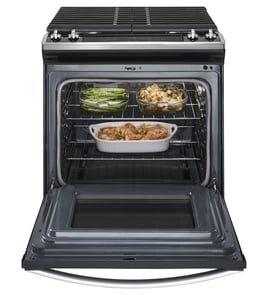





Does Kenmore make gas ranges?
Yes. Kenmore makes gas ranges, including the Kenmore 66575775891 model; it is designed for Natural gas and can be converted to LP gas by a qualified technician using the instructions in the installation guide.
What “Kenmore gas range” means for this model
Kenmore is the brand on the appliance, and 66575775891 is a Kenmore gas range model. For this range, the installation instructions specify:
- It is factory set for Natural gas.
- It is design-certified for Natural gas or LP gas after proper conversion.
- The model and serial rating plate (behind the storage drawer) lists approved gas types.
Gas type and conversion basics
Conversion is a normal setup step when your home has LP gas instead of Natural gas.
| Setup | Typical home supply | What you do |
|---|---|---|
| Natural gas | Natural gas utility line | Install as configured from the factory |
| LP gas | Propane tank | Convert the range, then install |
Quick checks before you buy parts or schedule service
- Confirm the full model number on the rating plate: 66575775891.
- Verify your home gas type (Natural vs. LP).
- Use a new AGA-approved gas supply line during installation.
- Follow local codes and ordinances for gas appliance installation.
- If you are above 2,000 feet elevation, follow the high-altitude guidance in the instructions.
Why it matters
Gas type and correct installation directly affect burner ignition, flame quality, and safe operation. Using the correct conversion procedure for LP gas helps your Kenmore range heat properly and cook consistently.
Last updated: February 2026
How long should a Kenmore gas stove last?
A Kenmore gas range like model 66575775891 typically lasts 15 years with normal household use. Keeping burners clean, maintaining good ventilation, and fixing ignition or door-seal issues early helps you get the full life out of the range (see the 66575775891 owner's manual).
Typical lifespan and what affects it
Most ranges reach their expected service life when heat, gas ignition, and door sealing stay consistent.
- Heavy daily cooking and frequent high-heat broiling shorten lifespan
- Poor airflow and grease buildup increase heat stress on components
- Spills that clog burner ports cause uneven flames and delayed ignition
- A worn door seal lets heat escape and makes the oven work harder
- Ignition problems can lead to repeated cycling and extra wear
Quick maintenance checklist (high impact)
Use these habits to protect key parts like the igniter, burner system, and oven cavity.
- Wipe up boilovers quickly and keep burner ports clear
- Clean the cooktop and sealed surface burner area regularly
- Check the oven door closes evenly and seals all the way around
- Replace a dim or failed oven light when needed for safe monitoring
- Address “clicking” or slow lighting before it becomes a no-heat problem
Common wear items and what they do
These are some of the most common parts customers replace on gas ranges.
| Symptom | Likely area | Example part for this model |
|---|---|---|
| Oven will not heat or heats inconsistently | Bake ignition | Oven igniter 4342528 |
| Heat leaks, longer preheat, uneven baking | Door sealing | Door gasket W11542153 |
| Oven light out | Interior lighting | Light bulb 8009 |
Why it matters
A gas range that is clean, sealed, and igniting properly cooks more evenly, preheats faster, and avoids unnecessary strain on the oven burner and ignition system. That directly supports the typical 15-year lifespan.
Last updated: February 2026
How to remove the top of a Kenmore gas range?
On Kenmore gas range model 66575775891, the cooktop (top) is typically lifted up after removing the surface burner pieces; a putty knife is used to release the front hold-down clips, then the cooktop is propped open for service access. Follow the steps in the 66575775891 installation guide for safe handling.
Before you start (safety first)
- Turn all burner knobs to OFF and let the range cool completely.
- Shut off the gas supply if you will lift the cooktop for service or move the range.
- Unplug the range (or switch off the breaker) to prevent accidental ignition.
- Protect the finish; use painter’s tape or a thin cloth where tools might touch porcelain.
- Keep the anti-tip bracket engaged if you slide the range out for access.
Steps to remove or lift the cooktop top
- Remove the grates.
- Remove burner caps and burner bases (some versions use screws at the bases).
- If your version has burner tube screws, remove the screws securing the burner tubes.
- At the front edge, carefully slide a putty knife between the cooktop and the range frame to release the retaining clips.
- Lift the cooktop and prop it open.
- If you need deeper access, remove the venturi plates under the cooktop (common during gas conversion and burner service).
What you may need to remove (varies by version)
| Item | Usually removed first? | Why it matters |
|---|---|---|
| Grates | Yes | Clears access to burners and cooktop edge |
| Burner caps | Yes | Allows burner base removal |
| Burner bases (and screws) | Often | Frees cooktop from burner hardware |
| Venturi plates | Sometimes | Needed for burner/orifice access |
Common mistakes to avoid
- Forcing the cooktop up without releasing the front clips; this can bend the top or chip porcelain.
- Mixing up burner parts; keep caps and bases grouped by burner location.
- Letting the cooktop drop; always use a stable prop.
Why it matters
Removing the top correctly prevents gas burner alignment issues, avoids damage to the cooktop finish, and gives safe access to components like igniters, wiring, and burner tubes.
Last updated: February 2026
What are the parts of a gas oven?
A Kenmore gas range like model 66575775891 is built around a gas bake and broil system, an oven cavity with racks and door seal, and ignition and control components that light and regulate the flame. Your exact layout and names are shown in the 66575775891 owner's manual.
Main gas oven components (what they do)
- Oven burner (bake): provides most everyday oven heat.
- Broil burner: high heat at the top for browning and broiling.
- Ignition system: lights the gas (often a hot-surface igniter).
- Oven control and sensors: set temperature and manage cycling.
- Oven vent and flue: routes heat and combustion byproducts out.
- Door and gasket: keeps heat in for stable temperatures.
Parts you will commonly replace on this model
These are some of the most common service parts we see for Kenmore gas ranges, including 66575775891:
| Symptom | Likely part | Example part for this model |
|---|---|---|
| Oven will not heat, no ignition | Igniter | Oven igniter 4342528 |
| Oven light out | Light bulb | Light bulb 8009 |
| Heat leaks, uneven baking | Door seal | Door gasket W11542153 |
Quick identification tips
- If the surface burners click but the oven will not heat, focus on the bake ignition and burner circuit.
- If the door feels loose or you see gaps, inspect the gasket for tears, flattening, or hard spots.
- If the range rocks or the door does not close evenly, check the leveling legs and floor contact.
Why it matters
Knowing the major gas oven parts helps you troubleshoot safely and order the right replacement the first time. For example, a weak igniter can prevent the burner from lighting even when the control is calling for heat.
Last updated: February 2026