Owner’s manual
 View engine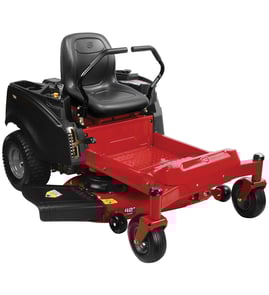

Where to find model number on riding mower?
On the Craftsman rear-engine riding mower model 536270301, the model number is typically printed on a product ID label located on the frame or under the seat area. We recommend matching the label exactly to 536270301 before ordering parts or using the 536270301 owner's manual.
Common places to check on a riding mower
Look for a sticker or metal tag in these spots (wipe dirt and grass off first):
- Underside of the seat pan or on the seat deck near the seat
- Rear frame area between the rear wheels
- Right or left side of the frame rail
- Near the engine area (around the starter housing or blower housing)
- On or near the mower deck housing (varies by deck design)
Quick steps to find it fast
- Park on a flat surface, set the parking brake, and remove the key
- Lift the seat and inspect the underside of the seat pan and seat deck
- Check the rear frame crossmember between the wheels
- Clean the label gently with a damp rag so the numbers are readable
- Write down the full model number and any additional numbers on the tag
What the label usually includes
| Label item | What it’s used for | Example for this mower |
|---|---|---|
| Model number | Identifies the exact mower version | 536270301 |
| Serial number | Identifies your specific unit | Varies |
| Engine info | Helps match engine parts | Varies |
Why it matters
Parts like the blade drive belt, seat switch, solenoid, and deck hardware can change by model variation. Using the exact model number helps us match the correct diagrams and parts list the first time.
Last updated: January 2026
How old is my mower by serial number?
On a Craftsman rear-engine riding mower model 536270301, the serial number can often be decoded to estimate the build date (and therefore the mower’s age), but the exact format varies by manufacturer and production run. We use the date-code guidance and identification details in the 536270301 owner's manual to match your serial tag to the correct format.
Where to find the serial number on model 536270301
Most serial/model tags for rear-engine riders are placed where they stay readable but protected.
- Under the seat pan (lift the seat and look on the frame)
- On the rear frame near the transaxle
- Near the engine mounting area
- On the mower deck housing (less common for the main serial)
- On a sticker or metal plate riveted to the chassis
How to decode the serial number (common date-code patterns)
Many outdoor power equipment serials include a date code near the beginning or embedded in the string.
- MMDDYY: month, day, year (example: 041507 = April 15, 2007)
- YYMMDD: year, month, day (example: 070415 = April 15, 2007)
- YYWW: year and production week (example: 0720 = week 20 of 2007)
- MMYY or YYMM: month and year only (common on some tags)
Quick check steps
- Write the full serial number exactly as shown (include letters).
- Look for the first 4 to 6 digits that could form a date.
- If multiple interpretations are possible, use the one that creates a valid month (01-12).
If the serial number does not include a clear date code
In that case, we estimate age by cross-referencing the tag style and manufacturer coding rules.
| What you see on the tag | What it usually means | What to do next |
|---|---|---|
| A long mix of letters and numbers with no obvious date | Internal production code | Compare formats shown in the manual |
| Separate “SERIAL” and “MODEL” fields | Standard ID plate | Use the serial field only for dating |
| Engine has its own model/type/code | Engine date differs from mower date | Use engine code as a secondary clue |
Why it matters
Knowing the build date helps us match the correct parts diagrams and revisions for belts, blades, and safety switches so you order parts that fit the first time.
Last updated: January 2026
How to identify a lawn mower engine?
On the Craftsman rear-engine riding mower model 536270301, you identify the engine by locating the engine identification label or stamping on the engine shroud (sheet metal) near the muffler and air cleaner, then recording the model and type numbers exactly as shown. Use the 536270301 owner's manual for the correct label locations and safety steps.
Where to look on the engine
Common places to find the engine model information on rear-engine riding mowers include:
- On the sheet metal (engine shroud) directly above the muffler
- On the front of the engine near the air cleaner housing
- Near the spark plug area on the engine shroud
- On a label plate attached to the blower housing
- On a stamped pad on the engine block (less common on some mower engines)
How to record the numbers (so you get the right parts)
Write the engine information exactly as it appears, including any dashes or extra digits.
- Engine model number (primary identifier)
- Type or trim number (narrows down exact configuration)
- Code or date number (helps match production run)
- Any engine family or emissions label info (useful for cross-checking)
Safety first before you inspect the engine
Our manual guidance is to prevent accidental starting before any inspection or repair.
- Turn the key off and remove it
- Set the parking brake
- Let the muffler and engine cool completely
- Disconnect the spark plug wire before reaching near moving parts
Quick troubleshooting: label missing or unreadable
If the label is damaged, you can still narrow it down using mower and engine features.
| What you can check | What it helps confirm |
|---|---|
| Air cleaner style and location | Engine series and configuration |
| Muffler position | Shroud layout and engine family |
| Spark plug location | Head design and engine variant |
| Fuel tank and line routing | Carburetor and linkage setup |
Why it matters
The mower model number (536270301) identifies the chassis and mower components, but the engine model and type numbers identify the exact engine parts (like the air filter, spark plug, carburetor parts, and fuel system components). Matching both prevents wrong-part returns and repeat repairs.
Last updated: January 2026
Is it worth replacing a lawn mower engine?
Replacing the engine on your Craftsman rear-engine riding mower model 536270301 is worth it when the mower’s deck, frame, steering, and drive system are still solid and you want to extend the machine’s life. It is usually not worth it when the total repair cost approaches about half the price of a comparable replacement mower.
Quick decision checklist
- Replace the engine if the mower deck is straight (not rusted through) and cuts well when the belt and blades are in good shape.
- Replace the engine if the transmission and drive system move the mower normally (no slipping or loss of motion).
- Replace the engine if you can do basic maintenance and adjustments safely (spark plug wire off before service).
- Consider replacing the mower if multiple major systems are worn (engine plus steering, deck spindles, or drive issues).
- Consider replacing the mower if you need a fast, low-effort solution; an engine swap is a project.
Cost and effort: what to compare
Use this simple comparison to decide:
| Option | Upfront cost | Time/skill | Best when |
|---|---|---|---|
| Replace engine | Higher | Moderate to high | Chassis and deck are in great shape |
| Repair engine (carb, ignition, fuel) | Lower | Low to moderate | No-start or poor running is minor |
| Replace mower | Highest | Low | Multiple systems are worn or unsafe |
Before you commit: rule out common “engine” problems
Many “bad engine” symptoms are maintenance or adjustment related. The manual calls out routine upkeep that improves performance and engine life, plus safety steps like disconnecting the spark plug wire before service.
- Check and change oil on schedule
- Clean the engine and air screen to prevent overheating and power loss
- Inspect and tighten fasteners (loose engine bolts can cause vibration)
- Verify fuel delivery (filter, fresh fuel)
- Check for blown fuse if the engine will not start (15-amp automotive style)
For model-specific procedures and safety warnings, use the 536270301 owner’s manual.
Why it matters
A rear-engine rider like the Craftsman 536270301 can last many seasons when the deck and drivetrain are maintained. Replacing an engine makes sense when it preserves a good chassis; it does not make sense if you are stacking major repairs on top of each other.
Last updated: January 2026