Owner’s manual
 Error Codes




What is the capacity of the GE model WDSR2080DBWW?
The GE WDSR2080DBWW washer has a 3.1 cu. ft. capacity. This is the approximate tub volume the washer is designed to handle; for best results, load items loosely and avoid packing clothes above the top row of basket holes (see the WDSR2080DBWW owner's manual).
How to load it correctly (so you actually get the full capacity)
Even with a 3.1 cu. ft. tub, performance depends on how you load and select water level.
- Load clothes loosely, not tightly packed
- Keep the load no higher than the top row of holes in the basket
- Choose a load size/water level that lets water just cover the clothes
- Mix large and small items to reduce out-of-balance spinning
- For bulky items (towels, bedding), use fewer pieces and allow room to move
Capacity vs. load size setting: what’s the difference?
Capacity is the tub volume; the load size setting controls the water level for that load.
| Term | What it means | What you control |
|---|---|---|
| Capacity (3.1 cu. ft.) | How much space the tub provides | You do not change this |
| Load size / water level | How much water fills the tub for that load | You select this on the control |
| Wash cycle selection | Agitation time and intensity | You select this (Whites, Casuals, etc.) |
Why it matters
Using the correct load height and water level helps the WDSR2080DBWW clean better, rinse better, and spin out more water. Overloading commonly causes poor cleaning, tangling, and vibration during spin.
Last updated: February 2026
How do I know if my GE washer is high efficiency?
A GE washer is high efficiency (HE) when it’s designed to wash and rinse with lower water levels than traditional washers. On many GE models, you’ll see an “HE” marking on the control panel; on others, you confirm HE by checking the model’s features in the owner's manual.
Quick ways to tell if it’s HE
- Look for an HE label on the control panel or near the cycle selector.
- Watch the fill: HE washers typically use water that just covers the clothes, not a full tub.
- Check your detergent guidance: HE washers are intended for HE detergent (low-sudsing).
- Compare cycle behavior: HE designs often use longer wash times with less water.
- Confirm by model: verify your GE WDSR2080DBWW features and operating notes in the owner's manual.
What “low water level” looks like in real use
In normal operation, the water level in the basket should be set so it just covers the clothes, and clothes should be loaded loosely (not packed). That wash style is consistent with HE-type water usage and helps cleaning performance while limiting oversudsing.
HE vs non-HE: what changes for you
| Topic | HE-style washer behavior | What you should do |
|---|---|---|
| Water level | Lower fill, water just covers load | Choose the correct load size; avoid overloading |
| Detergent | Low-suds is important | Use HE detergent; measure carefully |
| Cleaning results | Relies on proper loading and chemistry | Add detergent first, then load clothes |
Why it matters
Knowing whether your washer is HE helps you choose the right detergent amount and load size. That prevents common issues like excess suds, poor rinsing, and longer-than-expected cycles.
Last updated: February 2026
What type of appliance is the WDSR2080DBWW?
The GE WDSR2080DBWW is a top-load washer. In the owner's manual, this model is shown with a lid and a pull-to-start control knob, which matches a traditional top-loading washing machine design.
How we identify the appliance type
We confirm the appliance type using model-specific documentation and common washer design cues:
- The control panel section lists Model WDSR2080 under “About the washer control panel”
- The operating steps include “Close lid” and “Pull knob,” which are typical for top-load washers
- The manual groups WDSR2080 with other GE top-load models that use similar cycle knobs and load-size settings
What this means for parts and repairs
Knowing it is a top-load washer helps you choose the right repair approach and replacement parts (for example, lid-related parts, drive belt systems, and tub components).
| Item | What you will typically see on WDSR2080DBWW | Why it matters |
|---|---|---|
| Loading style | Lid on top | Confirms top-load configuration and lid-safety behavior |
| Controls | Mechanical knob/timer style | Helps when diagnosing “won’t start” or cycle-advance issues |
| Common service areas | Drain pump, belt, tub seal/bearing | Guides troubleshooting for leaks, noise, or no-drain |
Related parts customers often look for
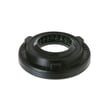
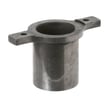
If you are troubleshooting symptoms (leaking, loud spin, not draining), these model-matched parts are commonly involved:
Why it matters
Top-load washers like the GE WDSR2080DBWW use different access panels, drive systems, and safety interlocks than front-load washers; identifying the correct washer type prevents ordering the wrong parts and speeds up diagnosis.
Last updated: February 2026
How do I reset the error code on my GE washer?
On a GE WDSR2080DBWW washer, most error or fault conditions clear after a simple power reset: unplug the washer (or switch off the breaker) for 60 seconds, then restore power and restart the cycle. If the code returns, the washer is still detecting the underlying problem and needs troubleshooting.
Quick reset steps (safe first)
- Press the cycle knob in to stop the washer.
- Unplug the washer for 60 seconds (or turn the breaker off).
- Plug back in (or turn breaker on).
- Close the lid fully, then select a cycle and pull the knob out to start.
- If the washer will not start, confirm both hot and cold water faucets are fully on.
If the code comes back: what to check next
Many “error code” situations on this style of GE top-load washer are triggered by basic operating conditions (no fill, no drain, lid open, or an unbalanced load). Check these items before replacing parts:
- Lid open: close the lid; this model will not agitate or spin with the lid up.
- No power: make sure the cord is firmly plugged into a working outlet; reset the house breaker if needed.
- No fill/slow fill: verify both supply faucets are fully open.
- Drain problem: look for a kinked drain hose or a standpipe that is backing up.
- Out-of-balance/noisy spin: stop the washer, redistribute the load evenly, then restart.
Helpful reference: symptoms and likely causes
| What you see | What it usually means | What to do |
|---|---|---|
| Washer will not run | Power, controls, or lid not set | Verify outlet, set cycle, close lid |
| Stops or pauses | Normal pauses between steps | Wait; restart only if it stalls |
| Won’t spin out water | Unbalanced load or drain issue | Rebalance load; check drain path |
| Won’t drain | Pump or restriction | Inspect hose; consider pump diagnosis |
When a part is the fix
If you confirm the washer has power and fills but will not drain (or you hear the motor running with no water movement), the drain pump is a common repair item for drainage-related faults. For this model, see the washer drain pump assembly WH23X10030.
Why it matters
Clearing the code without fixing the cause usually leads to the same code returning mid-cycle. A quick reset gets you running again, but the follow-up checks prevent repeat shutdowns, poor spinning, and water left in the tub.
For model-specific operating details and troubleshooting tips, use the owner's manual.
Last updated: February 2026