 Installation guide
 Owner’s manual




What is the average lifespan of a GE dishwasher?
A GE dishwasher typically lasts 10 to 12 years. For your GE GDT580SSF2SS, regular maintenance (especially cleaning the filters and keeping spray arms clear) helps it reach that normal lifespan and maintain strong wash performance; see the GDT580SSF2SS owner's manual.
What affects lifespan the most
- Filter care: GE recommends inspecting and cleaning filters periodically (about every other month, depending on use).
- Water quality: Hard water mineral buildup can shorten component life and reduce cleaning.
- Loading habits: Overloading can block spray arms and strain the circulation system.
- Heat and drying use: Heavy heated-dry use increases wear on heating components.
- Leaks and door sealing: A small leak can lead to corrosion on non-stainless components and electrical issues.
Maintenance that helps you get the full 10 to 12 years
Use these habits to reduce wear on key parts like the heater, pump, and door system:
- Clean the filters on schedule and whenever dishes feel gritty.
- Run hot water at the sink before starting a cycle so the dishwasher fills with warmer water.
- Keep the lower spray arm holes clear; replace a damaged arm with the dishwasher spray arm, lower WD22X33499.
- Use a quality detergent and rinse aid to reduce film and mineral deposits.
- De-odorize and descale periodically (citric acid-type cleaners are commonly used for mineral deposits).
Quick guide: what “normal” aging looks like vs. what needs attention
| What you notice | Common cause | What to do first |
|---|---|---|
| Dishes not getting clean | Clogged filters or blocked spray arms | Clean filters; check spray arm holes |
| Not drying well | Heater or venting issue, rinse aid low | Refill rinse aid; verify heated dry settings |
| Won’t start or stops mid-cycle | Door latch or control issue | Check door closes firmly; inspect latch |
| Water left in tub | Drain restriction or drain pump issue | Check drain hose routing and sink/disposal connection |
Why it matters
Knowing the typical lifespan helps you decide when maintenance is the best fix versus when a major repair (like a circulation pump or control) may not be cost-effective compared to the dishwasher’s age.
Last updated: February 2026
What are the commonly replaced parts in a dishwasher?
On the GE GDT580SSF2SS dishwasher, the most commonly replaced parts are the wash and drain components (spray arms, pumps, hoses), door parts (latch, strike, gasket, springs), and heating and control components. These parts wear from normal use, clogs, leaks, and heat cycles.
Most common dishwasher parts that get replaced
These are the parts we see replaced most often because they directly affect cleaning, draining, and door sealing:
- Spray arms that clog or crack (poor cleaning, no spray)
- Drain parts that clog or leak (standing water)
- Door latch and strike parts that stop the unit from starting
- Heater parts that reduce drying performance
- Racks and rollers that break, rust, or stop sliding smoothly
Examples of common replacements for GDT580SSF2SS
| Symptom | Likely part area | Example part for this model |
|---|---|---|
| Dishes not getting clean | Spray system | Dishwasher spray arm, lower WD22X33499 |
| Dishwasher will not start or stops mid-cycle | Door latch system | GE dishwasher door latch lock WD21X10490 and dishwasher door latch strike WD13X10071 |
| Not drying well, water stays cool | Heating circuit | Dishwasher heater element WD05X30818 |
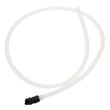
| Not draining | Drain system | Dishwasher drain hose WD24X10062 or drain pump |
| Leaks at the door or tub edge | Sealing surfaces | Dishwasher tub gasket WD08X23477 |
Quick checks that prevent repeat failures
Before replacing parts, we recommend these basic checks because they often solve the root cause (clogs, loading issues, or a stuck float):
- Clean the filters and check for debris in the sump area
- Inspect spray arm holes for mineral buildup and food particles
- Confirm the sink drain path is clear; clean the air gap if your setup has one
- Make sure the water supply valve under the sink is fully open
- Verify the door closes firmly and the latch engages consistently
Why it matters
Replacing the right part the first time restores wash pressure, proper draining, and safe heating. It also prevents secondary problems like leaks, repeated clogs, and cycles that stop because the door switch or float system is not reading correctly.
For model-specific diagrams, maintenance steps, and troubleshooting tips, use the GDT580SSF2SS owner’s manual.
Last updated: February 2026
Can I replace dishwasher parts myself?
Yes, for the GE GDT580SSF2SS dishwasher, we can replace many common parts ourselves if we’re comfortable shutting off power and water and following the correct steps. For electrical diagnostics or anything involving wiring, we disconnect power first and use the GDT580SSF2SS owner’s manual as the step-by-step reference.
What’s usually DIY-friendly vs. better for a technician
Many repairs are straightforward mechanical swaps; others involve electrical testing or leak risk.
- Often DIY-friendly: spray arms, door strike, door spring, drain hose
- Usually more advanced: control board, user interface, internal wiring checks
- Stop and get help if: you see melted wiring, repeated tripped breakers, or active leaking
| Repair type | Typical difficulty | Common examples for this model |
|---|---|---|
| Mechanical replacement | Low to medium | Dishwasher spray arm, lower WD22X33499, dishwasher door latch strike WD13X10071 |
| Water path / draining | Medium | Dishwasher drain hose WD24X10062, checking air gap (if installed) |
| Electrical controls | Medium to high | Machine control WD21X22276, user interface WD21X22177 |
Safety steps we follow before any repair
The manual notes that turning the dishwasher off does not fully disconnect power; we cut power at the breaker before maintenance.
- Turn off the circuit breaker (or unplug if accessible)
- Shut off the water supply under the sink
- Protect the floor with towels; keep a shallow pan ready
- Wear gloves and safety glasses for installation or removal work
- Take photos of hose routing and wire connections before disassembly
Quick troubleshooting checks before buying a part
A few checks can prevent replacing the wrong component.
- If it won’t start, confirm the door is fully latched and the Start sequence is followed
- If it won’t drain well, check and clean the air gap (if your setup has one)
- If it has power but won’t run, look for a locked control panel or a tripped breaker
- If you see an error code, use the GE electronic dishwasher error codes guide to narrow the failure
Why it matters
DIY replacement can save time and cost, but dishwashers combine water and electricity. Using the correct shutoff steps and the right part (spray arm, latch, drain hose, or control) helps prevent leaks, shock risk, and repeat failures.
Last updated: February 2026
What is the most common problem with GE dishwashers?
The most common problem we see on GE dishwashers (including model GDT580SSF2SS) is a no-drain or slow-drain complaint that leaves standing water. In most cases, cleaning the filters and clearing the drain path (air gap or hose) fixes it.
What to check first (fast, high-success steps)
- Clean the filters; gritty dishes and poor wash performance are common signs. Use the steps in the GDT580SSF2SS owner’s manual.
- Check the air gap (if installed) and clear debris under the cap.
- Inspect the drain hose for kinks, clogs, or a blocked disposer inlet.
- Confirm the door fully latches; an interrupted Start sequence can prevent operation.
- Run a short cycle and listen for the drain pump at the end of the cycle.
Symptom-to-cause guide
| Symptom | Most likely cause | Best next step |
|---|---|---|
| Water left in tub | Filter or drain restriction | Clean filters; clear air gap; check hose routing |
| Humming but no drain | Pump jammed or weak | Check for blockage; consider pump replacement |
| Won’t start or stops | Door not latched or Start interrupted | Re-latch door; press Start and close door |
| Dishes feel gritty | Filters need cleaning | Clean filters; verify spray arms spin freely |
Parts that often solve the underlying issue
If cleaning and hose checks do not restore draining, these model-matched parts are common fixes:
- Drain pump WD19X25187 (persistent no-drain, pump hums)
- Dishwasher drain hose WD24X10062 (kinked, split, or restricted hose)
- GE dishwasher door latch lock WD21X10490 (won’t start, door-ajar beeping)
Why it matters
Drain restrictions can stop a cycle early, leave dirty water in the tub, and reduce cleaning performance. Regular filter maintenance and a clear drain path keep the circulation system working correctly.
Last updated: February 2026





