Owner’s manual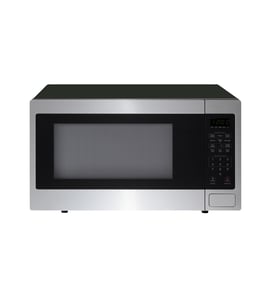



How much clearance for a countertop microwave?
For Kenmore countertop microwave model 72163259301, we install it with at least 4 inches of clearance on the left, right, top, and rear sides so air can flow for proper ventilation. This spacing helps prevent overheating and protects internal components.
Use these minimum clearances when placing the microwave on a counter or shelf:
- Left side: 4 inches minimum
- Right side: 4 inches minimum
- Top: 4 inches minimum
- Rear: 4 inches minimum
- Front: keep the front unobstructed (do not block the door area or vents)
For the exact placement notes and ventilation warnings, follow the 72163259301 owner's manual.
| Location around microwave | Minimum clearance | Purpose |
|---|---|---|
| Left side | 4 in. | Ventilation airflow |
| Right side | 4 in. | Ventilation airflow |
| Top | 4 in. | Heat dissipation |
| Rear | 4 in. | Protects rear vents and wiring |
- Place the unit on a level, stable surface.
- Do not push the cabinet tight against a wall or into a tight cubby.
- Do not cover or block any openings; blocked vents can damage the microwave.
- Keep the cord positioned so it does not hang over the counter edge.
- Avoid running the microwave empty; it can overheat.
Countertop microwaves pull cooling air through vents to protect high-voltage and heating components. When clearance is too tight, heat builds up, which can shorten the life of parts such as the magnetron and thermal safety devices.
Last updated: January 2026
Do Countertop Microwaves need venting?
Yes. Kenmore countertop microwave model 72163259301 does not need external duct venting, but it does need open airflow around the cabinet so heat and steam can exit the built-in vents. For this model, we recommend keeping at least 4 inches of clearance on the left, right, top, and rear sides (see the 72163259301 owner's manual).
Countertop microwaves are designed to vent internally through cabinet openings, not through a wall or roof.
- No outside vent pipe is required.
- Do not cover or block any openings.
- Keep the microwave on a level, stable counter.
- Avoid tight cubbies unless they provide the required clearance.
- Keep the turntable and roller rest installed during cooking.
The installation guidance for this model calls for open space on all sides for proper ventilation.
| Location around microwave | Recommended clearance | What happens if it is blocked |
|---|---|---|
| Left side | 4 inches | Overheating, poor airflow |
| Right side | 4 inches | Overheating, poor airflow |
| Top | 4 inches | Heat buildup above unit |
| Rear | 4 inches | Hot air cannot exhaust properly |
If ventilation is restricted, you may notice performance and safety symptoms.
- Cabinet feels unusually hot during normal reheating
- Cooking times seem longer than normal
- Steam and heat concentrate under cabinets or shelves
- Fan runs longer after cooking
- Unit shuts off mid-cycle and later works again (thermal protection behavior)
Proper ventilation protects key components (like the magnetron and thermostat) from heat stress, helps the microwave maintain consistent cooking power, and reduces nuisance shutdowns caused by overheating.
Last updated: January 2026
Can you put stuff on top of a countertop microwave?
Yes, you can place light items on top of the Kenmore 72163259301 countertop microwave, but only if you keep all ventilation space clear. This model needs at least 4 inches of open space on the left, right, top, and rear for proper airflow, so anything on top must not block vents or trap heat (see the 72163259301 owner's manual).
- Keep items lightweight; avoid anything heavy enough to dent the cabinet or shift the microwave.
- Do not cover the top surface with towels, paper, or liners that can restrict airflow.
- Keep items away from side and rear clearances; this model requires 4 inches of space around the top and sides for ventilation.
- Avoid storing heat-sensitive items (plastic wrap boxes, chocolate, medications) where warm exhaust air can affect them.
- Do not stack another appliance on top (toaster oven, air fryer); heat buildup and vibration can damage components.
| What you want to store | OK on top? | Why |
|---|---|---|
| Paper towels (single roll) | Usually yes | Light, but keep vents and clearances open |
| Bread, chips, cereal boxes | Sometimes | Can block airflow or warm from exhaust |
| Cookbooks, cutting boards | Sometimes | Weight is usually fine; watch for sliding |
| Another small appliance | No | Heat and vibration increase overheating risk |
Microwaves rely on airflow to keep internal components cool. The manual warns not to cover or block openings, and it specifies 4 inches of clearance around the unit for ventilation. Blocking airflow can cause overheating, nuisance shutoffs, or shortened part life.
- Make sure the microwave is on a level surface with the full 4-inch clearance.
- Remove anything stored on top and around the sides and rear.
- Check that the turntable and roller rest are installed correctly (improper setup can affect cooking performance).
- If the unit runs but does not heat, use our troubleshooting steps in why is my microwave not heating.
Last updated: January 2026
Can you put a countertop microwave in a built-in cabinet?
Yes, you can place the Kenmore 72163259301 countertop microwave in a built-in cabinet only if the cabinet allows the required ventilation clearances and does not block any air openings. This model needs open space around it for safe cooling and reliable heating performance; follow the clearances in the 72163259301 owner's manual.
For this Kenmore countertop microwave, plan the cabinet opening so the microwave has airflow on all sides and the rear.
- Provide at least 4 inches of space at the left, right, top, and rear for ventilation.
- Do not cover or block any inlet or outlet openings.
- Keep the unit on a level, stable surface (a solid shelf, not a flimsy slide-out).
- Do not run the microwave empty; overheating can damage internal components.
- Make sure the power cord is not pinched or sharply bent behind the unit.
Use this quick checklist to avoid the most common cabinet-install problems.
- Cabinet opening allows the microwave to slide in without scraping or binding.
- Ventilation gaps remain open after the door is closed and the unit is pushed back.
- No trim, face frame, or shelf lip blocks side or rear vents.
- Outlet is reachable without using an extension cord.
- Door can open fully without hitting adjacent doors, knobs, or walls.
A countertop microwave can work in a cabinet, but it still must breathe like it is on a counter.
| Setup | What it means | Main risk if done wrong |
|---|---|---|
| Countertop microwave on open shelf | Ventilation clearances maintained | Low |
| Countertop microwave in cabinet opening | Clearances must be designed into cabinet | Overheating, nuisance shutdowns |
| True built-in microwave | Designed for enclosed installation | Wrong product for the space |
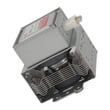
Microwaves generate heat in the high-voltage system and need airflow to protect key components. Poor ventilation can lead to weak heating, thermal cutoffs, or premature failure of parts such as the microwave magnetron 6324W1A001L or microwave thermostat 6930W1A003A.
Last updated: January 2026