Installation guide
 Owner’s manual
 Error Codes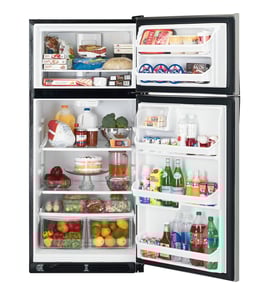



How do I tell what model Kenmore fridge I have?
Your Kenmore refrigerator’s model number is printed on the serial plate inside the fresh food (refrigerator) compartment. For model 2536580250A, the Use & Care information notes the serial plate location inside the refrigerator compartment; once you find it, copy the full model and serial numbers exactly.
Where to look first (fastest checks)
- Inside the refrigerator compartment on a serial plate (most common location)
- On an inside wall near the top or side of the fresh food section
- On the inside wall of the freezer section (some configurations)
- Behind the lower crisper drawers on the cabinet wall
- Near the bottom front area behind the toe grille or kick plate
What the model number label looks like
The label is usually a white or silver sticker or metal plate that lists:
- Model number (for example, 2536580250A)
- Serial number
- Sometimes the electrical rating information
Quick tip
Write the model number exactly as shown (including any letters at the end). That last letter can change which parts fit.
Why it matters
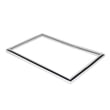
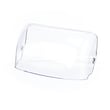
We use the exact Kenmore model number to match the correct parts and diagrams for your refrigerator, such as door shelves, gaskets, and storage bins. Even small model number differences can change fit and mounting points.
Common label locations at a glance
| Location | What to do | When it’s likely |
|---|---|---|
| Fresh food compartment (inside cabinet wall) | Look for a serial plate sticker | Most Kenmore top-mount models |
| Behind crisper drawers | Pull drawers out and check the back wall | If you do not see a label up top |
| Behind toe grille/kick plate | Remove the grille and look for a tag | If interior labels are missing or worn |
For diagrams and model-specific details, use the 2536580250A owner's manual.
Last updated: February 2026
How many cubic feet is my Kenmore refrigerator model 2536580250A?
Kenmore refrigerator model 2536580250A is typically a top-mount (top freezer) refrigerator in the 18 to 20 cubic foot range. For the exact capacity for your specific configuration, we recommend checking the specifications section in the 2536580250A owner's manual.
How to confirm the exact cubic feet
Use these quick checks to verify capacity without guessing:
- Look for a specifications or product data section in the 2536580250A owner's manual
- Check the model and serial tag inside the fresh food compartment (often lists key ratings)
- Compare your refrigerator’s shelf and bin layout to the diagrams in the manual
- If you have an ice maker installed, note that some configurations slightly change usable space
What “cubic feet” means (and why it can vary)
Cubic feet is the refrigerator’s total internal storage volume (fresh food plus freezer). Two units that look similar can have different capacities due to insulation thickness, air ducting, and evaporator cover design.
Typical capacity by top-mount size class
| Top-mount refrigerator size class | Typical total capacity |
|---|---|
| Apartment/compact | 10 to 14 cu ft |
| Standard | 14 to 18 cu ft |
| Large | 18 to 21 cu ft |
Why it matters
Knowing the correct cubic feet helps when you are comparing replacement models, planning kitchen fit, and choosing storage accessories like bins and drawers that match your refrigerator’s interior layout.
Last updated: February 2026
What are the common problems with Kenmore Elite refrigerators?
Common Kenmore Elite refrigerator problems include warm temperatures (cooling issues), ice maker not making ice, water leaks or puddles, unusual noise or vibration, and odors. Your Kenmore model 2536580250A is a top-mount refrigerator (not an Elite-branded unit), but the same core troubleshooting checks apply; use the 2536580250A owner's manual to match symptoms to the right tests.
Most common problems and what usually causes them
- Not cooling well: blocked air vents, overloaded compartments, dirty condenser area, evaporator fan or defrost trouble
- Ice maker not working (some models): wire signal arm up, water supply off, air in new plumbing lines
- Water on the floor: clogged or iced defrost drain, excess moisture from frequent openings, door not sealing
- Noisy or vibrating: cabinet not level, weak floor, normal operating sounds amplified by placement
- Odors: spills, uncovered foods, moisture buildup
Quick checks we recommend first (safe, no tools)
- Confirm the temperature control is not set to OFF (“0”).
- After any control change, allow 24 hours for temperatures to stabilize.
- Keep packages from blocking cold air vents; avoid overcrowding.
- Level the refrigerator so the doors close tightly.
- Clean the condenser area periodically for efficiency (especially with dust, grease, or pets).
Symptom-to-check guide (works for Elite and non-Elite Kenmore models)
| Symptom | First checks | What “normal” can look like |
|---|---|---|
| Refrigerator not running | Power connection, control set to “0”, defrost cycle | Defrost can pause cooling; recheck after about 20 minutes |
| Temps too warm | Airflow, control setting, door closing | Temps stabilize after 24 hours |
| Ice maker slow/no ice | First-day startup, plumbing air, signal arm | No ice first 24 hours; 1 to 2 days to fill bin with no usage |
| Odors | Clean interior, cover foods | Odors drop quickly after cleaning and wrapping foods |
Why it matters
Most “big” complaints start as efficiency problems: airflow restrictions, doors not sealing, or condenser-area buildup. Fixing those early helps food stay at safe temperatures, reduces run time, and prevents frost and water puddles.
Last updated: February 2026
What is the average lifespan of a Kenmore refrigerator?
Most Kenmore refrigerators last 10 to 15 years with normal household use. For a Kenmore top-mount like model 2536580250A, steady maintenance (good airflow, stable power, and tight door seals) is what most often determines whether you reach the high end of that range.
Typical lifespan and what affects it
A refrigerator’s life is mainly driven by compressor run time, heat removal, and how well the doors seal.
- 10 to 15 years is the typical lifespan for a full-size refrigerator
- Heavy use, hot garages, and dusty environments can shorten life
- Poor door sealing forces longer run times and faster wear
- Power issues (low voltage, frequent outages) can damage the compressor
- Regular cleaning and correct temperature settings help components last
Maintenance that extends life (high impact)
Use these habits to reduce strain on the sealed system and cooling fans.
- Plug into a dedicated 115V, 60 Hz grounded outlet; avoid extension cords and adapters (per the 2536580250A owner’s manual)
- Keep the condenser area clean and allow airflow behind the cabinet
- Confirm doors close easily and don’t pop open when loaded
- Keep vents inside the refrigerator and freezer clear of food packages
- Replace worn door gaskets when you see gaps, tears, or persistent condensation
Quick “what to expect” table
| Refrigerator age | What’s common | What we recommend |
|---|---|---|
| 0 to 5 years | Minor adjustments, occasional noise changes | Clean coils, verify temps |
| 6 to 10 years | Fan noise, gasket wear, icemaker issues (if equipped) | Inspect seals, listen for fan rubbing |
| 11 to 15 years | Higher risk of cooling failures | Plan for repairs vs. replacement |
Why it matters
A refrigerator that runs longer to hold temperature uses more energy and puts extra wear on the compressor, evaporator fan, and defrost system. Simple upkeep often prevents “warm fridge” complaints that start as airflow or sealing problems.
Last updated: February 2026
What is the top part of the fridge called?
On the Kenmore 2536580250A top-mount refrigerator, the top section is the freezer compartment. It is designed to keep foods frozen solid and, on some setups, it is also where ice is made and stored.
What the freezer compartment does
- Maintains below-freezing temperatures for long-term food storage
- Circulates cold air that also helps cool the fresh food section below
- Provides door shelves and interior space for frozen items
- Often houses the ice maker area (if your refrigerator is equipped)
Freezer vs. refrigerator: quick comparison
| Compartment | Typical temperature setting | Main purpose |
|---|---|---|
| Freezer (top) | 0°F (-18°C) | Freeze and store frozen foods |
| Fresh food (bottom) | 37°F (3°C) | Keep foods cold without freezing |
Tips for better freezing performance
We recommend these habits for steadier freezer temperatures and fewer thawing issues:
- Leave space between packages so cold air can circulate.
- Avoid loading a lot of warm food at once; it slows freezing and can warm nearby items.
- Store hard-to-freeze items (like ice cream) toward the interior, not on the door.
- Keep the refrigerator level so doors close tightly (this helps both compartments).
- Use the temperature guidance in the 2536580250A owner’s manual for your control settings.
Why it matters
Using the correct name helps when you are ordering parts, reading troubleshooting steps, or following setup checks. For example, the installation checklist calls out freezer door leveling and door seal contact, which directly affects freezer temperature stability.
Last updated: February 2026
Who makes Kenmore refrigerator model 2536580250A?
Kenmore is a brand name, and model 2536580250A is part of Kenmore’s 253 model prefix family, which is manufactured for Kenmore by Frigidaire (Electrolux). You’ll see this reflected in the parts used on the unit and in the model numbering shown in the 2536580250A owner’s manual.
How we identify the manufacturer for Kenmore 253 models
Kenmore appliances are built by different manufacturers depending on the model prefix. For 2536580250A, the key identifier is the 253 prefix.
Common ways to confirm you have a 253-prefix unit:
- The model tag inside the fresh food compartment begins with 253
- The Use & Care Guide lists the model number format as 253 (or sometimes 970) for this platform
- Many replacement parts cross to Frigidaire-manufactured components
What this means for parts and repairs
Knowing the manufacturer helps you match the right style of parts and troubleshooting steps for a top-mount refrigerator.
Here are examples of Frigidaire-style parts used on this model:
- Filter drier 5303305677 (sealed system component)
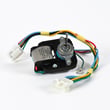
- Refrigerator evaporator fan motor 241854301 (circulates cold air)
- Refrigerator defrost bi-metal thermostat 5303918202 (defrost temperature control)
Quick reference
| What you see | What it usually indicates | Why it matters |
|---|---|---|
| Model starts with 253 | Built for Kenmore by Frigidaire (Electrolux) | Parts and service procedures align with Frigidaire designs |
| Top-mount layout | Freezer on top, refrigerator below | Airflow and defrost issues often show up as warm fridge, cold freezer |
Why it matters
When you’re ordering parts (like a gasket, evaporator fan, or defrost heater) or diagnosing cooling problems, the underlying Frigidaire design determines the correct component style, wiring layout, and service steps.
Last updated: February 2026