Installation guide
 Owner’s manual
 Error Codes



Is it worth repairing a Kenmore washing machine?
For a Kenmore top-loading washer like model 11022532510, repairing is worth it when the fix restores safe, reliable washing for less than the cost of a comparable replacement washer. Most common failures (drain, spin, agitation, lid lock, suspension) are repairable and can extend service life significantly.
Quick decision checklist
- Choose repair when the washer fills, drains, and spins after the fix, with no burning smell or repeated breaker trips.
- Choose repair when the problem is a wearable part (belt, pulley, lid lock, suspension) rather than multiple major systems.
- Choose replacement when the tub or cabinet is badly rusted, the unit is leaking from the outer tub, or multiple expensive parts are needed.
- Choose repair when the washer is otherwise stable (no severe shaking, no loud grinding) and the issue is isolated.
- Always prioritize electrical safety: use a grounded 3-prong outlet and avoid extension cords.
Typical repair cost vs. value (rule of thumb)
| Repair type | Common symptoms | Typical value call |
|---|---|---|
| Minor mechanical | won’t agitate, squeals, slips | Usually worth repairing |
| Control or motor related | won’t start, intermittent operation | Worth it if diagnosis points to one part |
| Structural or major leak | water under washer, tub damage | Often better to replace |
Parts that commonly make repair worthwhile on this model
These are frequent, targeted fixes that often restore normal operation:
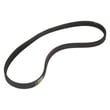
- Washer drive belt WPW10006384 for slipping, weak agitation, or no spin
- Washer lid lock W11307244 for won’t start, lid won’t lock, or stops mid-cycle
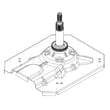
- Damper assembly W10780045 for banging, walking, or off-balance spinning
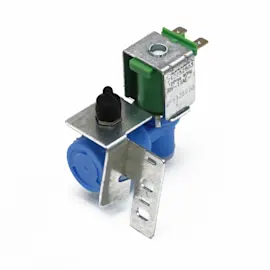
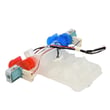
- Washer water inlet valve W11210459 for slow fill or no fill (after checking faucets)
Why it matters
A focused repair prevents repeat breakdowns and avoids replacing a washer for a single worn component. It also helps keep installation safe and stable; a properly installed washer needs a level floor and correct electrical hookup. For installation requirements and spacing guidance, use the installation guide. For operating and care tips (including cold-weather care), use the owner's manual.
Last updated: February 2026
What is the average lifespan of a Kenmore washer?
A Kenmore washer typically lasts 10 to 15 years. For your Kenmore top-loading washer model 11022532510, correct installation, a solid level floor, and avoiding overloads help you reach the longer end of that range; worn drive and suspension parts are common life-shorteners.
Typical lifespan and what affects it
Most top-loading washers land in the 10 to 15 year range. The biggest factors are load size, vibration, water quality, and whether the washer is installed to minimize “washer walk” and noise (all of which reduce wear).
- Keep loads balanced and avoid overfilling the basket
- Use the correct detergent amount to reduce residue buildup
- Level the washer to limit vibration and suspension wear
- Maintain proper hot and cold water supply and pressure
- Address new noises early (squeal, grinding, thumping)
Installation basics that protect the washer
Your installation setup directly impacts lifespan. The installation guidance for this platform calls out stable placement, proper clearances, and correct utility connections.
| Item | Recommended target | Why it matters |
|---|---|---|
| Water pressure | 20 to 100 psi | Prevents fill problems and valve stress |
| Floor slope | Max 1 in. under washer | Reduces vibration and out-of-balance wear |
| Supported weight | 315 lb (with water and load) | Prevents flexing and “walking” |
| Temperature | Above 32°F | Prevents freeze damage to remaining water |
For the exact spacing, drain hookup, and grounding requirements, follow the 11022532510 installation guide.
Parts that commonly shorten lifespan when worn
When a washer starts slipping, failing to spin, or banging during spin, these parts are frequent suspects on many Kenmore top-load designs:
- Drive system wear (belt or pulley issues)
- Suspension damping wear (excessive tub movement)
- Lid lock problems that stop spin or interrupt cycles
If you are chasing a spin or agitation issue, checking the washer drive belt WPW10006384 and damper assembly W10780045 is a practical starting point.
Why it matters
A washer that is level, properly supplied with water, and not overloaded runs smoother, vibrates less, and puts less strain on the gear case, motor, and tub support system. That directly translates into more years of reliable washing.
Last updated: February 2026
How do I find the model number on my 11022532510?
The model number for your Kenmore top-loading washer is printed on the washer’s model and serial tag. On model 11022532510, use the identification label to confirm the exact model number before ordering parts or using service information; then match it to the 11022532510 installation guide.
Where to look on the washer
Check these common locations for the model and serial tag on a Kenmore top-loading washer:
- Under the lid, around the lid opening (top rim)
- On the underside of the lid
- Along the top edge of the cabinet near the back
- On the rear panel of the cabinet
- Inside the cabinet on a side wall (visible when the lid is open)
What to write down (and why)
Record both numbers exactly as shown:
- Model number (for example, 11022532510)
- Serial number
- Date of purchase and date of installation (often noted during setup)
Why it matters
The model number ensures you get the correct diagrams, troubleshooting steps, and replacement parts (like a lid lock, water inlet valve, or drive belt) that fit your exact washer configuration.
Quick check: model vs. serial
| Item | What it tells us | When you need it |
|---|---|---|
| Model number | The exact washer design and parts fit | Always, especially when ordering parts |
| Serial number | Production details for your specific unit | Helpful for service history and some part lookups |
If the tag is hard to read
- Wipe the label gently with a damp cloth and mild soap; dry it
- Use a flashlight and take a close-up photo to zoom in
- Copy letters and numbers exactly; do not guess similar characters (0 vs O, 1 vs I)
Last updated: March 2026