Installation guide
 Owner’s manual



How do I reset my Kenmore dryer?
To reset your Kenmore gas dryer model 41798052700, we recommend a simple power reset: turn the dryer off, unplug it (or switch the breaker off) for about 1 to 5 minutes, then restore power and try a cycle again. This clears many control glitches and helps after a stalled cycle or error condition.
- Turn the cycle selector to OFF.
- Unplug the dryer from the wall outlet (or turn OFF the circuit breaker).
- Wait 1 to 5 minutes.
- Restore power.
- Close the door and press START to run a quick test cycle.
- If the dryer is gas and the burner does not light on the first attempt, turn the timer to OFF and wait 5 minutes before trying again (this allows time after a safety shutoff).
For model-specific operating details and control behavior, use the owner's manual.
Many “needs a reset” symptoms are actually a start or heat safety condition.
- Power supply: Make sure the plug fits tightly and the breaker is fully reset.
- Door closure: Open and close the door firmly; the dryer stops when the door opens.
- Airflow: Clean the lint screen and confirm the exhaust duct is not crushed or blocked.
- Gas supply (gas models): Confirm the gas supply valve is open.
- Overheat protection: If the dryer overheated, a limiter can stop operation until the underlying issue is corrected.
| Symptom | Most common cause | What we do first |
|---|---|---|
| Won’t start | Power issue, door not closed, safety limiter | Reset power, check door, check breaker |
| Runs but won’t heat | Gas valve closed, airflow problem, limiter tripped | Verify gas valve, improve venting |
| Stops when door opens | Normal safety feature | Close door, press START |
A reset can clear a temporary electronic glitch, but airflow and gas supply issues can trigger safety shutoffs and poor drying. Keeping the venting clear also helps prevent overheating and repeat shutdowns.
Last updated: February 2026
Do they still sell gas clothes dryers?
Yes. Gas clothes dryers are still sold today, and your Kenmore gas dryer model 41798052700 is the same general type: it uses a gas burner for heat but still plugs into a grounded 3-prong outlet for controls and motor power. For hookup and venting rules, use the installation guide.
- You need a working gas supply shutoff valve and the correct connector (follow local codes).
- Gas dryers must be exhausted outdoors; proper venting helps drying performance and safety.
- The dryer must be plugged into a properly grounded 3-prong receptacle; do not remove the grounding prong.
- Avoid crushed or overly long vent runs; restriction increases drying time and heat buildup.
- Plan for periodic vent inspection and cleaning (a common interval is about every 18 months with normal use).
| Feature | Gas dryer | Electric dryer |
|---|---|---|
| Heat source | Gas burner | Electric heating element |
| Electrical needs | Standard 120V outlet (typical) | Usually 240V circuit |
| Installation needs | Gas line plus venting | 240V circuit plus venting |
| Drying feel | Often faster heat recovery | Consistent electric heat |
This Kenmore 41798052700 is a gas dryer, so correct venting and combustion air are essential. The installation requirements also affect where you can place it (for example, closet installs need specific door ventilation openings and must vent outdoors).
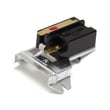
If you are shopping because your dryer runs but will not heat, common checks include confirming the gas supply valve is open and verifying airflow. If parts are needed, common heat-related replacements for this model include the booster coil 5303931775 and the dryer igniter 5304517325.
Last updated: February 2026
What does AF mean on Kenmore dryer?
AF on a Kenmore dryer means restricted air flow. On Kenmore gas dryer model 41798052700, it points to a clogged lint screen, blocked exhaust duct, or a crushed or kinked vent that is limiting airflow; the dryer may keep running but dry times increase.
- Clean the lint screen completely (clean it after every load).
- Check the outside exhaust hood; remove lint buildup and confirm the flap opens freely.
- Inspect the vent duct behind the dryer for crushing, kinks, or loose connections.
- Reduce vent complexity; most installations should avoid extra turns.
- Run a timed dry cycle and confirm airflow feels strong at the outside vent.
Your dryer needs a clear, outdoor exhaust path. The installation guidance for this style of dryer typically expects metal ducting with limited bends and a controlled total vent length; too many turns or a long run restricts airflow.
| Vent condition | What you may notice | What to do |
|---|---|---|
| Lint screen clogged | AF code, longer dry times | Clean screen; wash residue off with mild soap and water if needed, then dry it |
| Duct kinked/crushed | AF code soon after start | Re-route duct; use rigid or semi-rigid metal where possible |
| Outside hood blocked | Weak airflow outside | Clear lint/debris; confirm damper moves freely |
| Too many bends/long run | Clothes stay damp | Shorten run; reduce elbows; follow the vent length limits in the guide |
Restricted airflow causes inefficient drying and can lead to overheating. Keeping the lint screen and venting clear also helps protect the burner flame stability on gas models and reduces nuisance shutdowns.
Use the installation guide for model 41798052700 to confirm the allowed vent material, maximum vent length, and bend limits for your specific installation.
Last updated: February 2026
How long do gas dryers last?
Gas dryers typically last 13 years with normal household use. With consistent care on your Kenmore 41798052700 (especially lint control and proper venting), it’s common to reach 15 years before major repairs become frequent.
A gas dryer’s life is usually determined by heat stress, airflow restriction, and wear on moving parts.
- Clean the lint screen before every load
- Keep the exhaust duct clear and uncrushed (restricted venting overheats the dryer)
- Inspect and clean the exhaust system about every 18 months with normal usage
- Avoid overloading; it strains the drum support and drive system
- Address squealing, thumping, or burning smells quickly to prevent secondary damage
The installation guidance for this model emphasizes venting and periodic exhaust cleaning. Use this simple schedule to stay ahead of problems.
| Task | How often | Why it matters |
|---|---|---|
| Clean lint screen | Every load | Maintains airflow and drying performance |
| Check vent hood flap outside | Monthly | Confirms strong exhaust flow |
| Inspect vent duct for kinks/crushing | Every 6 months | Prevents overheating and long dry times |
| Clean full exhaust duct run | Every 18 months | Reduces lint buildup and restriction |
If your dryer still heats but gets noisy, won’t tumble, or takes longer to dry, these are common wear items on this platform.
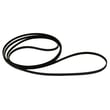
- Frigidaire dryer drum belt 134503600 (no tumble, slipping, squealing)
- Dryer idler assembly 131863007 (squeal, belt tension issues)
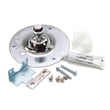
- Dryer drum bearing 131825900 (rumble, scraping, drum play)
- Dryer thermistor 134587700 (temperature control problems, inconsistent drying)
A restricted vent or ignored noise often turns a small, inexpensive repair into a larger failure (overheating, repeated thermal trips, or damage to the drum support). Following the venting and safety guidance in the installation guide helps your dryer dry faster and last longer.
Last updated: February 2026