Owner’s manual


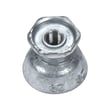
How do I know if my Kenmore dryer thermal fuse is blown?
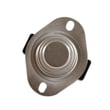
If your Kenmore dryer model 11096274800 won’t start or it runs but won’t heat, a blown thermal fuse is a top suspect. The sure way to know is to unplug the dryer and test the fuse for continuity with a multimeter; no continuity means the fuse is blown.
Quick symptoms to watch for
- Dryer will not start (no motor run)
- Dryer tumbles but produces no heat (electric models)
- Cycle stops early or acts “dead” after a short run
- Burning smell or overheating signs before the failure
- Lint buildup and long dry times leading up to the issue
How to test the thermal fuse (continuity test)
- Unplug the dryer (or switch off the breaker). For gas models, also shut off the gas supply.
- Access the fuse (commonly on the blower housing or exhaust duct area).
- Remove at least one wire from the fuse terminal.
- Set your meter to continuity or ohms.
- Touch probes to the fuse terminals.
What the meter reading means
| Meter result | What it means | What to do next |
|---|---|---|
| Beep or near 0 Ω | Fuse is good | Keep troubleshooting (thermostat, timer, motor circuit, heat circuit) |
| No beep or OL/infinite | Fuse is blown | Replace the fuse and correct the overheating cause |
Why it matters (and what to fix with it)
A thermal fuse usually blows because the dryer overheated. Replacing only the fuse can lead to a repeat failure if airflow is still restricted.
Check these airflow items before running the dryer again:
- Clean the lint screen and lint chute
- Inspect and clear the vent hose (kinks, crushed sections)
- Verify the outside vent hood opens fully
- Remove lint from the blower housing area
For model-specific access steps and safety notes, follow the 11096274800 owner's manual. For electrical testing basics, use how to use a multimeter to test electrical parts video.
Last updated: February 2026
How do I tell what model my Kenmore dryer is?
Your Kenmore dryer’s model number is printed on the appliance ID label; on most Kenmore dryers it’s inside the door opening on the front panel, and it’s the key to ordering the right parts and using the correct 11096274800 owner’s manual.
Where to look for the model number
Check these common locations (use a flashlight and wipe lint or dust off the label):
- Inside the dryer door opening, on the rim of the front panel
- On the back panel of the dryer cabinet
- Near the lint screen housing (some designs place the label close to the filter opening)
- On the side panel edge near the door opening
What the model number looks like (and why it matters)
Kenmore model numbers are usually long digit strings (often starting with 110). Use the full number exactly as shown, including all digits.
Why it matters
- Ensures the parts diagram matches your exact dryer configuration
- Prevents ordering the wrong electrical parts (thermostat, switch, motor)
- Helps you find the correct wiring diagram and cycle features in the manual
Quick check: model number vs. other numbers
Use this table to avoid mixing up IDs.
| Label item | What it’s used for | Example format |
|---|---|---|
| Model number | Parts lookup and manual match | 11096274800 |
| Serial number | Manufacturing tracking | Letters and numbers |
| Stock/catalog number | Retail listing reference | Varies by sheet |
If the label is missing or unreadable
Use these practical options to identify the dryer:
- Look for a second label on the back panel
- Check your purchase receipt or delivery paperwork
- Match the control panel layout and door style to the pictures and feature list in the 11096274800 owner’s manual
- If you already know a common wear part you replaced, confirm it matches your model’s parts list (for example, the drum belt 341241)
Last updated: February 2026
Is it worth repairing an old Kenmore dryer?
Yes, repairing an older Kenmore dryer is usually worth it when the problem is a common wear item (belt, idler pulley, thermostat, thermal cut-off) and the cabinet and drum are in good shape. For Kenmore model 11096274800, many repairs are straightforward and parts are readily available; use the 11096274800 owner's manual to confirm access steps and safety notes.
Quick decision checklist
- The dryer heats and tumbles normally after a basic maintenance cleanout (lint screen and vent).
- The issue matches a typical wear failure (squeal, thump, no tumble, intermittent heat).
- Repair cost stays well below the cost of a comparable new dryer.
- The drum, door, and bulkhead are not badly rusted or damaged.
- You can complete the repair safely (unplug power, verify wiring connections).
Common “worth it” repairs for this model
These are the fixes we see most often on older Kenmore dryers, and they typically restore full operation:
| Symptom | Likely part(s) | Example part to check |
|---|---|---|
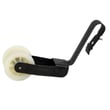
| Drum will not turn, motor runs | Belt or idler issue | Drum belt 341241, dryer idler pulley WP691366 |
| Dryer runs but heat is inconsistent | Thermostat or airflow restriction | Dryer operating thermostat WP3387134 |
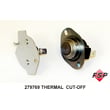
| No heat (electric models) after overheating event | Thermal cut-off kit, venting | Cut-off kit 279769 |
When replacement makes more sense
- Multiple major failures at once (motor plus heat system plus drum support wear).
- Repeated overheating from long vent runs or crushed ducting that you cannot correct.
- Severe internal wear (front bearing area, blower housing damage) that would require several parts.
Why it matters
A dryer that is mechanically sound can run for many years; replacing a few wear parts often costs far less than a new unit and restores drying performance. The manual’s feature sheet also confirms this is a large-capacity, older-style design, which is typically service-friendly. See the 11096274800 owner's manual for model-specific details.
Last updated: February 2026