Owner’s manual
 Error Codes



What is the capacity of the Kenmore Elite washer model 79640021900?
The Kenmore 79640021900 is a front-loading washer in the 796.4002#9## series; its exact tub capacity (cu. ft.) is listed in the model’s literature, so we recommend confirming it in the 79640021900 owner's manual to match your specific version.
We use the model-specific documentation because capacity can vary by revision within a series.
- Check the Specifications section in the 79640021900 owner's manual.
- Look for terms like “capacity,” “volume,” “cu. ft.,” or “tub volume.”
- If you have the washer open, record the serial number from the ID plate inside the door; it helps match the correct spec listing.
- Compare your washer’s key dimensions to the manual to ensure you are using the right document.
The manual for the 796.4002#9## front-load platform provides key dimensions and electrical specs (useful for identifying the correct platform), even when you are mainly shopping by capacity.
| Spec type | What to check | Why it helps |
|---|---|---|
| Platform | Front-loading washer (796.4002#9##) | Confirms you are looking at the correct family |
| Dimensions | 27 in. W x 29 3/4 in. D x 38 11/16 in. H | Helps validate the correct model literature |
| Power | 120 VAC, 60 Hz | Confirms electrical requirements |
Capacity affects how well the washer handles bulky items (comforters, towels) and how much space you need between loads. It also helps you choose the right cycle settings and avoid overloading, which can lead to out-of-balance spinning and drainage issues.
Last updated: February 2026
How to hard reset kenmore washer?
For Kenmore washer model 79640021900, the most reliable “hard reset” is a power cycle: turn the washer off, unplug it for 60 seconds, then plug it back in and select a cycle to clear the display. This resets the control after many control and power-related glitches (including PF).
- Press POWER to turn the washer off.
- Unplug the washer from the wall outlet.
- Wait 60 seconds.
- Plug the washer back in.
- Press POWER, then select any cycle and press START/PAUSE.
- If the controls do not respond and you see CL, turn off Control Lock (below).
Your washer can be in Control Lock, which looks like a reset problem but is not.
- Look for “CL” alternating on the display.
- Press and hold CONTROL LOCK for 5 seconds to toggle it off.
- Press POWER, reselect the cycle, then press START/PAUSE.
Reference: 79640021900 owner's manual
A reset clears many temporary control states, but it will not fix a failed part.
| Symptom after reset | What it usually means | What to check next |
|---|---|---|
| PF shows | Power interruption occurred | Select any cycle to clear PF and run a test load |
| LE shows | Motor overload/thermal protection tripped | Let it sit 30 minutes, then retry |
| Error returns quickly | Ongoing fault condition | Use the troubleshooting steps below |
- Unbalanced load: pause, wait for the door to unlock, then redistribute items.
- Small load: add 1 to 2 similar items to help balance.
- Drain issues: check the drain pump filter area for debris; a clogged filter can prevent proper draining.
- Water fill problems: confirm both water taps are fully open.
- Persistent LE or control errors: allow cool-down time; if it repeats, service is typically needed.
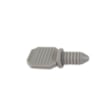
If you are addressing a drain-related issue during troubleshooting, the washer drain pump filter 383EER2001A is the model-matched filter component.
Resetting correctly prevents unnecessary part replacement and helps you tell the difference between a temporary control glitch (PF, locked controls) and a real failure (motor overload, water valve problems, draining restrictions).
Last updated: February 2026
How to identify a Kenmore washer model?
For Kenmore washer model 79640021900, the model number and serial number are printed on the identification plate inside the washer door. Use that exact model number when ordering parts or checking troubleshooting information in the 79640021900 owner's manual.
On the Kenmore 79640021900 front-load washer, open the door and look around the door opening area for the identification plate.
- Open the washer door fully
- Check the identification plate inside the door area
- Write down both the model number and serial number
- Take a clear photo of the plate for reference
- Use the full model number (all digits) when searching parts
Having the correct model number keeps you matched to the right diagrams, parts, and procedures for your exact washer.
| What you need | Where it’s used | Example for this washer |
|---|---|---|
| Model number | Parts lookup, manuals, compatibility | 79640021900 |
| Serial number | Service history, warranty, production info | From the same ID plate |
Kenmore model numbers can look similar across different series, but internal components (like the door lock, inlet valves, and drain pump system) can vary. Using 79640021900 prevents ordering a part that does not fit or troubleshooting the wrong design.
Last updated: February 2026
Is it worth repairing a Kenmore washing machine?
Yes, it’s usually worth repairing a Kenmore washer, especially a front-load model like Kenmore 79640021900, when the fix restores reliable operation for less than the cost of replacement. This model’s warranty coverage (including longer motor coverage) also makes certain repairs more cost-effective; see the 79640021900 owner's manual.
Use these practical checkpoints before you spend money on parts or labor:
- Repair when the problem is isolated (drain, fill, door lock) and the tub and bearings are quiet.
- Repair when the washer is otherwise in good condition and you have no recurring leaks.
- Repair when the estimate is under about 50% of a comparable new washer.
- Replace when the inner/outer tub, bearings, or rear tub support is failing (often loud roaring in spin).
- Replace when multiple major systems are failing (motor plus control plus leaks).
These are frequent, contained repairs on front-load Kenmore 796 washers that typically restore normal washing and spinning:
| Symptom | Likely area | Example part for 79640021900 |
|---|---|---|
| Won’t drain, water left in tub | Drain pump or blockage | Motor assembly 4681EA2001T, washer drain pump filter 383EER2001A |
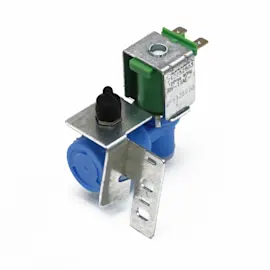
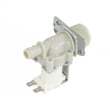
| Won’t fill or fills slowly | Water inlet valve or screens | Washer inlet valve 5220FR2006H |
| Door won’t lock, won’t start | Door lock assembly | Washer door lock switch EBF49827801 |
The Kenmore limited warranty for this washer includes one year of coverage for defects in materials/workmanship when installed and maintained as instructed. It also provides longer coverage on the direct drive motor (years 2 through 10) for the motor itself (labor after year 1 is typically not included). Details and service guidance are in the 79640021900 owner's manual.
A good repair decision prevents repeat breakdowns and protects your home. For example, drain and fill problems can lead to standing water, odors, and leaks; electrical issues (like a damaged cord) can create shock and fire hazards. We follow the manual’s safety guidance: unplug before cleaning or service, and use qualified service when needed.
Last updated: February 2026
Does my Kenmore top load washer have a filter?
Yes. Your Kenmore washer model 79640021900 has filters: a drain pump filter behind the filter access panel (to catch lint and small objects) and water inlet filter screens at the hot and cold water valve connections. See the 79640021900 owner's manual for the exact access steps.
- Drain pump filter: behind the small filter access panel on the front of the washer.
- Water inlet filters: small screens inside the inlet valves where the hot and cold hoses connect at the back.
- Detergent dispenser drawer: not a “filter,” but it should be cleaned regularly to prevent buildup.
- Unplug the washer.
- Open the access panel.
- Pull out the small drain hose, remove the plug, and drain water into a shallow pan.
- Twist the filter counterclockwise to remove it.
- Remove lint, coins, buttons, and debris; reinstall the filter and plug.
If the filter housing or cap is damaged, replace the washer drain pump filter 383EER2001A.
- Turn OFF both water taps.
- Unscrew the hot and cold inlet hoses from the washer.
- Remove the small screens, soak in white vinegar (or scale remover), rinse, and reinstall.
- Reattach hoses and turn water back on; check for leaks.
| What you notice | Most likely filter area to check |
|---|---|
| Slow or no draining | Drain pump filter |
| Rattling/clanking, items “missing” | Drain pump filter |
| Slow fill or no fill | Water inlet filter screens |
Keeping these filters clean helps your washer drain and fill correctly, reduces noise from trapped objects, and protects parts like the drain pump and inlet valve from damage.
Last updated: February 2026
How to unclog drain hose on Kenmore washer?
On Kenmore washer model 79640021900, we unclog the drain hose by safely draining any standing water first, then checking for kinks, pinches, and debris in the hose and the drain pump filter. This restores normal draining and helps prevent slow-drain error conditions.
- Unplug the washer; if there is water in the tub, let it cool before draining.
- Open the drain pump filter access panel.
- Unclip the small drain hose, place it in a shallow pan, then remove the plug to drain the water.
- Remove and clean the pump filter (turn it counterclockwise); clear lint, coins, buttons, and other debris.
- Inspect the main drain hose behind the washer for kinks, crushing, or pinching; straighten and re-route as needed.
- Check the home drain (standpipe, laundry tub, or floor drain) for clogs; clear the drain path.
Use the installation limits in the 79640021900 owner's manual to avoid poor draining:
| Setup item | What to do | Why it helps |
|---|---|---|
| Standpipe insertion depth | Insert hose about 8 to 12 inches | Prevents siphoning and backups |
| Max drain height | Keep hose end at 96 in. (244.8 cm) or less above washer base | Prevents slow or no drain |
| Hose extension | Do not extend more than 6 ft | Too long causes poor draining |
If the filter is damaged, missing, or won’t seal correctly after cleaning, replacing it is a reliable fix.
- Washer drain pump filter 383EER2001A: catches lint and foreign objects before they reach the pump
- Washer drain pump filter drain hose plug 5006EN3015A: seals the drain hose during normal operation
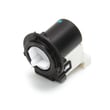
- Motor assembly 4681EA2001T: the drain pump motor assembly that can fail after repeated clogging
A restricted drain hose or clogged pump filter makes the washer drain slowly or not at all; that can stop the cycle, leave water in the drum, and reduce wash and spin performance.
Last updated: February 2026
What is the average lifespan of a Kenmore washer?
A Kenmore washer typically lasts 10 to 15 years with normal household use. For the Kenmore 79640021900, staying on top of routine cleaning and avoiding chronic overloading helps you reach the longer end of that range; neglected maintenance and repeated out-of-balance loads shorten it.
Most washers wear out from a few high-stress systems rather than the cabinet or controls.
- Load habits: frequent overloading strains the tub support, bearings, and motor
- Drain care: coins, lint, and debris can restrict draining and overwork the pump
- Water quality: hard water speeds mineral buildup and can affect valves and heating performance
- Detergent use: too much detergent increases residue, odors, and seal wear
- Leveling: an unlevel washer increases vibration and suspension wear
For model-specific care steps (including interior cleaning and dispenser cleaning), follow the 79640021900 owner's manual.
When these parts fail, repair cost and labor often determine whether it is worth fixing.
| Symptom | Common wear area | Example part for this model |
|---|---|---|
| Won’t drain, water left in tub | Drain pump system or blockage | Motor assembly 4681EA2001T or washer drain pump filter 383EER2001A |
| Won’t fill or fills slowly | Water inlet valve(s) | Washer water inlet valve 5221ER1003A |
| Door won’t lock, won’t start | Door lock/latch circuit | Washer door lock switch EBF49827801 |
These habits reduce corrosion, odor, and mechanical strain.
- Run the washer’s tub-clean cycle regularly (often labeled Clean Washer)
- Wipe the door seal and glass after use and leave the door ajar to dry
- Clean the dispenser periodically to prevent clogs and residue
- Check and clean the drain filter if draining slows or you see debris
- Keep the washer level and stable to reduce vibration during spin
A front-load washer like the Kenmore 79640021900 can run for years when water flow, draining, and vibration are controlled. Preventive cleaning and quick fixes for small leaks or drain issues help avoid bigger failures such as bearing damage or motor strain.
Last updated: February 2026
What is the OE code on a Kenmore Elite 79640021900?
On the Kenmore 79640021900 front-load washer, the OE error code means the washer is not draining properly within the allowed time. In most cases, clearing a drain restriction (filter, hose, or pump) restores normal draining.
- Unplug the washer for safety.
- Drain any standing water using the small drain tube at the pump area (if equipped).
- Clean the pump filter; lint, coins, and small socks commonly block flow.
- Confirm the drain hose is not kinked, crushed, or pushed too far down the standpipe.
- Make sure the standpipe or laundry sink is not clogged.
A common replacement item when the filter housing is damaged or won’t seal is the washer drain pump filter 383EER2001A.
If the filter and hose are clear but OE returns, the drain pump may be jammed, electrically open, or weak. On this model, the drain pump motor is commonly serviced as a motor assembly.
- Loud humming but no draining: pump impeller jammed or pump motor failing
- Drains slowly: partial blockage in filter, bellows, or hose
- Intermittent OE: debris shifting in the pump/filter area
| What you see | Most likely cause | What to do |
|---|---|---|
| Water won’t drain at all | Clogged filter or failed pump | Clean filter; test/replace pump |
| Drains but leaves water | Partial restriction | Recheck filter, bellows, hose routing |
| OE after moving washer | Kinked drain hose/standpipe issue | Correct hose position; clear standpipe |
A drain problem can stop the cycle, leave clothes soaking wet, and strain the drain pump. Fixing restrictions early helps prevent repeat OE errors and reduces the chance of pump damage.
Your 79640021900 is a front-loading automatic washer designed for HE (high efficiency) detergent. For the exact access steps and panel locations for your unit, follow the 79640021900 owner's manual.
Last updated: February 2026