 Error Codes



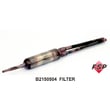
Can I run my Kenmore refrigerator without a water filter?
Yes. Your Kenmore refrigerator model 59675232401 will still cool normally without a water filter, and many units will still dispense water and make ice; however, water and ice quality typically drops and mineral or sediment buildup can increase wear in the water system over time.
What to expect with no filter installed
- Taste and odor: water and ice often taste worse because chlorine and sediment are not reduced.
- Flow rate: you may see higher flow at first, but buildup can later restrict flow.
- Ice maker performance: the ice maker can still work, but scale can contribute to fill issues over time.
- Leaks or no-dispense: some designs need a bypass plug or a properly seated filter head to prevent leaking or to open the water path.
Quick checks before you run it filter-free
- Confirm the filter housing is empty and clean; wipe the sealing surfaces.
- Make sure the filter cap or housing cover is fully seated and locked.
- If the dispenser stops working after removing the filter, install the correct bypass or reinstall a filter.
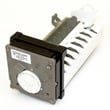
- If you notice slow ice production or hollow cubes, inspect the ice maker area and consider service parts such as the refrigerator ice maker D7824706Q.
Filter vs no filter (practical comparison)
| Setup | Water/ice quality | Risk of mineral buildup | Typical best use |
|---|---|---|---|
| Filter installed | Better taste and clarity | Lower | Everyday use, hard water areas |
| No filter | More variable | Higher | Temporary use, testing, emergencies |
Why it matters
Running without a filter does not usually harm the sealed refrigeration system, but it can affect the water inlet path, dispenser, and ice maker. Keeping sediment out helps maintain steady water flow and more consistent ice production.
For step-by-step filter guidance, use our DIY article: how to replace the water filter in a Kenmore refrigerator.
Last updated: February 2026
How do I know what model Kenmore refrigerator I have?
Your Kenmore refrigerator’s model number is printed on the appliance’s ID tag; for this parts page, the model is 59675232401. On most Kenmore bottom-mount refrigerators, you’ll find the tag inside the fresh food compartment (often on a side wall or ceiling) or on a frame edge behind a crisper drawer.
Where to look for the model number tag
Check these common locations first (use a flashlight and look for a white or silver sticker/plate):
- Inside the refrigerator section on the left or right side wall
- On the ceiling of the fresh food compartment near the light housing
- On the frame edge behind the crisper drawers (remove drawers to see it)
- Along the door jamb area (where the door seals against the cabinet)
- Near the lower front kick plate area (less common, but possible)
What the model number looks like (and why it matters)
Kenmore model numbers are usually a mix of numbers and sometimes a prefix. The exact model number is what we use to match the correct parts list, diagrams, and compatible replacements.
| What to capture | Example for this page | Why you need it |
|---|---|---|
| Model number | 59675232401 | Ensures parts fit your exact refrigerator |
| Serial number | (varies) | Helps identify production run for some parts |
| Brand | Kenmore | Narrows parts and troubleshooting info |
Quick tips to avoid ordering the wrong part
Before you shop for items like an ice maker, control board, or door gasket, we recommend:
- Write the model number exactly as shown (include all digits)
- Take a clear photo of the model tag for reference
- Match your refrigerator type (bottom-mount) to the parts category
- Use the model number when selecting parts such as the refrigerator ice maker D7824706Q
Why it matters
Kenmore refrigerators were produced by different manufacturers over the years, and parts can vary even when units look similar. Using the exact model number (like 59675232401) is the fastest way to get the right replacement parts the first time.
Last updated: February 2026
How to tell if a Kenmore refrigerator compressor is bad?
If your Kenmore 59675232401 bottom-mount refrigerator is warm and the compressor repeatedly clicks, runs only briefly, or never starts while fans and lights still work, the compressor or its start components are failing. Confirm by checking airflow, condenser cleanliness, and basic electrical symptoms before replacing major parts.
Quick signs the compressor is failing
- Repeated clicking every few minutes (overload trips, then retries)
- Compressor is very hot to the touch and shuts off quickly
- Compressor is silent and not vibrating when cooling is demanded
- Fridge and freezer both warm, but interior lights work
- You hear fans running, but there is little or no cooling
- Loud buzzing or knocking from the compressor area
What to check first (common look-alikes)
Before you blame the compressor, rule out these frequent causes:
- Dirty condenser coils: poor heat release can mimic a weak compressor
- Condenser fan not running (if equipped): compressor overheats and trips
- Evaporator fan issue: freezer may not circulate cold air to the fresh food section (see how to fix your evaporator cooling fan)
- Defrost problem: heavy frost on the evaporator can block airflow
- Control or power issue: a failed board or switch can prevent proper operation (for example, refrigerator control board WPW10503278 or refrigerator switch W11396033)
Simple symptom checks you can do safely
- Listen and feel: when cooling should be on, the compressor should hum and lightly vibrate.
- Check temperatures: if both sections are warming together, suspect sealed-system or compressor related issues.
- Look for airflow: strong airflow from vents points away from an evaporator fan failure.
- Inspect for frost buildup: a solid frost blanket behind the freezer panel points toward defrost trouble.
Symptom-to-likely-cause guide
| What you notice | Most likely cause | What to do next |
|---|---|---|
| Clicks, tries to start, then stops | Start device/overload or compressor | Have start components and compressor amps tested |
| Fans run, no cooling, compressor silent | Control/power issue or failed compressor | Check power supply and control outputs |
| Compressor runs constantly, weak cooling | Dirty condenser, airflow issue, or weak compressor | Clean coils, verify fans, then evaluate sealed system |
| Freezer cold, fridge warm | Airflow/damper/evap fan issue | Follow evaporator fan troubleshooting |
Why it matters
A compressor is part of the sealed refrigeration system; misdiagnosing it can lead to unnecessary cost. Ruling out airflow, defrost, and control problems first helps you target the right repair and restore proper cooling faster.
Last updated: February 2026
What is the cubic foot of my Kenmore refrigerator model 59675232401?
The exact cubic foot capacity for Kenmore refrigerator model 59675232401 depends on the specific configuration and data tag for that unit; most Kenmore bottom-mount refrigerators in this style are typically in the 18 to 22 cu. ft. range. We use the model’s identification label details to match the correct capacity and parts.
How to estimate capacity (quick check)
If you need a practical estimate, you can approximate cubic feet from interior dimensions (in inches):
- Measure usable interior width, height, and depth (ignore door bins and rounded corners)
- Multiply:
width × height × depthto get cubic inches - Divide by 1,728 to convert to cubic feet
- Expect your estimate to run a bit high; shelves, ducts, and liners reduce usable space
Capacity conversion table
| Measurement | Formula | Example |
|---|---|---|
| Cubic inches to cubic feet | cu in ÷ 1,728 |
34,560 ÷ 1,728 = 20 cu. ft. |
| Cubic feet to cubic inches | cu ft × 1,728 |
20 × 1,728 = 34,560 cu in |
Where the “real” capacity is listed
For Kenmore refrigerators, the most reliable capacity is typically tied to the unit’s model/serial label and the product specs for that exact build. When you are already shopping parts for model 59675232401, staying model-matched also helps avoid fit issues.
- Use your model number 59675232401 when looking up specs and parts
- Match parts by model to avoid ordering the wrong revision
- If you are troubleshooting cooling or ice production, capacity does not change the repair steps, but it can affect expected recovery time after door openings
Why it matters
Knowing cubic feet helps you compare storage space, plan food organization, and set realistic expectations for cooling performance after loading groceries. It also helps when choosing accessories like shelves and bins that must match the correct interior layout.
Related DIY help
If you are diagnosing performance issues (often mistaken for “too small” capacity), use: Kenmore 111 model bottom freezer refrigerator error codes
Last updated: February 2026





