Owner’s manual


How do I know if my Kenmore dryer thermal fuse is blown?
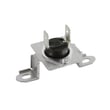
If your Kenmore Elite dryer model 79669002000 won’t start at all, or it runs but produces no heat, a blown thermal fuse is a top suspect. The sure way to know is a continuity test with a multimeter after unplugging the dryer and accessing the fuse (details in the 79669002000 owner’s manual).
Common symptoms of a blown thermal fuse
- Dryer will not start (no motor run)
- Dryer runs but there is no heat
- Cycle stops early and won’t restart until it cools (some failures present this way)
- Burning smell or unusually hot cabinet (often tied to restricted airflow)
- Repeated “no heat” complaints after long dry times
How we test it (safe, reliable method)
- Unplug the dryer (or switch off the breaker) and let it cool.
- Access the thermal fuse area as shown in the 79669002000 owner’s manual.
- Pull at least one wire off the fuse terminal.
- Set a multimeter to continuity or lowest ohms.
- Touch probes to the fuse terminals.
What the meter reading means
| Meter result | What it indicates | Next step |
|---|---|---|
| Near 0 ohms or continuity tone | Fuse is good | Check airflow, thermostats, heater circuit |
| No continuity (open circuit) | Fuse is blown | Replace fuse and correct airflow restriction |
Why the fuse blows (and what to fix first)
A thermal fuse usually opens because the dryer overheats. Before running the dryer with a new fuse, we correct the overheating cause:
- Clean lint screen and lint screen housing
- Inspect and clear the vent duct to the outside
- Confirm the outside vent hood opens freely
- Avoid crushed, kinked, or extra-long vent runs
- Make sure the blower area is not packed with lint
Related parts that often affect overheating
If you also have overheating, temperature swings, or no-heat symptoms, these parts can be involved:
- Dryer thermistor AGM30045804 (temperature sensing)
- Dryer high-limit thermostat 6931EL3003D (overheat protection)
- Dryer blower thermostat 6931EL3002M (blower housing temperature control)
Why it matters
A blown thermal fuse is a safety cutoff; replacing it without fixing restricted airflow can cause the new fuse to blow again and can shorten the life of the heating system.
Last updated: February 2026
How do I remove the front panel of my Kenmore dryer?
On Kenmore Elite dryer model 79669002000, front panel removal follows the same cabinet sequence used on most Kenmore 796 (LG-built) dryers: disconnect power, lift the top, remove the front mounting screws, unplug the door switch harness, then lift the panel off the lower tabs. Use the 79669002000 manual for the exact fastener locations on your version.
Before you start
- Unplug the dryer.
- If your 79669002000 is gas, shut off the gas supply valve.
- Pull the dryer forward for safe access and lighting.
- Wear cut-resistant gloves; cabinet edges are sharp.
- Keep screws grouped by step so reassembly is straightforward.
Front panel removal (typical 796 platform sequence)
- Remove the lint screen.
- Release and lift the top panel:
- Remove rear screws or
- Release front spring clips with a putty knife (common on this platform)
- With the top raised, remove the screws along the top edge that secure the front panel to the cabinet.
- Open the door; remove the screws around the door opening that fasten the front panel to the front bulkhead.
- Support the front panel; disconnect the door switch wiring harness.
- Lift the front panel straight up to clear the lower retaining tabs, then pull it forward and off.
What changes between versions (so you do not break clips)
| Item | What you may see | What to do |
|---|---|---|
| Top panel retention | Rear screws or front clips | Check both; remove screws first, then try clips |
| Console involvement | Console blocks top-front screws | Remove only the console screws needed for access |
| Door switch wiring | Harness clipped to panel | Unclip the harness retainer before pulling the panel away |
Why it matters
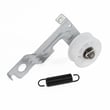
Removing the front panel correctly prevents bent cabinet tabs, broken top clips, and damaged door switch wiring. It also gives direct access to the drum and belt path for common repairs such as replacing the dryer drum belt 4400EL2001F or inspecting the idler pulley.
Last updated: February 2026
How do I reset my Kenmore dryer?
To reset your Kenmore Elite dryer model 79669002000, we recommend a simple power reset: turn the dryer off, unplug it (or switch off the breaker) for 2 minutes, then restore power and try a cycle again. This clears most control glitches and many temporary error conditions.
Quick reset steps (works for most situations)
- Press Power/Off to stop the cycle.
- Unplug the dryer or turn both dryer breakers off (electric dryers are often on a 2-pole breaker).
- Wait 2 minutes.
- Restore power.
- Open and close the door once, then select a cycle and press Start.
For model-specific control behavior and any reset or diagnostic steps, follow the 79669002000 owner's manual.
If the dryer still will not start after a reset
These checks solve the most common “dead” or “won’t start” complaints:
- Confirm the door fully latches; a bad door switch can prevent starting.
- Verify the outlet has power; for electric dryers, confirm 240V is present (a half-tripped breaker can leave the motor running weakly or not at all).
- Make sure Control Lock/Child Lock is off (if enabled, buttons may not respond).
- Clean the lint screen and check airflow; overheating can trigger safety shutoff.
- If the drum is hard to turn by hand (with power off), inspect the belt and drum support system.
| Symptom after reset | Most common cause | What to check next |
|---|---|---|
| No lights, no response | No power to dryer | Breaker, cord, outlet |
| Lights on, won’t start | Door not sensed closed | Door latch and switch |
| Starts then stops quickly | Airflow restriction or overheating | Lint screen, venting |
| Hums but drum won’t turn | Belt or idler issue | Belt, idler pulley, rollers |
Why it matters
A reset clears temporary electronic faults, but repeated shutdowns usually point to a real issue such as restricted venting, overheating protection opening, or a worn drive system. Fixing the root cause prevents longer dry times and repeat failures.
Parts that commonly relate to “won’t tumble” complaints
If the dryer runs but the drum does not turn, these model-matched parts are common suspects:
For error-code meanings and what to do next when a code appears, use our Kenmore elite dryer error codes guide.
Last updated: February 2026
How much does it cost to replace a heating element in a Kenmore dryer?
For the Kenmore Elite 79669002000 dryer, replacing the heating element typically costs $150 to $450 total: about $100 to $300 for the part (model-specific elements are often sold as assemblies) plus $100 to $200 for professional labor. DIY replacement usually costs the price of the part only.
Typical cost breakdown
- Heating element part: commonly $100 to $300 for this style of Kenmore Elite dryer
- Labor (service call + install): commonly $100 to $200
- Optional add-ons: vent cleaning, new clamps, or replacing worn drum support parts while the dryer is open
| Scenario | What you pay for | Typical total |
|---|---|---|
| DIY replacement | Part only | $100 to $300 |
| Pro replacement | Part + labor | $150 to $450 |
| “While we’re in there” service | Part + labor + extra wear parts | $200 to $600 |
What changes the price the most
- Element style: some models use a simple coil; others use a complete heater housing/assembly (higher cost)
- Access time: stacked installs, tight closets, or long vent runs increase labor time
- Root cause: restricted airflow can overheat and damage the heater again if the venting is not corrected
- Extra wear parts: squealing or thumping can justify replacing drive components at the same time
Parts that are often checked during a “no heat” repair
If the dryer runs but does not heat, we commonly test these items along with the heater:
- High-limit thermostat
- Blower thermostat
- Thermistor
- Moisture sensor (for auto-dry performance)
- Venting and lint screen airflow
If you’re already opening the cabinet, it can also be smart to inspect the drive system; a worn belt or pulley can fail soon after.
Why it matters
A heating element can fail from normal wear, but poor airflow (lint buildup, crushed vent, blocked exterior hood) is a top reason heaters and thermostats overheat. Fixing airflow protects the new element and improves dry times.
Helpful references for this model
- Use the 79669002000 owner’s manual for access panels, safety steps, and cycle/heat settings.
- If you need the correct heater for this model, match by model number and consider the lg dryer heating element 5301EL1001H when it applies to your symptom and parts diagram.
Last updated: February 2026
What are the codes for Kenmore Elite dryer?
Kenmore Elite dryer model 79669002000 uses display error codes to point you to the system that needs attention (power, control, keypad, heating, or temperature sensing). Use the code to decide what to check first, then follow the diagnostic steps in the 79669002000 owner's manual.
Common codes you may see and what to check first
These are widely used Kenmore Elite style dryer codes and the first checks that solve many calls.
| Code | What it points to | First checks we recommend |
|---|---|---|
| PF | Power interruption | Reset breaker, verify outlet power, check cord and terminal block connections |
| F:01 | Main control issue | Power reset, inspect wiring harness connections at the control |
| F:02 | Keypad or user interface issue | Check for stuck keys, reseat console ribbon/connector |
| F:20 | Heating control or heater relay issue | Check venting and heating circuit connections; look for overheated terminals |
| F:22 / F:23 | Outlet thermistor sensing issue | Check airflow and thermistor wiring; clean lint buildup |
| F:24 / F:25 | Inlet thermistor sensing issue | Check airflow and thermistor wiring; inspect for loose connectors |
Quick steps that fix the most problems
- Unplug the dryer (or switch off the breaker) for 2 minutes; restore power and retry.
- Clean the lint screen; confirm strong airflow at the outside vent hood.
- Inspect the vent run for crushing, kinks, or heavy lint; keep it as short and straight as possible.
- If the code returns, check wiring connectors for looseness or heat damage.
- Run the model’s built-in diagnostics and component checks using the procedure in the 79669002000 owner's manual.
Parts often involved with heat and sensor-related codes
When the code points to temperature sensing or overheating, these model-matched parts are commonly in the repair path:
- Dryer thermistor AGM30045804 (temperature sensing)
- Dryer high-limit thermostat 6931EL3003D (overheat protection)
- Lg dryer heating element 5301EL1001H (electric heat source)
Why it matters
A thermistor or thermostat code often shows up when airflow is restricted; fixing venting prevents repeat overheating and protects the heating circuit and control.
Last updated: February 2026
What are the main parts of a dryer?
The main parts of a Kenmore Elite dryer model 79669002000 are the drum and drive system (belt, motor, idler, rollers), the heating and temperature-sensing system, and the airflow and lint system (blower, venting, lint screen). For diagrams and locations, use the 79669002000 owner's manual.
Main dryer systems and what they do
- Drum and support: tumbles clothes and rides on support components to stay stable.
- Drive system: turns the drum using a motor, belt, and idler pulley.
- Heating system: produces heat (electric models use a heating element).
- Temperature control and safety: monitors temperature and prevents overheating.
- Airflow and lint handling: moves air through the drum and out the exhaust while capturing lint.
Common parts you may replace on this model
These are some of the most frequently serviced components for Kenmore 796-style dryers like 79669002000:
- Dryer drum belt 4400EL2001F (drum won’t turn, squealing, thumping)
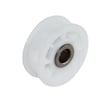
- Dryer idler pulley 4560EL3001A (chirping, belt slipping, intermittent tumbling)
- Dryer drum support roller 4581EL2002L (rumbling, thumping, flat spots)
- Lg dryer heating element 5301EL1001H (no heat or weak heat)
- Dryer thermistor AGM30045804 (temperature issues, drying performance problems)
- Dryer lint screen by lg 5231EL1001C (poor airflow, lint bypassing screen)
Quick “part to symptom” guide
| Symptom | Most likely system | Examples of parts to check |
|---|---|---|
| Drum not turning but motor runs | Drive system | Belt, idler pulley |
| Loud rumble or thump | Drum support | Support rollers, drum seals |
| No heat or long dry times | Heating and airflow | Heating element, thermostats, venting |
| Overheating or shuts off | Safety/temperature control | High-limit thermostat, thermistor |
Why it matters
Knowing which system matches your symptom helps you troubleshoot faster, order the right Kenmore parts, and avoid repeat failures (for example, replacing a belt without addressing a seized roller).
Last updated: February 2026
What does D80 mean on a Kenmore Elite dryer?
On Kenmore Elite dryer model 79669002000, the D80 code means the dryer is detecting about an 80% airflow restriction in the exhaust venting. The dryer is warning that lint buildup, a crushed hose, or a blocked exterior hood is preventing proper airflow, which increases dry times and overheating risk. See the venting and error-code details in the 79669002000 owner's manual.
What to check first (fast airflow fixes)
- Clean the lint screen and the lint screen housing opening.
- Inspect the flexible vent behind the dryer for kinks, crushing, or sagging.
- Check the exterior vent hood flap for lint blockage or a stuck flap.
- Remove any screen or mesh cover at the exterior hood (these commonly trap lint).
- If the vent runs through an attic or roof cap, check that termination for lint buildup.
- If the vent is long, schedule a full vent cleaning from the dryer outlet to the outside.
Quick test: is the restriction in the house vent or the dryer?
- Unplug the dryer.
- Disconnect the vent from the dryer outlet.
- Run a short timed dry cycle for a few minutes (do not leave it unattended).
- Feel for strong airflow at the dryer outlet.
| Result | What it points to | What to do next |
|---|---|---|
| Strong airflow at dryer outlet | House vent restriction | Clean/repair vent run, shorten if possible |
| Weak airflow at dryer outlet | Dryer airflow problem | Check blower area and internal lint buildup; service may be needed |
Why it matters
Restricted venting makes the heater and thermostats work harder, which can cause longer dry times, higher energy use, and repeated high-heat shutdowns. Keeping airflow clear helps protect key heating and safety components such as the dryer high-limit thermostat 6931EL3003D.
After you clear the vent
- Run a timed dry cycle and confirm airflow at the exterior hood.
- Recheck for the D80 code over the next few loads.
- Keep venting as short and straight as possible; avoid plastic or foil duct.
Last updated: February 2026
Where is the model number on a Kenmore Elite dryer?
On the Kenmore Elite 79669002000 dryer, we typically find the model number on the rating label inside the door opening; check the cabinet frame around the door (top, sides, or lower edge) and the inner door area. For label diagrams and exact locations, use the 79669002000 owner's manual.
Most common places to check
- Inside the dryer door opening on the cabinet frame (often the most visible spot)
- On the inner edge of the door itself
- Along the front panel opening near the lint screen housing
- On the side panel near the front (visible with the door open)
- On the rear panel (less common, but worth a quick look)
What the label looks like and what to copy
The rating label is usually a white or silver sticker or metal plate. Write down these items exactly:
| Item on label | Why it matters |
|---|---|
| Model number (example: 79669002000) | Ensures parts and diagrams match your dryer |
| Serial number | Helps identify production version for service |
| Electrical or gas info | Confirms correct power or fuel setup |
Tips if the label is hard to read
- Wipe dust off with a damp cloth and mild soap; dry it fully
- Use a flashlight and take a close-up photo, then zoom in
- If the sticker is scratched, look for a stamped plate nearby in the same area
Why it matters
Kenmore Elite dryers often share similar styling across multiple model numbers; using the exact model number helps us match the correct parts (like a drum belt, thermistor, or heating element) and the right troubleshooting steps.
Last updated: February 2026
Why is the drum not turning on my Kenmore Elite dryer?
If the drum on your Kenmore Elite 79669002000 runs but will not tumble, the most common causes are a broken or slipped drum belt, a seized idler pulley, or worn drum support rollers. We recommend checking the belt and drum support parts first using the steps in the 79669002000 owner's manual.
Quick checks (fastest to confirm)
- Unplug the dryer before opening any panels.
- Try turning the drum by hand; hard to turn points to rollers or an idler pulley binding.
- Listen for the motor running with no drum movement; this often indicates a broken belt.
- Check for a burning rubber smell; this can happen when the belt slips or the idler pulley seizes.
- If the drum turns but squeals or thumps, suspect rollers or a pulley rather than the motor.
Parts that most often stop the drum from turning
These are the most common drum-drive parts for this model:
| Symptom | Most likely part | What you typically find |
|---|---|---|
| Motor runs, drum does not move | Dryer drum belt 4400EL2001F | Belt snapped, stretched, or off the drum |
| Drum hard to spin by hand | Dryer idler pulley 4560EL3001A | Pulley frozen, wobbling, or noisy |
| Thumping, rumbling, drum stalls | Dryer drum support roller 4581EL2002L | Roller flat spots or roller not spinning freely |
How we recommend troubleshooting (in order)
- Inspect the belt for breaks, glazing, or slack.
- Check the idler pulley for free spin and alignment.
- Spin each drum roller by hand; replace any roller that binds, wobbles, or feels rough.
- If all drum support parts check out, inspect the motor and blower area for obstructions.
Why it matters
A dryer that runs without tumbling can overheat clothing, increase dry times, and strain the motor. Fixing a worn belt, roller, or idler pulley restores proper drum rotation and helps protect the heating system and airflow.
Last updated: February 2026