Owner’s manual
 Error Codes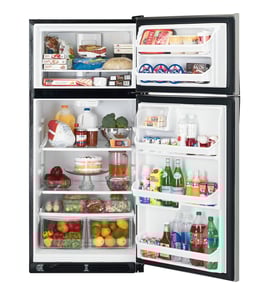






What is a fridge with freezer on top called?
A fridge with the freezer on top is called a top-freezer refrigerator, also commonly called a top-mount refrigerator. Your Kenmore model 10672209201 is this style, with the freezer compartment above the fresh-food compartment and separate side-swing doors.
Both terms describe the same layout:
- Freezer compartment is on the top
- Refrigerator (fresh-food) compartment is on the bottom
- Two separate doors that open from the side
- Cold air circulates between sections through vents, so keeping vents clear helps temperatures stay stable
For model-specific features and layout details, use the 10672209201 owner's manual.
Refrigerator style affects where key components sit and how common problems show up (airflow, frost patterns, door sealing, and ice maker routing).
| Style name | Freezer location | Common alternate name |
|---|---|---|
| Top-freezer refrigerator | Top | Top-mount |
| Bottom-freezer refrigerator | Bottom | Bottom-mount |
| Side-by-side refrigerator | Left side | Side-by-side |
These are common best practices for Kenmore top-freezer units like model 10672209201:
- Do not block freezer or refrigerator vents with food packages
- Keep doors aligned and closing tightly to prevent moisture and temperature swings
- Expect normal operating sounds (gurgling, popping, fan airflow) during cooling and defrost
- Wrap foods tightly to reduce odor transfer between compartments
- If you have ice maker issues, confirm the water supply and inlet valve operation before replacing parts
If you are troubleshooting a display or diagnostic issue on Kenmore 106-series units, use the Kenmore 106 model refrigerator error codes reference.
Last updated: January 2026
What is the cubic foot of my Kenmore refrigerator model 10672209201?
The Kenmore refrigerator model 10672209201 has a total capacity of 21.9 cubic feet. This number represents the combined storage space of the fresh food compartment and the freezer, and it helps you compare overall usable space across top-mount refrigerators.
- Plan grocery storage: larger capacity supports bulk shopping and bigger platters.
- Compare models: cubic feet is the fastest way to compare overall size across brands.
- Set expectations: capacity is total volume; shelves, bins, and the ice maker reduce usable space.
- Match household needs: most families do well in the 18 to 22 cu. ft. range for a top-mount.
| Spec | What it tells you | What it does not tell you |
|---|---|---|
| Total capacity (cu. ft.) | Overall interior volume (fridge + freezer) | Exact shelf layout, bin sizes, or door storage |
| Fresh food capacity | Space for refrigerated items | How tall items fit on your shelf configuration |
| Freezer capacity | Space for frozen items | How much is taken up by an ice bin or shelves |
We recommend checking the capacity listing and other specifications in the 10672209201 owner's manual. The model and serial label is typically located on the inside wall of the refrigerator compartment, which is also helpful when ordering Kenmore parts.
Capacity affects day-to-day convenience: it influences how much food you can store, how you organize items, and whether add-ons like an ice maker fit your needs. If you are adding or troubleshooting ice production, the ice maker assembly 4317943 is a common related component for this model.
Last updated: January 2026
What are the common problems with Kenmore Elite refrigerators?
Common problems we see on Kenmore top-mount refrigerators like model 10672209201 include warm temperatures from poor airflow, frost buildup from a defrost or door-seal issue, water or moisture problems tied to the water supply or filter, and unusual fan or compressor noises. Use the owner's manual troubleshooting section to match symptoms to the right checks.
- Not cooling or weak cooling: blocked air vents, dirty condenser coils, failed evaporator fan motor, or sealed-system/compressor issues.
- Excessive frost or ice buildup: defrost system problem (heater, thermostat, timer/control) or a door gasket not sealing.
- Water leaks or puddles: clogged defrost drain, cracked water tube, or a leaking water inlet valve.
- Low water flow at dispenser (if equipped): water shutoff valve not fully open, kinked supply line, or a clogged/incorrectly installed filter.
- Door not closing well: refrigerator not level, sticky gaskets, or door alignment problems.
- Confirm airflow: keep packages away from interior vents so cold air can circulate.
- Check door sealing: clean the gasket and the cabinet surface it touches; if it sticks, apply a thin coat of paraffin wax after cleaning.
- Verify water supply (if you have an ice maker or dispenser): make sure the shutoff valve is on and the supply line is not kinked.
- Listen for fan noise: a grinding or squealing sound often points to the evaporator fan area.
| Symptom | Common part involved | Example part for this model |
|---|---|---|
| Warm fridge, noisy freezer area | Evaporator fan motor or fan blade | Refrigerator evaporator motor WPW10189703, fan blade WP2163777 |
| Frost buildup, warm temps | Defrost thermostat (bi-metal) | Defrost bi-metal WP4387503 |
| No ice or water leaks at back | Water inlet valve or water tube | Refrigerator inlet valve WPW10498990, refrigerator water tube W10823511 |
| Door sweating, frost near door | Door gasket not sealing | Gasket panel (white) 2159061 |
Catching airflow, gasket, and water-supply problems early helps prevent food spoilage, reduces frost buildup, and avoids extra strain on the compressor and sealed refrigeration system.
Last updated: January 2026