Owner’s manual
 Error Codes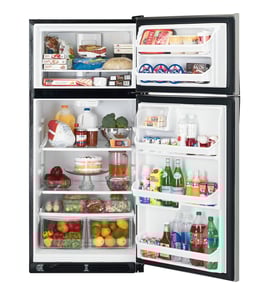


What's the average lifespan of a Kenmore refrigerator?
Most Kenmore refrigerators, including the Kenmore 10677222700 top-mount refrigerator, typically last 12 to 15 years with normal household use. Regular maintenance (especially keeping airflow and door sealing in good shape) is what most often determines whether you land closer to 12 years or push beyond 15.
What affects refrigerator lifespan the most
- Condenser coil cleanliness: Dust buildup makes the compressor run hotter and longer.
- Door gasket condition: Air leaks cause longer run times and moisture problems.
- Temperature settings: Over-cooling increases run time and wear.
- Ventilation around the cabinet: Poor airflow stresses the sealed system.
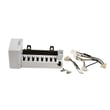
- Ice maker and water system upkeep: Leaks and clogs can create secondary damage.
Maintenance checklist to help your Kenmore last longer
Use the care and maintenance guidance in the 10677222700 owner's manual.
- Vacuum and brush condenser coils regularly.
- Confirm doors close fully and stay aligned; level the refrigerator if it wobbles.
- Clean sticky gaskets and the surfaces they touch; a thin coat of paraffin wax after cleaning can help reduce sticking.
- Keep interior vents unblocked so cold air can circulate.
- Address water leaks quickly (tubing, valve, ice maker fill issues).
Common “end-of-life” symptoms vs. fixable issues
| Symptom | Often fixable? | Common area to check |
|---|---|---|
| Warm fridge, freezer still cold | Yes | Airflow, evaporator fan, frost buildup |
| Clicking, no cooling | Sometimes | Start components, compressor circuit |
| Water under fridge | Yes | Defrost drain, water tubing, inlet valve |
| Doors won’t seal | Yes | Door alignment, gasket condition |
Why it matters
A refrigerator that runs longer than it should (from dirty coils, air leaks, or poor airflow) puts extra load on the compressor and cooling system. That extra run time is one of the biggest drivers of shortened lifespan.
Last updated: January 2026
What are the disadvantages of a top mount fridge?
Top-mount refrigerators like Kenmore 10677222700 typically cost less and cool reliably, but the main disadvantages are convenience and organization: fresh-food items sit lower (more bending), freezer access is higher, and storage features are usually simpler than bottom-freezer designs.
Common disadvantages (what you will notice day to day)
- More bending for fresh food: the refrigerator section is below the freezer, so you reach down more often.
- Less “eye-level” organization: many top-mount designs have fewer specialty bins and dividers.
- Harder access for some users: lifting heavier items into the freezer can be inconvenient.
- Fewer built-in dispenser options: many top-mount models do not include external water or ice dispensing.
- Odors can transfer between sections: because air circulates between freezer and refrigerator, smells can move from one section to the other.
What to check on your Kenmore 10677222700
Your model’s setup and use instructions cover airflow and control settings that affect performance and food quality. Use the 10677222700 owner's manual to confirm:
- Recommended control “mid” settings after installation
- Which vents must stay clear for proper airflow
- Cleaning guidance to reduce odor transfer
Quick comparison: top-mount vs bottom-freezer
| Feature | Top-mount refrigerator (like 10677222700) | Bottom-freezer refrigerator |
|---|---|---|
| Fresh-food access | Lower, more bending | Higher, easier access |
| Freezer access | Higher, easier reach | Lower drawer, more bending |
| Storage features | Often simpler | Often more specialized |
| Dispenser options | Less common | More common |
Why it matters
If you use fresh food more than frozen food, the lower refrigerator compartment can feel inconvenient over time. Also, keeping vents unblocked helps prevent temperature swings and moisture issues that can make organization and food storage harder.
Last updated: January 2026
What are the dimensions of a Kenmore refrigerator model 10677222700?
For Kenmore top-mount refrigerator model 10677222700, use the exact exterior dimensions listed in the 10677222700 owner's manual. If you are planning a tight fit, measure your unit as well (height, width, and depth) because handles, hinges, and leveling legs change the real-world space needed.
How we recommend measuring (so your numbers match the space)
- Height: floor to top of hinge cover (and also to top of cabinet without the hinge cover, if removable)
- Width: widest point across the cabinet (include door edges if they protrude)
- Depth: back of cabinet to front of door (then add handle depth if installed)
- Door swing: measure clearance needed for drawers/crispers to pull out
- Back clearance: include room for the power cord and any water line
Installation clearances to plan for
The manual for this model calls out ventilation and door-swing spacing that matters as much as the cabinet size:
- Leave 1/2 inch of space on each side and at the top for airflow
- If next to a fixed wall, leave at least 2 inches on the hinge side for door swing
- If equipped with an ice maker, allow extra space behind for the water line connection
- Avoid installing near heat sources (oven, radiator)
- Do not install where temperatures drop below 55°F (13°C)
Quick reference table (clearance, not cabinet size)
| What you are planning for | Typical requirement for this model type |
|---|---|
| Side and top ventilation | 1/2 inch |
| Hinge-side wall clearance | 2 inches minimum |
| Extra rear space (ice maker models) | Enough for water line and cord |
Why it matters
Correct dimensions and clearances prevent poor cooling from restricted airflow, reduce compressor run time, and help avoid door alignment and drawer clearance problems.
Last updated: January 2026