Owner’s manual
 Error Codes


Which is better top mount or bottom mount freezer?
A bottom-mount freezer (like KitchenAid model KFCP22EXMP5) is usually better for everyday convenience because fresh food sits at eye level, so you bend less. A top-mount freezer is typically the better pick for lower upfront cost and often slightly lower energy use.
Quick comparison
| Feature | Top-mount freezer | Bottom-mount freezer |
|---|---|---|
| Everyday access | Freezer is easiest to reach | Fresh food is easiest to reach |
| Ergonomics | More bending for fridge items | Less bending for fridge items |
| Organization | Simple shelves, smaller freezer space | Often better freezer drawers/baskets |
| Energy use | Often slightly lower | Often slightly higher |
| Price | Usually lower | Usually higher |
How we recommend choosing
- Choose bottom-mount if you use the refrigerator section most and want easier access to produce, drinks, and leftovers.
- Choose top-mount if you want a simpler design, typically lower purchase price, and you do not mind bending for fresh-food items.
- If you store lots of frozen foods, compare freezer layout: drawers (bottom-mount) can be easier to organize than stacked shelves.
- If you have limited kitchen space, measure door swing and clearance; bottom-mount units can need more room for freezer drawer pull-out.
- If you want the most accurate feature and capacity details for your exact unit, use the KFCP22EXMP5 owner's manual.
Why it matters
Most households open the refrigerator section far more than the freezer. With a bottom-mount design, the items you reach for most are higher up, which reduces bending and makes day-to-day use feel easier, even if energy use is similar.
Last updated: February 2026
How to remove bottom grill from KitchenAid refrigerator?
On KitchenAid model KFCP22EXMP5, the bottom grill (toe kick) snaps onto the lower frame. We remove it by gripping the grill at the ends and pulling straight forward to release the retaining clips; then we lift it away. Reinstall by aligning and snapping it back in.
Steps to remove the bottom grill (toe kick)
- Unplug the refrigerator or switch off power at the breaker (recommended when working near wiring).
- Open both fresh food doors for better access.
- Grip the grill firmly near the left and right ends (not the center).
- Pull straight forward to pop the clips loose.
- If it resists, work one end loose first, then the other; avoid twisting.
- Lift the grill away and set it aside.
Reinstall tips
- Line up the grill tabs and clip points with the lower frame.
- Press evenly along the ends until you hear or feel the clips snap in.
- Confirm the grill sits flush so it does not rub the doors or restrict airflow.
What to check if it will not come off
| Symptom | Most common cause | What we do next |
|---|---|---|
| Grill will not budge | Clips are tight or stuck | Pull from the ends; rock gently while pulling forward |
| Grill pops loose on one side only | One clip still engaged | Release the stuck end first, then pull the other end |
| Grill feels blocked | Something behind it (dust, tubing, wiring cover) | Look underneath with a flashlight before pulling harder |
Why it matters
The bottom grill helps protect components and supports airflow across the condenser area. Removing it correctly prevents broken clips and makes routine cleaning easier, which helps the refrigerator cool efficiently.
For model-specific diagrams and any special clip locations, use the KFCP22EXMP5 owner's manual.
Last updated: February 2026
What is the advantage of a bottom mount fridge?
A bottom-mount refrigerator like the KitchenAid KFCP22EXMP5 keeps the fresh-food section at eye and waist level, so you reach everyday items with less bending. The freezer sits below, which is convenient if you use frozen foods less often; it also helps you see and organize refrigerated foods faster.
Key advantages for daily use
- Less bending for fresh food: produce, milk, and leftovers are easier to grab.
- Better visibility: shelves and bins are closer to eye level, so food is less likely to get forgotten.
- More comfortable loading: heavy items (like beverage containers) go into the fridge section without deep crouching.
- Freezer storage is still roomy: many bottom-mount designs use pull-out baskets for bulk frozen items.
- Good for meal prep households: frequent fridge access feels quicker and more ergonomic.
Bottom-mount vs top-freezer: quick comparison
| Feature | Bottom-mount (like KFCP22EXMP5) | Top-freezer |
|---|---|---|
| Most-used compartment height | Fridge at eye level | Freezer at eye level |
| Bending for daily items | Less | More |
| Freezer access | Pull-out drawer/baskets | Swing door/shelves |
| Best fit for | Fresh-food focused households | Frozen-food focused households |
Tips to get the most from a bottom-mount layout
- Set the refrigerator to about 37°F and the freezer to about 0°F.
- Keep high-use items on the middle shelves for fastest access.
- Use clear bins to group snacks, deli items, and meal-prep ingredients.
- Avoid overpacking the freezer drawer; airflow helps maintain even temperatures.
Why it matters
Most households open the refrigerator section far more often than the freezer. With a bottom-mount design, the compartment you use most is the easiest to reach, which improves convenience and helps reduce food waste through better visibility.
For model-specific features (drawer layout, controls, and storage options), check the KFCP22EXMP5 owner's manual.
Last updated: February 2026
How do I know which KitchenAid model I have?
For your KitchenAid refrigerator, the model number is printed on the appliance’s rating label. On the KitchenAid KFCP22EXMP5 bottom-mount refrigerator, you’ll typically find that label inside the fresh food compartment on a side wall or near the ceiling, or on the cabinet frame behind a crisper drawer; match the full model number exactly.
Where to look on a bottom-mount refrigerator
Check these common label locations first:
- Inside the refrigerator section on the left or right interior wall
- On the ceiling area inside the fresh food compartment
- On the cabinet frame behind the crisper drawers (remove the drawers to see the frame)
- Along the door jamb area (where the door seals against the cabinet)
- On the back exterior panel near the lower area (less common, but worth a quick check)
What to write down (and why)
Record the information exactly as shown on the label.
| Label item | What it’s used for | Example format |
|---|---|---|
| Model number | Ensures parts fit your exact configuration | KFCP22EXMP5 |
| Serial number | Helps date the unit and match production changes | Letters and numbers |
| Electrical ratings | Confirms power requirements for service | Volts/amps |
Tips to avoid common mix-ups
These quick checks prevent ordering the wrong KitchenAid parts:
- Use the full model number, including any letters and numbers at the end
- Don’t use the number from the user interface or display panel; that is not the model
- If the label is worn, take a clear photo and zoom in to confirm each character
- Match the model number before choosing parts like a control board, door gasket, or ice maker
Why it matters
KitchenAid refrigerators can look similar across model families, but parts like the ice maker assembly, door gasket, and electronic control board can vary by model revision. Using the exact model number (KFCP22EXMP5) is the fastest way to get the right-fit replacement parts and avoid returns.
For diagrams, label location notes, and model-specific details, use the KFCP22EXMP5 owner's manual.
Last updated: February 2026
Are KitchenAid refrigerators high end?
Yes. KitchenAid refrigerators, including model KFCP22EXMP5, are positioned as premium, high-end appliances; you typically get upgraded styling, stronger fit-and-finish, and feature-focused cooling and storage compared with basic top-freezer models. For exact features and care guidance for your unit, use the KFCP22EXMP5 owner's manual.
What “high end” usually means for KitchenAid refrigerators
High-end is less about one single feature and more about the overall package: materials, design, and performance.
- More premium exterior and interior finishes (handles, trim, shelving)
- Better organization options (adjustable bins, specialty drawers, flexible shelving)
- More precise temperature management (multiple sensors and controls)
- Quieter operation compared with entry-level refrigerators
- Higher typical replacement-part costs (controls, door panels, specialty components)
Quick comparison: premium vs. basic refrigerators
| Category | Premium (typical KitchenAid) | Basic (entry-level) |
|---|---|---|
| Fit and finish | Higher | Standard |
| Storage flexibility | More adjustable | Fewer adjustments |
| Controls | More advanced | Simpler |
| Repair parts cost | Often higher | Often lower |
What to check on your KFCP22EXMP5 to confirm “premium” features
Use these practical checks to see where your refrigerator lands on the high-end spectrum:
- Look for advanced control features and temperature settings in the KFCP22EXMP5 owner's manual
- Inspect door seals for a tight, even close (premium units rely on strong sealing for stable temps)
- Verify the ice maker and water system performance; premium models often include more robust dispensing features
- Check for consistent airflow and cooling; an evaporator fan issue can reduce performance (see how to fix your evaporator cooling fan)
Why it matters
High-end refrigerators tend to deliver more consistent food preservation and better day-to-day usability, but they also reward good maintenance. Simple steps like keeping doors aligned, seals clean, and airflow unobstructed help protect performance and reduce wear on components such as the control board, evaporator fan motor, and ice maker.
Last updated: February 2026
What is the lifespan of a KitchenAid refrigerator?
KitchenAid refrigerators typically last 10 to 17 years with normal household use. For your KitchenAid KFCP22EXMP5 bottom-mount refrigerator, consistent maintenance (clean condenser coils, keep door gaskets sealing, and fix small issues early) is what most often determines whether you land closer to 10 years or closer to 17.
Typical lifespan and what to expect
Most premium refrigerators like KitchenAid fall into this range:
| Appliance type | Typical lifespan | What usually ends life early |
|---|---|---|
| KitchenAid bottom-mount refrigerator | 10 to 17 years | Poor airflow from dirty coils, chronic warm temps, door seal leaks |
| Standard household refrigerator (all brands) | 10 to 15 years | Heavy use, neglected maintenance, repeated defrost/drain issues |
How to help your KFCP22EXMP5 reach the high end of the range
These are the highest-impact habits we recommend:
- Clean the condenser area regularly so the sealed system does not run hot and long.
- Confirm the doors close and seal fully; a small air leak can add years of wear.
- Keep vents clear inside (do not pack food tightly against air returns).
- Set proper temperatures (about 37°F fresh food, 0°F freezer).
- Address water leaks quickly to prevent ice buildup and airflow problems.
- Listen for fan noise changes; a failing fan can cause warm temps and long run times.
For model-specific care and cleaning intervals, use the KFCP22EXMP5 owner's manual.
Parts that commonly affect longevity
When cooling performance drops, these parts are often involved:
- Evaporator fan motor (moves cold air through the compartments)
- Door gasket (prevents warm, moist air leaks)
- Water inlet valve (can contribute to ice maker and leak issues)
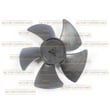
If you are troubleshooting airflow or temperature swings, the refrigerator evaporator fan motor WPW10128551 is one of the common wear items on this platform.
Why it matters
A refrigerator that runs longer to hold temperature uses more energy and puts extra stress on the compressor and fans. Simple maintenance and quick repairs usually cost far less than replacing a major cooling component.
Last updated: February 2026
What is the most common problem with a KitchenAid refrigerator?
For KitchenAid refrigerators like model KFCP22EXMP5, the most common service issues are ice maker and water system problems (no ice, slow fill, leaks) and cooling complaints (warm fridge, temperature swings) caused by airflow, drainage, or water-supply components. Use the KFCP22EXMP5 owner's manual to confirm your feature set and troubleshooting steps.
Most common symptoms we see
- Ice maker not making ice or making small/hollow cubes
- Water leaking under the refrigerator or inside the fresh food section
- Fridge section warm but freezer still cold (airflow issue)
- Unusual fan noise, rattling, or buzzing
- Frost buildup on the freezer back wall (defrost or airflow restriction)
Quick checks before replacing parts
- Confirm temperatures: set fridge to about 37°F and freezer to about 0°F.
- Check airflow: make sure vents are not blocked by food packages.
- Inspect door sealing: look for gaps, wrinkles, or doors that do not close firmly.
- Look for drain issues: water under crisper drawers often points to a clogged/iced drain.
- Verify water supply (if equipped): shutoff valve fully open; no kinks in the supply line.
Parts that commonly solve these problems on KFCP22EXMP5
| Symptom | Likely area | Example part for this model |
|---|---|---|
| No ice, slow ice, leaking at back | Water fill system | Refrigerator water inlet valve assembly WPW10420083 |
| Warm fridge, fan noise, poor airflow | Evaporator fan system | Refrigerator evaporator fan motor WPW10128551 |
| Water pooling inside | Defrost drain path | Refrigerator drain tube kit W10619951 |
| Door not sealing, moisture, temp swings | Door seal | Refrigerator door gasket (gray) W10830046 |
Why it matters
Ice maker, leaking, and temperature fluctuation complaints often share the same root causes: restricted airflow, poor door sealing, or water system restrictions. Fixing the underlying cause protects food quality, reduces frost buildup, and helps the compressor run normally.
Helpful DIY guidance
- For filter-related water and ice issues, follow how to replace the water filter in a KitchenAid refrigerator.
- For airflow and noise issues, use how to fix your evaporator cooling fan.
Last updated: February 2026