Owner’s manual
 Error Codes


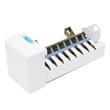
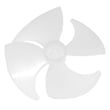

Can I replace fridge parts myself?
Yes, for Amana model ASI2175GRS01, we can replace many common refrigerator parts ourselves (bins, switches, ice maker components, and some water system parts) as long as we disconnect power first and follow the safety steps in the ASI2175GRS01 owner's manual. For sealed-system repairs (compressor, refrigerant lines), we use a professional.
These repairs are typically DIY-friendly with basic tools:
- Door bins and shelf rails (cosmetic and storage parts)
- Door and light switches (simple electrical parts)
- Ice maker and ice container components
- Water inlet valve and water tubing (if you can access the rear of the unit)
- Evaporator fan motor or fan blade (if you are comfortable removing interior panels)
The manual’s safety guidance is clear: disconnect power before servicing, use a grounded outlet, and avoid extension cords. We also shut off the water supply before opening any water line.
- Unplug the refrigerator (or switch off the breaker)
- Turn off the household water supply to the refrigerator (if equipped)
- Wear cut-resistant gloves around sheet metal edges
- Take photos of wire connectors and tubing routing before removal
- Reinstall all panels and covers before restoring power
If you are troubleshooting, these model-matched parts are common fixes:
| Symptom | Common DIY checks | Part that may be involved |
|---|---|---|
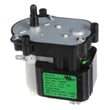
| No ice or small cubes | Water supply on, line not kinked, filter not clogged | Refrigerator water inlet valve WPW10179146 |
| Warm fridge/freezer, noisy fan | Fan blade clear of ice, fan runs with door switch pressed | Refrigerator evaporator fan motor WP2315549 |
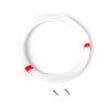
| Water dispenser weak or sputtering | Purge air, check tubing connections for leaks | Refrigerator water tube W10823511 |
Some repairs are higher risk or require specialized equipment.
- Compressor replacement or any sealed-system work
- Refrigerant leaks or brazing/soldering on refrigerant lines
- Repeated breaker trips or burning smell from wiring
DIY repairs can save time and money, but doing the correct safety steps (power off, water off, panels reinstalled) prevents electric shock, leaks, and repeat failures.
Last updated: February 2026
How do I tell how many cubic feet my refrigerator is?
For your Amana ASI2175GRS01 side-by-side refrigerator, the most reliable way to tell cubic feet is to calculate the usable interior volume: measure the inside height, width, and depth (in inches), multiply them, then divide by 1,728 to convert cubic inches to cubic feet. For model-specific capacity details, check the ASI2175GRS01 owner's manual.
- Empty enough space to measure the interior walls accurately.
- Measure interior width, interior height, and interior depth in inches.
- Multiply:
width x height x depth = cubic inches. - Divide by 1,728 to convert to cubic feet.
- Repeat for both compartments (fresh food and freezer) if you want a more detailed estimate.
- Add the two results together for total approximate capacity.
If an interior section measures 18 in (W) x 60 in (H) x 16 in (D):
| Measurement | Value (inches) |
|---|---|
| Width | 18 |
| Height | 60 |
| Depth | 16 |
| Cubic inches | 17,280 |
| Cubic feet (divide by 1,728) | 10.0 |
For the most useful number, we measure the usable space:
- Measure to the interior liner walls, not the door bins.
- Ignore small curves and molded corners; measure the “box” space.
- If shelves and drawers block your tape, measure around them or remove one shelf temporarily.
- If you want a “real-world” estimate, subtract space taken by bulky components (like the ice bin area).
Cubic feet helps us match the right refrigerator parts and accessories (like bins and shelves), and it also helps when comparing storage capacity between side-by-side refrigerator models.
Last updated: February 2026
How often should I replace my Amana refrigerator water filter?
For Amana model ASI2175GRS01, we recommend replacing the refrigerator water filter at least every 6 months, or sooner if the filter status light turns red or water flow to the dispenser or ice maker drops noticeably. See the steps in the ASI2175GRS01 owner's manual.
- Replace every 6 months for normal use.
- Replace when the filter status light turns red (on models with a status light).
- Replace sooner if water dispenses slowly or ice production drops.
- Replace after heavy sediment or noticeable taste and odor changes.
- If you use reverse osmosis, a clogged filter can reduce flow even more.
After installing the new filter, reset the filter status so the indicator tracks the next interval.
- Locate the reset function on the control panel.
- Press TEMP SETTING within 3 seconds to reset the filter status light.
- Dispense water to confirm normal flow and clear any air in the line.
Your ASI2175GRS01 needs adequate cold water pressure to run the dispenser and ice maker correctly.
| Check | What “good” looks like | What it suggests if it fails |
|---|---|---|
| Household water pressure | 30 to 120 psi | Supply issue or restriction |
| Flow test (filter removed) | 1 cup in 8 seconds or less | Low pressure to refrigerator |
| Reverse osmosis supply | 30 to 120 psi to the refrigerator inlet | RO system restriction or low feed pressure |
A timely water filter replacement helps protect water flow to the water dispenser and ice maker, which prevents small ice cubes, slow dispensing, and reduced ice production.
Last updated: February 2026
How old is my Amana refrigerator by serial number?
On Amana side-by-side refrigerator model ASI2175GRS01, you can date the unit from the serial number: the first 2 digits are the year it was built, and the next 2 digits are the week of that year. This gives you the manufacturing week and year, which is the best way to estimate age.
Most Amana refrigerators place the model and serial tag inside the fresh food compartment.
- Check the inside wall near the crisper drawers
- Check the side wall near the top shelf area
- Check the ceiling area inside the refrigerator compartment
- If the label is hard to read, take a photo and zoom in
For label location and identification details specific to your refrigerator, use the ASI2175GRS01 owner's manual.
Use this format:
- YYWWxxxx
- YY = year
- WW = week (01 to 52)
| Serial starts with | Interprets as | What that means |
|---|---|---|
| 1720 | Year 2017, week 20 | Built around mid-May 2017 |
| 2103 | Year 2021, week 03 | Built around mid-January 2021 |
| 2401 | Year 2024, week 01 | Built around early January 2024 |
Knowing the build week and year helps us match the correct refrigerator parts (like an ice maker assembly, water inlet valve, or electronic control) and it also helps when comparing symptoms to typical wear items such as door gaskets and evaporator fan components.
Last updated: February 2026
What are the most commonly replaced parts in a refrigerator?
In the Amana ASI2175GRS01 side-by-side refrigerator, the most commonly replaced parts are the ones that handle water flow, airflow, defrosting, and door sealing. These parts wear out from normal use, mineral buildup, and temperature cycling, and they are also the first places we check when cooling or dispensing problems start.
These are the parts we see replaced most often on side-by-side refrigerators like the ASI2175GRS01:
- Water filter and filter housing components (low flow, bad taste, slow ice production)
- Water inlet valve (no water to dispenser, no ice, leaking)
- Ice maker and ice storage components (no ice, small cubes, jams)
- Evaporator fan motor and fan blade (warm fridge, uneven temps, noisy operation)
- Defrost heater and related defrost parts (frost buildup, warm freezer, poor airflow)
- Door gaskets and door switches (sweating, frost, lights not working correctly)
- Electronic control board (erratic temps, fans not running, intermittent operation)
For model-specific procedures and safety steps (like disconnecting power before service), follow the ASI2175GRS01 owner's manual.
Here are several high-frequency replacements that match this model’s parts list:
| Symptom | Common part to check | Example for ASI2175GRS01 |
|---|---|---|
| No water or weak water flow | Water inlet valve | Refrigerator water inlet valve WPW10179146 |
| No ice or intermittent ice | Ice maker assembly | Refrigerator ice maker assembly WPW10300022 |
| Warm refrigerator section | Evaporator fan motor | Refrigerator evaporator fan motor WP2315549 |
| Frost buildup on back wall | Defrost heater | Refrigerator defrost heater WPW10495967 |
These components do the most work and see the harshest conditions:
- Water parts handle mineral-heavy water and pressure changes
- Fan and defrost parts run in cold, damp areas where ice can bind moving parts
- Door seals and switches get stressed by frequent opening and closing
- Controls manage multiple loads (compressor, fans, defrost) and can fail after power events
Replacing the right “high-failure” part first saves time and prevents food spoilage. For example, a weak water dispenser often points to a filter or valve issue, while frost buildup often points to a defrost or airflow problem.
Last updated: February 2026
What is the average lifespan of an Amana refrigerator?
Most Amana refrigerators, including the Amana ASI2175GRS01 side-by-side refrigerator, typically last 10 to 15 years. We see longer life when basic care is consistent, especially keeping airflow clear and maintaining good door sealing so the compressor does not have to run excessively.
- Condenser coil cleanliness (dust buildup raises run time and heat)
- Door gasket condition (air leaks cause temperature swings and frost)
- Room temperature and ventilation (hot rooms increase compressor workload)
- Water and ice system health (valves, lines, and ice maker issues can create leaks or icing)
- Fan performance (poor airflow stresses the sealed system)
- Vacuum and brush the condenser area regularly.
- Confirm doors close firmly; clean the gasket and check for gaps.
- Keep vents inside the refrigerator and freezer unblocked.
- Replace the water filter on schedule and flush the dispenser after changes.
- If you hear abnormal fan noise or warm spots, address airflow issues early.
| Component | Typical lifespan | What failure looks like |
|---|---|---|
| Compressor (sealed system) | 10 to 15 years | Warm fridge/freezer, long run times |
| Evaporator fan motor | 5 to 10 years | Warm freezer, weak airflow, noise |
| Ice maker assembly | 5 to 10 years | No ice, small cubes, leaking/overflow |
| Water inlet valve | 5 to 10 years | No water/ice, slow fill, dripping |
A refrigerator usually reaches end-of-life because one stressed system (airflow, sealing, or cooling) forces the compressor to run harder and longer. Keeping temperatures stable and airflow clear is the simplest way to protect the most expensive components.
For model-specific care and cleaning guidance, follow the ASI2175GRS01 owner's manual.
Last updated: February 2026
What is the most common problem in the refrigerator?
In the Amana ASI2175GRS01 side-by-side refrigerator, the most common problems we see are cooling complaints caused by airflow restrictions (blocked vents), doors not sealing, or normal-but-long run times that feel like a failure. Power supply issues and warm-room conditions also commonly trigger “not cooling” symptoms; see the ASI2175GRS01 owner's manual troubleshooting section for model-specific checks.
- Doors not closed or not sealing: temperatures rise, frost or moisture, compressor runs longer.
- Air vents blocked by food: warm spots in the refrigerator section.
- New installation or recent temperature changes: needs up to 24 hours to cool fully.
- Warm room or frequent door openings: longer run times (often normal on efficient models).
- Water and ice symptoms (separate from cooling): slow water, no ice, or leaks can point to the inlet valve or tubing.
- Confirm the unit is plugged into a grounded 3-prong outlet (no extension cord).
- If it will not run, test the outlet with a lamp; reset the breaker if needed.
- Make sure both doors close easily and the gaskets contact the cabinet all the way around.
- Clear packages away from interior vents so cold air can circulate.
- After any control change, recheck temperatures in 24 hours (colder settings do not cool faster).
| Symptom | Most common cause | What to do next |
|---|---|---|
| Refrigerator too warm | Doors opened often, poor seal, vents blocked | Reduce openings, check seal, clear vents |
| Runs “all the time” | Energy-efficient compressor, warm room, heavy use | Verify temps, improve airflow, allow 24 hours |
| No water or no ice | Water supply issue or valve problem | Follow how to diagnose a faulty refrigerator water inlet valve |
| No ice production | Ice maker issue | Inspect/replace refrigerator ice maker assembly WPW10300022 |
Most “refrigerator problems” are really airflow, door seal, or setup conditions. Fixing those first prevents unnecessary part replacement and helps the compressor and fans maintain stable temperatures efficiently.
Last updated: February 2026