Installation guide
 Owner’s manual


Is it worth fixing a KitchenAid dishwasher?
Yes, it’s usually worth fixing a KitchenAid dishwasher like model KDFE104DSS2 when the failure is limited to one repairable system (drain, fill, door latch, or a door leak) and the tub and racks are still in good condition. Dishwashers typically last 10 to 15 years, so a targeted repair often makes financial sense.
How we decide on KDFE104DSS2
Use these practical checks before you commit to a repair:
- The dishwasher still cleans well when it runs, but has one clear symptom.
- The stainless steel tub and inner door liner are not damaged.
- The issue matches a common troubleshooting path in the KDFE104DSS2 owner’s manual.
- You are not seeing multiple unrelated problems at the same time.
- The repair cost is reasonable compared with replacing the dishwasher.
Common “worth fixing” problems on this model
If your symptom matches one of these, repair is often straightforward:
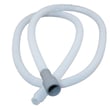
- Won’t drain: check for a clog first; a failed pump is a common cause. Consider the dishwasher drain pump WPW10348269.
- Won’t fill: confirm the shutoff valve is on and water is hot (the install guide calls for 120°F water at the dishwasher); if it still won’t fill, consider the dishwasher water inlet valve W11175771.
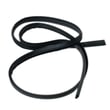
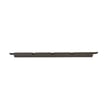
- Leaks at the door: inspect the gasket for tears, flattening, or gaps; the dishwasher door seal W11177741 is a typical fix.
- Won’t start or stops when you close the door: a worn latch can cause intermittent starting; consider the dishwasher door latch WPW10653840.
Repair vs replace: quick comparison
| What you’re seeing on KDFE104DSS2 | Usually repair | Usually replace |
|---|---|---|
| One clear failure (drain, fill, latch, door seal) | Yes | No |
| Multiple major symptoms at once | Sometimes | Often |
| Repeated breakdowns in a short period | Sometimes | Often |
| Tub damage or severe rack deterioration | No | Yes |
Why it matters
KDFE104DSS2 uses longer, more efficient cycles (the manual notes typical cycle time is about 2 1/2 hours, and some options can run longer). Fixing a single failed part can restore normal cleaning and drying without the cost and disruption of replacement.
Last updated: January 2026
What is the average lifespan of a KitchenAid dishwasher?
KitchenAid dishwashers typically last 10 to 14 years. For your KitchenAid KDFE104DSS2, regular filter cleaning, correct detergent use, and avoiding leaks are the biggest factors that help you reach (or beat) that average lifespan.
What affects lifespan the most
- Water quality: hard water can cause mineral buildup on spray arms, filters, and the heating system
- Maintenance habits: cleaning the filter system and interior reduces strain on the pump and motor
- Loading and detergent: overloading and using the wrong detergent can reduce cleaning performance and increase wear
- Drying choices: using rinse aid and heated drying options can reduce moisture-related issues
- Small leaks: even minor door seal leaks can lead to bigger problems over time
Maintenance schedule we recommend
Use this as a simple baseline for KDFE104DSS2 care; adjust more often if you have hard water or heavy use.
| Task | Typical frequency | Why it helps |
|---|---|---|
| Rinse and clean filters | Every 1 to 4 weeks | Prevents gritty dishes and protects circulation/drain flow |
| Check spray arms for clogs | Monthly | Keeps wash pressure strong and consistent |
| Run a dishwasher cleaner cycle | Monthly | Reduces odor and mineral/film buildup |
| Inspect door sealing surfaces | Monthly | Helps prevent leaks and protects the tub area |
For model-specific cleaning and operating guidance (including filtration and drying tips), follow the steps in the KDFE104DSS2 user manual.
Parts that commonly impact performance as the unit ages
If you start seeing symptoms like poor draining, standing water, or leaks, these are common wear items to inspect on this model:
- Dishwasher drain pump WPW10348269 (helps push water out during drain)
- Dishwasher door seal W11177741 (prevents water from leaking around the door)
- Element assembly W10703867 (supports water heating and heated drying)
Why it matters
Knowing the typical 10 to 14 year lifespan helps you decide whether a repair is worth it. If your KDFE104DSS2 is within that range, routine maintenance and replacing a few key parts can often restore cleaning and drying performance without replacing the whole dishwasher.
Last updated: January 2026
What is the most common problem with the KitchenAid dishwasher?
On the KitchenAid KDFE104DSS2 dishwasher, the most common day-to-day problem is poor cleaning (food left on dishes). In our experience, it is usually caused by a dirty filter area, blocked spray-arm holes, or loading that prevents the spray arms from spinning freely; door leaks are another frequent issue.
What to check first (fast fixes)
These items cause the biggest performance drop on KDFE104DSS2:
- Clean the filtration area and remove debris from the sump (labels, bones, toothpicks).
- Make sure both spray arms spin freely and the spray holes are clear.
- Run hot water at the sink nearest the dishwasher until it is hot before starting.
- Use fresh automatic dishwasher detergent; tablets/packs often reduce filming.
- Use rinse aid to improve drying and reduce spots.
For model-specific filtration and loading guidance, follow the steps in the KDFE104DSS2 user manual.
When it is likely a part problem
If cleaning or leaking continues after the checks above, these parts are common suspects:
- Leaking at the door: inspect for tears, flattening, or gaps in the seal (see dishwasher door seal W11177741).
- Not draining well (standing water, gritty dishes): check for clogs; a weak pump can contribute (see dishwasher drain pump WPW10348269).
- Spray arm damage: if a spray arm is cracked, warped, or won’t stay seated, match the replacement to your model’s parts diagram; KDFE104DSS2 uses more than one spray arm style depending on location (for example, dishwasher spray arm WPW10448645 is one compatible option).
What is “normal” cycle time on this model?
KDFE104DSS2 is designed to run longer cycles to save water and energy.
| Cycle behavior | What you may see | What it usually means |
|---|---|---|
| Normal cycle time | About 2 1/2 hours | Typical operation |
| Longer cycles | Up to about 3 1/2 hours | Options selected, heavier soil, sensor adjustments |
| First run after install/power loss | Longer than usual | Sensor calibration can extend time |
Why it matters
This model’s filtration system and spray coverage work best when the filters are clean and the spray arms are unobstructed. When either is restricted, wash quality drops quickly and can look like a pump or motor failure.
Last updated: January 2026