Installation guide
 Owner’s manual
 Error Codes



How to tell if a dryer idler pulley is bad?
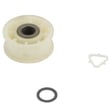
On Kenmore dryer model 11061632611, a bad idler pulley usually shows up as a squeal or chirp while the drum turns, intermittent tumbling, or a belt that slips. When you spin the pulley by hand (with power disconnected), it should turn smoothly and quietly without wobble.
What you’ll notice during a cycle
- High-pitched squealing or chirping that gets worse as the dryer runs
- Drum stops turning but you still hear the motor running (belt not being tensioned)
- Burning rubber smell (belt slipping on the drum or pulley)
- Dryer shuts down after a short run if friction and heat build up
- Noise changes when you press lightly on the front panel (load shifts the drum)
Quick inspection checklist (power off)
Use the steps in the 11061632611 owner’s manual to safely access service areas and confirm basic operation checks.
- Unplug the dryer (electric dryers use 240V or 208V supply)
- Remove the front or lower access panel as outlined for your configuration
- Locate the idler pulley near the motor and belt path
- Spin the pulley: it should rotate freely with light, even resistance
- Check for wobble, grinding, flat spots, cracks, or melted plastic
- Check belt tracking: the belt should ride centered on the pulley
What “good” vs “bad” looks like
| Check | Good idler pulley | Bad idler pulley |
|---|---|---|
| Spin test | Smooth, quiet rotation | Grinding, squealing, or seized |
| Side-to-side play | Minimal | Wobbles or rocks |
| Surface condition | Even, round | Grooved, cracked, warped |
| Belt behavior | Stays aligned | Walks off, slips, or frays |
Parts that commonly get replaced together
If the idler pulley is worn, the belt and drum rollers are often worn too. Replacing the wear items together helps prevent repeat teardown.
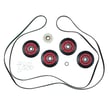
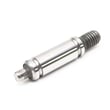
- Dryer idler pulley W10837240
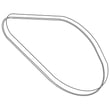
- Dryer drum belt, 4-rib W11568627
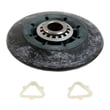
- Dryer drum support roller WPW10314173
- Dryer repair kit 4392067 (common bundled wear parts)
Why it matters
The idler pulley keeps proper belt tension. When it binds or wobbles, the belt can slip, overheat, or break, and the drum may stop turning even though the motor runs.
Last updated: January 2026
What is the lifespan of a Kenmore dryer?
A Kenmore electric dryer like model 11061632611 typically lasts 10 to 13 years. With consistent lint and vent cleaning, stable power, and prompt replacement of wear items (belt, rollers, idler pulley), many dryers reach 15 years or more.
Typical lifespan and what affects it
Most dryer life comes down to heat management, airflow, and drum support wear.
- Vent restriction (long runs, crushed duct, lint buildup) shortens life by overheating components
- Heavy loads and overloading strain the drum belt, motor, and support rollers
- High-heat cycles used constantly increase wear on thermostats and fuses
- Poor cabinet leveling can accelerate roller and drum wear
- Delayed repairs (squeals, thumps, burning smell) often lead to bigger failures
Maintenance that extends dryer life
Use the care and cleaning guidance in the 11061632611 owner’s manual and follow these habits.
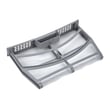
- Clean the lint screen every load; replace a torn or warped screen such as the dryer lint screen (white) W10859086
- Check airflow at the outside vent hood; strong flow means safer operating temperatures
- Clean the vent duct at least yearly (more often with long vents or pets)
- Avoid overloading; dry similar fabrics together for shorter run times
- Stop using the dryer if it overheats or shuts off; inspect venting and safety devices
Wear parts that commonly determine “end of life”
If the dryer still heats and runs but is noisy or stops tumbling, replacing wear parts often restores years of service.
| Symptom | Common wear area | Example part for 11061632611 |
|---|---|---|
| Squealing or rumbling | Drum support rollers | Dryer drum support roller WPW10314173 |
| Thumping, drum not turning | Drum belt | Dryer drum belt, 4-rib W11568627 |
| Squeal, belt slipping | Idler pulley | Dryer idler pulley W10837240 |
Why it matters
A dryer that runs hot or struggles to move air wears out heating and safety components faster, increases dry times, and can lead to repeated shutdowns. Keeping airflow strong is the single best way to protect the motor, heater circuit, and drum support system.
Last updated: January 2026
How much to replace a dryer switch?
Replacing a switch on Kenmore electric dryer model 11061632611 costs the price of the switch plus labor if you hire service. Most repairs like this include a service call and 30 to 60 minutes of labor; the exact total depends on which switch is being replaced and how much disassembly is required.
What “dryer switch” usually means
Dryers can have more than one switch; confirming the exact switch keeps you from ordering the wrong part.
- Door switch: prevents the dryer from running with the door open.
- Start switch: sends the start signal when you press Start.
- Push-to-start button: part of the user interface on some models.
- Belt switch (some designs): stops the motor if the belt breaks.
Quick checks before paying for a switch replacement
These steps often pinpoint whether the issue is a switch, power, or a different part.
- Make sure the door closes fully; the manual lists “door not closed completely” as a common no-run cause.
- Touch and hold START/PAUSE long enough to start the cycle (the manual notes it may require a press-and-hold).
- Verify power at the outlet; electric dryers commonly use two household fuses or breakers.
- If the dryer runs but shuts off early, check airflow and clean the lint screen.
Typical cost components (what you are paying for)
| Cost item | What it covers | Notes |
|---|---|---|
| Switch part | The replacement switch | Price varies by switch type and supplier |
| Labor | Diagnosis and installation | Access time drives labor time |
| Service call | Trip and basic diagnosis | Often charged even if you decline repair |
Why it matters
A failing door or start switch can cause a no-start condition that looks like a bigger problem. Confirming the exact switch and doing basic power and door checks helps you avoid unnecessary parts and repeat service calls.
For model-specific troubleshooting steps and control operation details, use the 11061632611 owner's manual.
Last updated: January 2026
How do I tell if my dryer heating element is bad?
If your Kenmore electric dryer model 11061632611 runs but won’t dry (no heat or very weak heat), the heating element circuit is a top suspect. We confirm it by checking airflow first, then doing a continuity/resistance test on the heater circuit with the dryer unplugged.
Quick signs the heating element circuit is failing
- Clothes stay damp after a full cycle, even on a heated setting
- Dryer tumbles normally but there is little to no heat
- Dry times suddenly get much longer
- “Check Vent” indicator comes on (often airflow-related, but it can lead to overheating and heat shutoff)
- Heat works sometimes, then stops mid-cycle
Step-by-step: what we check (in the right order)
- Verify power supply: Electric dryers need 240V (or 208V); if one leg is missing, the motor can run but the heater won’t. The troubleshooting section in the 11061632611 owner’s manual also notes that electric dryers typically use two household fuses/breakers.
- Rule out airflow problems: Clean the lint screen and confirm the vent run is not crushed, kinked, or packed with lint. Poor venting can cause overheating and open safety devices.
- Test the heater circuit (unplug dryer): Access the heater terminals and use a multimeter.
- Good element: shows measurable resistance (not “OL”/infinite)
- Bad element: shows open circuit (OL/infinite) or visible breaks/burns in the coil
What else can look like a “bad heating element”
If the element tests good, these parts commonly stop heat on this model family:
- Thermal fuse W10909685 (opens if the dryer overheats)
- Dryer thermistor WP8577274 (temperature sensing issues)
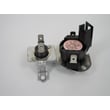
- Dryer high-limit thermostat WP8557403 (opens on overheating)
Fast comparison: symptoms vs likely cause
| What you see | Most likely cause | What to do next |
|---|---|---|
| Drum turns, no heat at all | Power issue or open heater circuit | Check 2 breakers, then meter-test heater circuit |
| Heat starts then stops | Vent restriction or high-limit opening | Clean venting, then test thermostat/fuse |
| “L2” code (low/no line voltage) | Home power supply problem | Follow checks in the 11061632611 installation guide |
Why it matters
A restricted vent can overheat the dryer and repeatedly open safety devices, which can mimic a failed heating element and shorten the life of parts like the thermal fuse and high-limit thermostat.
Last updated: January 2026