Installation guide
 Owner’s manual
 Error Codes


How do I tell what model KitchenAid dishwasher I have?
To tell what model KitchenAid dishwasher you have, open the door and look for the rating label on the inside edge of the tub or door frame. On your KitchenAid undercounter dishwasher, that label lists the model number (for example, KUDS35FXBL8) and the serial number.
Check these common rating-label locations first:
- Inside the door, along the left or right side of the inner frame
- On the tub rim (the top edge of the tub opening)
- Near the hinge area (still inside the door opening)
- Behind the lower access panel (kickplate) on some installations
For diagrams and model-specific details, use the KUDS35FXBL8 installation guide.
Record both numbers exactly as shown:
- Model number: identifies the exact design and parts list
- Serial number: helps match production changes and correct replacement parts
- Brand: KitchenAid (useful when searching manuals and parts)
| Item | What it’s used for | Example format |
|---|---|---|
| Model number | Correct parts and diagrams | KUDS35FXBL8 |
| Serial number | Version and production info | Letters and numbers |
KitchenAid dishwashers can look similar across multiple model series, but parts like a door seal, drain pump, or electronic control can vary by model and production run. Using the exact model number prevents ordering the wrong dishwasher parts.
Last updated: February 2026
What's the average lifespan of a KitchenAid dishwasher?
A KitchenAid dishwasher typically lasts 10 to 14 years with normal household use. For your KitchenAid KUDS35FXBL8 undercounter dishwasher, consistent cleaning, proper loading, and fixing small issues early are what most often determine whether it reaches the high end of that range (or beyond). See the KUDS35FXBL8 owner's manual for model-specific care and operating guidance.
- Water quality: hard water speeds up mineral buildup on the heater and internal parts.
- Maintenance habits: keeping the filter area and spray paths clear reduces strain on the wash system.
- Detergent and rinse aid use: rinse aid improves drying and helps control deposits.
- How often you run it: multiple loads daily generally shortens life compared to light use.
- Door sealing and alignment: leaks and rubbing doors can lead to corrosion and repeated repairs.
- Use rinse aid regularly for better drying and fewer hard-water deposits.
- Run hot water at the sink before starting a cycle so the dishwasher fills with hotter water.
- Keep the bottom area clear of labels, glass, and food bits that can reach the pump.
- Avoid overloading; make sure spray arms can rotate freely.
- If you notice leaking at the door, inspect and replace the dishwasher door seal W11177741 when it’s worn.
| Usage pattern | Typical expectation | What usually fails first |
|---|---|---|
| Light (few loads/week) | 12 to 15 years | Racks, seals, minor leaks |
| Average (1 load/day) | 10 to 14 years | Drain pump, heater, door seals |
| Heavy (2+ loads/day) | 7 to 12 years | Wash system, pumps, controls |
Dishwashers often start showing “end-of-life” symptoms gradually (longer cycles, poorer drying, intermittent draining). Staying ahead of buildup and leaks helps protect major components like the motor, heater, and electronic control, which are the most expensive repairs.
Last updated: February 2026
What is the most common problem with a KitchenAid dishwasher?
The most common KitchenAid dishwasher problems (including model KUDS35FXBL8) are poor cleaning, not draining, and leaking. In day-to-day repairs, we most often see these symptoms traced to a clogged filter/sump area, a restricted drain path, or a worn door seal rather than a major control failure.
- Dirty dishes or grit left behind: check spray arms for debris and confirm the filter/sump area is clear.
- Standing water in the bottom: check the sink/disposer connection, drain hose routing, and the drain pump.
- Water leaking at the door: inspect the door gasket and the lower door seal for tears, flattening, or gaps.
- Won’t start or stops mid-cycle: confirm the door latches fully, power is on, and water supply is turned on.
- Long cycle times: many newer-style dishwashers commonly run 2 to 3 hours per load as part of normal operation.
| Symptom | Most likely area | Common related part for this model |
|---|---|---|
| Not draining, water remains | Drain path or pump | Dishwasher drain pump WPW10348269 |
| Leaks at the door | Door sealing surfaces | Dishwasher door seal W11177741 and dishwasher door seal, lower WPW10497235 |
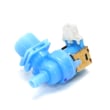
| Overfills or won’t fill correctly | Float or inlet system | Dishwasher float switch WPW10195039 or dishwasher water inlet valve WPW10327249 |
Dishwashers rely on steady water flow, correct draining, and a tight door seal. A small restriction (food debris, kinked hose, loose clamp) can cause big symptoms like poor wash results, standing water, or leaks.
These installation-related issues can look like “dishwasher problems” even when the dishwasher is fine:
- Verify the water connection is snug and not leaking at the elbow fitting.
- Confirm the drain hose connection is fully seated and clamped.
- Make sure the dishwasher is centered and level so the door closes without rubbing.
- Run a short cycle and confirm there is water in the tub after the first couple minutes.
For model-specific setup and operation checks, use the KUDS35FXBL8 installation guide and your KUDS35FXBL8 owner's manual.
Last updated: February 2026
How to fix rubber seal on KitchenAid dishwasher?
On KitchenAid dishwasher model KUDS35FXBL8, a “rubber seal” problem is usually a door gasket that has pulled out of its channel or a lower door seal that is worn. We fix it by cleaning the channel, pressing the seal in evenly, and confirming the door closes without rubbing.
- Turn off power at the breaker and open the door.
- Inspect the seal for twists, tears, or hardened sections.
- Clean the tub lip and seal channel with warm water and mild detergent; dry fully.
- Starting at the top center, press the gasket into the channel using your fingers, working evenly down both sides.
- Close and latch the door for several hours so the gasket “sets” into position.
- Run a short cycle and check for drips along the corners and bottom edge.
Replace the seal if you see any of the following:
- Cracks, splits, or missing chunks
- Flattened areas that no longer spring back
- Persistent leaks after reseating
- Moldy odor that returns quickly after cleaning
| Leak location | Most likely seal | What you’ll notice |
|---|---|---|
| Around sides/top | Door gasket (door seal) | Drips at corners, steam escaping |
| Along bottom edge | Lower door seal | Water line on inner door, puddle at toe-kick |
For KUDS35FXBL8, the door gasket is commonly replaced as the dishwasher door seal W11177741. If the leak is only at the very bottom of the door, the dishwasher door seal, lower WPW10497235 is the more likely fix.
A properly seated door gasket keeps wash pressure inside the tub, prevents leaks onto the floor, and helps the dishwasher dry better. A seal that is pinched or out of position can also make the door feel harder to latch.
- Confirm the dishwasher is level and centered in the cabinet opening (door alignment affects sealing); see the installation guide.
- Make sure racks are not pushing the door inward.
- Check for debris on the tub lip where the gasket contacts.
Last updated: February 2026