


Is there a filter that needs to be cleaned in a Whirlpool dishwasher?
Yes. Whirlpool dishwashers, including model DU915PWPB0, use a filter area at the bottom of the tub to help trap food soil so it does not redeposit on dishes; cleaning it regularly helps prevent poor cleaning, odors, and drain issues.
On most Whirlpool-built dishwashers, the filter system is in the sump area on the tub floor, typically under or near the lower spray arm. Depending on the design, it may be a removable filter assembly or a self-cleaning screen that still benefits from periodic inspection.
- Turn off power at the breaker before reaching into the sump area.
- Pull out the lower rack for access.
- Look around the lower spray arm base for a twist-lock filter, screen, or cover.
- Remove any visible debris (labels, glass, bones, seeds).
- Rinse the filter or screen with warm water; use a soft brush if needed.
- Reinstall everything fully seated so the spray arm spins freely.
Most households do best with a quick inspection monthly and a deeper clean every 1 to 3 months, especially if you run heavy loads, wash lots of starchy foods, or notice grit left on glasses.
| Usage pattern | Inspect | Clean |
|---|---|---|
| Light use (few loads/week) | Monthly | Every 3 months |
| Average use (daily) | Every 2 to 4 weeks | Every 1 to 2 months |
| Heavy soil / hard water | Every 1 to 2 weeks | Monthly |
A clogged filter or sump screen restricts water flow to the wash pump and spray arms. That can cause poor cleaning, standing water, and extra strain on the pump motor.
If you find leaks or poor wash action while you are cleaning the sump area, these model-matched parts are commonly involved:
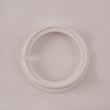
- Dishwasher lower spray arm seal WP3376846 (seal at the lower spray arm area)
- Dishwasher spray arm WP8268874 (spray arm that can clog or crack)
- Dishwasher drain hose WP3374077 (drain path that can trap debris)
For control lockups or odd behavior after a jam or overflow, use our reset steps in how to reset a Whirlpool dishwasher.
Last updated: February 2026
What model of Whirlpool dishwasher do I have?
Your Whirlpool dishwasher’s model number is printed on the rating label inside the door. Open the door on your dishwasher and look along the inner door frame (commonly on the left side); the label lists the model number and serial number you need for parts and troubleshooting.
- Open the dishwasher door fully.
- Check the inner door frame first (often the left side).
- Also scan the top edge of the tub opening and the right side of the frame.
- Look for a sticker or metal tag that says Model and Serial.
- Write the model number exactly as shown (letters and numbers).
Finding the exact model number lets us match the correct Whirlpool parts and diagrams. For example, if your label shows DU915PWPB0, you are on the right parts list for that model.
| You need | What to copy from the label | Why it matters |
|---|---|---|
| Model number | Example: DU915PWPB0 | Ensures the right parts fit your dishwasher |
| Serial number | A mix of letters and numbers | Helps confirm production series for some parts |
- Wipe the label gently with a damp cloth and mild dish soap; dry it.
- Use your phone camera and zoom in, or take a photo with flash.
- If the label is damaged, compare your dishwasher’s visible parts to the parts list (door latch, racks, spray arm) to narrow it down.
Whirlpool dishwashers can look similar across model families, but parts like the door seal, latch, and inlet valve can vary by model. Using the exact model number prevents ordering the wrong part and speeds up repair.
For common operation issues after you identify the model, we recommend starting with how to reset a Whirlpool dishwasher.
Last updated: February 2026
Why is my Whirlpool dishwasher leaking from the bottom?
On a Whirlpool dishwasher model DU915PWPB0, a bottom leak usually comes from a drain or fill issue (hose, inlet valve, float), or from water escaping the tub area during washing because of a spray-arm or pump-related problem. Start by pinpointing when the leak happens: fill, wash, or drain.
- Leak during fill: check the water inlet connection and the inlet valve area.
- Leak during wash: check spray-arm hardware and seals, and look for overspray or a loose component.
- Leak during drain: check the drain hose routing and clamps.
- Only leaks with heavy loads: check for items blocking the spray arm or causing water to deflect.
- Sudsy overflow: switch to dishwasher detergent only; too much soap can force water out the bottom.
If you see water collecting under the front kickplate or under the center of the unit, these model-matched parts are good starting points:
| Leak clue | Most likely area | Model-matched part to inspect |
|---|---|---|
| Water appears early in cycle | Fill system | Valve-inlt W10844024 |
| Water appears near door corners | Door sealing surface | Dishwasher door seal WPW10509257 |
| Water appears during drain | Drain path | Dishwasher drain hose WP3374077 |
| Water appears during wash, under tub | Spray-arm base hardware | Dishwasher lower spray arm seal WP3376846 |
- Turn off power at the breaker and shut off the water supply.
- Remove the toe panel (kickplate) and dry the base so you can spot fresh drips.
- Run a short cycle and watch with a flashlight for the first drip point.
- Check these common leak points:
- Inlet valve body and fittings
- Drain hose connection and routing (high loop)
- Lower spray arm mounting area and seal
- Door seal seating and debris along the sealing surface
A bottom leak can damage flooring and cabinets, and it can also lead to electrical issues if water reaches wiring or the junction box. Catching the source early usually keeps the repair limited to a hose, seal, or valve instead of larger components.
For control-related symptoms (beeping, flashing lights, cycle stopping), use our how to reset a Whirlpool dishwasher steps and then re-check for leaks during fill, wash, and drain.
Last updated: February 2026







