Installation guide
 Owner’s manual


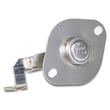
How to hard reset a Kenmore dryer?
To hard reset your Kenmore electric dryer model 11062822101, disconnect power to fully clear the control and restart the dryer: unplug the cord (or switch the breaker off), wait 1 to 5 minutes, then restore power and try a cycle again. See the 11062822101 owner's manual for normal start and restart steps.
Hard reset steps (power reset)
- Turn the dryer OFF.
- Unplug the dryer from the wall outlet (or turn OFF the circuit breaker).
- Wait 1 to 5 minutes.
- Plug back in (or turn the breaker ON).
- Select a cycle and press PUSH TO START firmly.
- Confirm the door is fully closed.
If it still will not start after a reset
A reset helps when the control is “stuck”, but it will not fix a failed switch, timer, or motor circuit. Use these quick checks from the startup basics in the manual.
- Make sure controls are set to a running or “On” position
- Press the Start button firmly
- Verify the dryer is plugged into a grounded outlet
- Check the house fuse/breaker
- Confirm the door closes and latches; a failed door switch can prevent starting (see dryer door switch WP3406107)
What a reset does (and does not do)
| Action | What it helps | What it will not fix |
|---|---|---|
| Hard reset (remove power) | Clears a temporary control glitch, restores normal response | Broken door switch, failed timer, open thermal fuse, bad motor |
| Normal restart (open/close door, press start) | Restarts a paused cycle | Power supply problems |
Why it matters
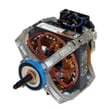
A proper hard reset is the fastest safe first step because it rules out a simple control lockup before you spend time testing parts like the door switch, timer, or drive motor.
Last updated: February 2026
How do I tell what model Kenmore dryer I have?
Your Kenmore dryer’s model number is printed on the model and serial number plate; for Kenmore model 11062822101, that plate is the official identifier we use to match the correct parts, wiring, and specifications. Record both the model and serial numbers before ordering parts or scheduling service.
Where to find the model and serial number plate
Check these common locations on Kenmore electric dryers:
- Inside the dryer door opening (on the cabinet frame)
- On the back panel of the dryer
- Near the lint screen housing area (depending on the design)
- On a metal plate or sticker labeled “Model No.” and “Serial No.”
For the exact location and how it’s labeled on your unit, use the 11062822101 owner’s manual.
How to read the number once you find it
Kenmore model numbers are typically a long string of digits. Use these tips to avoid ordering the wrong part:
- Copy the model number exactly as shown (no spaces)
- Copy the serial number exactly as shown
- Take a clear photo of the plate for reference
- Use the full model number, not just the first three digits (example: “110”)
- Match parts by model number first, then confirm by part name and part ID
Quick checklist
| What you see | What it means | What to do next |
|---|---|---|
| Model number (example: 11062822101) | Identifies the exact dryer design | Use it to look up diagrams and parts |
| Serial number | Identifies your specific unit | Keep it for service history and support |
Why it matters
Kenmore dryers can look similar across many years, but internal components (like the heating circuit, timer, or door switch) can differ. Using the correct model number helps us ensure the right fit and safe operation.
Last updated: February 2026
What is the average life of a Kenmore dryer?
Most Kenmore dryers, including the Kenmore 11062822101 electric dryer, typically last about 13 years with normal household use. Consistent airflow maintenance (lint screen and venting) is the biggest factor in reaching that lifespan and avoiding overheating-related breakdowns.
What affects dryer lifespan the most
Good airflow keeps temperatures stable, reduces strain on the heating system, and helps parts like thermostats and fuses last longer.
- Clean the lint screen before and after loads (especially new towels that shed more lint)
- Keep the exhaust vent and outside hood clear; restricted venting increases heat and run time
- Remove accumulated lint from the exhaust vent about every 2 years (more often with heavy use)
- Have lint removed from inside the cabinet about every 2 years (a qualified person should do this)
- Use the dryer where room temperature stays above 45°F for best performance
For the exact care schedule and safety guidance for this model, follow the 11062822101 owner's manual.
Quick maintenance checklist (what to do and how often)
| Task | Typical frequency | Why it helps |
|---|---|---|
| Clean lint screen | Every load | Prevents airflow restriction and overheating |
| Check vent airflow at outside hood | Monthly | Catches clogs early and shortens dry times |
| Clean full vent run (dryer to outside) | Every 2 years | Reduces heat stress and improves efficiency |
| Internal cabinet lint cleaning | Every 2 years (qualified service) | Helps prevent hot spots and nuisance shutdowns |
Why it matters
A dryer can keep running for years while slowly losing airflow. That usually shows up as longer dry times, hotter cabinet temperatures, and more wear on heat and safety components such as the heating element and thermal cut-off.
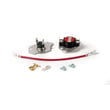
If you are already seeing long dry times or no-heat symptoms, common wear items on this model include the dryer element 279838 and the dryer thermal cut-off fuse kit 279816.
Last updated: February 2026
What is the error code f01 on Kenmore Elite Smartheat quiet Pak 4?
On Kenmore electric dryers like model 11062822101, an F01 code points to a failed temperature-sensing circuit, most often the thermistor (the dryer reads an out-of-range temperature signal and stops). Fixing it typically involves checking wiring connections and replacing the failed sensor or control.
What to do first (safe, fast checks)
- Unplug the dryer (or switch off the breaker) before removing any panels.
- Reset the dryer by disconnecting power for 2 minutes, then retry a cycle.
- Confirm the door fully closes and the drum turns freely.
- Check the exhaust vent for restriction; overheating and poor airflow can trigger temperature-related faults.
- Inspect visible wire connectors for looseness or heat damage.
Parts that commonly relate to temperature and overheating
Even when the code is triggered by a sensor signal, we always check the overheat protection parts and airflow because they can cause repeat failures.
| Symptom with F01 | Most likely area | What we check/replace |
|---|---|---|
| Code appears soon after start | Sensor circuit | Thermistor wiring, control connections |
| Dryer runs but shuts down hot | Overheat protection | Thermal cut-off, high-limit thermostat |
| Long dry times, very hot cabinet | Airflow restriction | Venting, blower wheel, lint buildup |
If you suspect overheating protection opened, the Dryer thermal cut-off fuse kit 279816 is a common repair item on this platform.
Airflow and installation items that prevent repeat problems
A restricted vent is the #1 reason dryers overheat and damage thermostats, fuses, and wiring.
- Use the straightest vent route possible with the fewest elbows
- Avoid sharp 90° turns and crushed flex vent
- Do not use screws that protrude into the vent duct
- Make sure the vent terminates outdoors (especially important for mobile home setups)
For venting rules and installation clearances, follow the 11062822101 installation guide.
Why it matters
The dryer’s temperature sensing protects fabrics and prevents overheating. When the thermistor circuit reads incorrectly, the dryer can stop mid-cycle, overheat, or dry poorly. Correcting airflow and the temperature-sensing components restores normal heat control.
Last updated: February 2026
How much does it cost to replace a temperature sensor on a dryer?
On Kenmore electric dryer model 11062822101, replacing a temperature-sensing component typically runs $20 to $60 for the part plus $100 to $250 for labor. Most installed repairs land around $120 to $310, depending on which temperature-control part is replaced.
What “temperature sensor” usually means on this Kenmore dryer
Many Kenmore 110-series dryers use thermostats and thermal cutoffs for temperature control and safety rather than a single probe-style sensor.
- Operating thermostat: cycles heat on and off
- High-limit thermostat: shuts heat down if it overheats
- Thermal cut-off: opens if temperatures get dangerously high
- Heating element: not a sensor, but a common no-heat cause
For part locations and access panels, use the 11062822101 owner's manual.
Typical cost breakdown
| Cost item | Typical range | What affects it |
|---|---|---|
| Part only | $20 to $60 | Thermostat vs. cutoff kit |
| Diagnosis/service call | $80 to $150 | Local rates, trip charge |
| Labor | $100 to $250 | Disassembly time, vent access |
| Total installed | $120 to $310 | Most common overall range |
Checks that prevent repeat failures
Airflow problems often mimic a “bad sensor” and can overheat the dryer.
- Clean the lint screen and housing
- Confirm strong airflow at the outside vent hood
- Replace crushed or kinked venting with rigid or flexible metal vent
- Verify the dryer is level (sensor cycles can act up when unlevel)
- Confirm room temperature stays above 45°F (7°C) for proper automatic-cycle operation
Common temperature-related parts for heat complaints
If the dryer runs but heat is weak, inconsistent, or stops:
- Consider the dryer thermal cut-off fuse kit 279816 after an overheat event
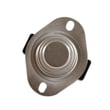
- Consider the dryer operating thermostat WP3387134 for poor cycling temperatures
- Consider the dryer high-limit thermostat WP3977767 if overheating protection trips
Why it matters
Correcting venting and airflow protects the new thermostat or thermal cut-off from overheating again, improves dry times, and helps prevent no-heat conditions.
Last updated: February 2026