Owner’s manual
 Error Codes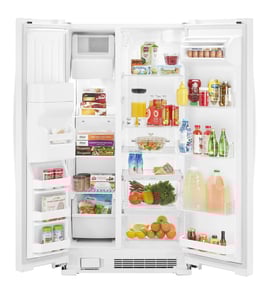


How many cubic feet is my Kenmore refrigerator model 10651782410?
Your Kenmore side-by-side refrigerator model 10651782410 is typically in the 25 to 26 cubic feet class. For the exact rated capacity for your specific color/trim variation, we recommend confirming it in the 10651782410 owner's manual.
We use the capacity listed on the model’s rating information (or in the specifications section of the manual). Check these common places:
- The specifications section in the 10651782410 owner's manual
- The model and serial tag inside the fresh food compartment (often on a side wall)
- Product literature that came with the refrigerator (spec sheet)
- If you have the original listing, look for “total capacity” or “cu. ft.”
Capacity is the total internal volume of the refrigerator and freezer compartments. Depending on where you look, you may see:
| Capacity term | What it includes | Why it matters |
|---|---|---|
| Total capacity | Refrigerator + freezer | Best for comparing overall size |
| Refrigerator capacity | Fresh food section only | Helps plan shelf and bin space |
| Freezer capacity | Freezer section only | Helps plan frozen storage |
Knowing the cubic feet helps us match the right replacement parts and accessories (like water filters, door bins, and ice storage components) and it also helps you compare storage space if you are planning a replacement.
Last updated: January 2026
What does er if mean on kenmore elite refrigerator?
On Kenmore model 10651782410 (side-by-side), ER IF means the refrigerator is detecting an ice maker fan (ice box fan) problem, most often a fan that is blocked by ice, not spinning, or has a wiring/control issue. This can reduce ice production and cause temperature issues around the ice bin.
- Power the refrigerator off at the breaker for 1 minute, then restore power (this can clear a temporary fault).
- Check the ice bin area for frost or ice buildup that could be rubbing the fan.
- Make sure the freezer door closes fully and the gasket seals all the way around.
- Confirm the vents near the ice box are not blocked by food packages.
- If you recently replaced a filter or shut off water, allow time for normal operation to resume.
| Likely cause | What you may notice | Typical fix |
|---|---|---|
| Fan blade hitting ice | Buzzing, clicking, or intermittent fan noise | Defrost ice buildup; improve door sealing |
| Failed fan motor | No airflow to ice box; warm ice bin area | Replace the fan motor |
| Loose connection or damaged wiring | Error comes and goes | Inspect/secure harness connections |
| Control not powering fan | Fan never runs even when it should | Diagnose control and fan circuit |
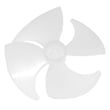
If you find the fan blade is damaged or wobbling, replacing the blade can restore airflow; see the refrigerator evaporator fan blade WP2169142.
That ice maker fan moves cold air to the ice storage area. When airflow drops, cubes can melt and refreeze into clumps, ice production slows, and the refrigerator may struggle to hold steady temperatures.
Use the 10651782410 owner's manual to locate the problem solver section and the care and cleaning steps that help prevent frost and airflow restrictions.
Last updated: January 2026
What is the average lifespan of 10651782410?
The average lifespan of the Kenmore 10651782410 side-by-side refrigerator is 13 years. Regular maintenance (clean airflow, good door sealing, and timely replacement of wear parts) helps it reach that service life with fewer cooling and ice maker problems.
- Condenser cleanliness: Dust buildup makes the compressor run hotter and longer.
- Door seal condition: Leaky gaskets cause longer run times and temperature swings.
- Airflow inside the cabinet: Don’t block vents with food; the manual notes airflow between freezer and fresh food sections is required.
- Defrost system health: A failed heater or bi-metal can lead to frost buildup and warm temperatures.
- Water and ice system upkeep: Mineral buildup and valve wear can shorten ice maker and dispenser reliability.
| Task | How often | Why it matters |
|---|---|---|
| Clean condenser area (coil and fan area) | Every 6 to 12 months | Reduces compressor stress and improves cooling efficiency |
| Check door closing and gasket seal | Every 3 to 6 months | Prevents moisture intrusion, frost, and warm spots |
| Replace air filter (if equipped) | Every 6 months | Helps control odors and keeps airflow fresher |
| Verify freezer temp (0°F) and fridge temp (37°F) | Monthly | Stable temps reduce ice maker and food spoilage issues |
If you’re troubleshooting poor cooling, noise, or frost buildup on this model, these are common culprits:
- Evaporator fan issues (air circulation problems): refrigerator evaporator fan motor WP2315549
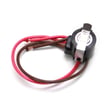
- Defrost failures (frosted evaporator, warm fridge): refrigerator defrost heater WPW10495967 and refrigerator defrost bi-metal WPW10225581
- Water and ice fill problems (no ice, slow fill): refrigerator water inlet valve WPW10341320
A refrigerator that runs longer to hold temperature uses more energy and puts extra wear on the sealed system (compressor, evaporator, condenser). Simple upkeep and early part replacement typically prevent the expensive failures that end a refrigerator’s life early.
For model-specific operating and care details, follow the maintenance and airflow guidance in the owner's manual.
Last updated: March 2026