Owner’s manual


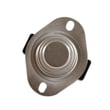
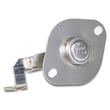
How do I know if my Kenmore dryer thermal fuse is blown?
On Kenmore electric dryer model 11066812692, a blown thermal fuse commonly shows up as a dryer that will not heat (it may still run) or a dryer that will not start. The sure way to know is a continuity test with the dryer unplugged, following the access steps in the 11066812692 owner's manual.
Quick symptoms to look for
- Dryer runs but clothes stay damp because there is no heat
- Dryer stops mid-cycle and then won’t restart until it cools (often tied to overheating/airflow)
- Long dry times and “not drying satisfactorily” complaints that point to restricted venting
- Burning smell or unusually hot cabinet (stop using the dryer and correct airflow)
How we confirm it (continuity test)
- Unplug the dryer (or switch off the breaker) before opening any panels.
- Access the thermal fuse area as shown in the 11066812692 owner's manual.
- Pull at least one wire off the fuse terminal.
- Set a multimeter to continuity or ohms.
- Touch a probe to each terminal.
- Good fuse: meter beeps or reads near 0 Ω
- Blown fuse: no beep or open/infinite reading
Why the fuse blows (and what to fix first)
A thermal fuse usually opens because the dryer overheats from poor airflow. Your manual’s troubleshooting guidance for poor drying focuses on airflow checks.
- Clean the lint screen
- Check strong airflow at the outside exhaust hood
- Replace crushed or kinked venting with rigid or heavy metal vent
- Make sure the dryer is level and not pushed tight against the vent
Airflow check at a glance
| What you check | What “good” looks like | What to do if it’s not good |
|---|---|---|
| Air at outside exhaust hood | Strong, steady flow | Clean/repair vent run and hood |
| Vent behind dryer | Not crushed or kinked | Re-route or replace vent |
| Dry time | Normal for load size | Fix airflow before replacing parts |
Why it matters
If you replace a fuse without correcting vent restriction, the new fuse can blow again and drying performance stays poor.
Last updated: February 2026
How do I tell what model my Kenmore dryer is?
Your Kenmore dryer’s model number is printed on the model and serial number plate; on model 11066812692, it’s typically found in the door opening area. Once you have the full model number, we can match the correct parts list, wiring, and specifications.
Where to look for the model number plate
Check these common locations on Kenmore electric dryers:
- Inside the dryer door opening (around the frame)
- On the back panel of the dryer cabinet
- On the cabinet opening near the door latch area
- In some designs, near the lint screen housing (you may need to open the door and look around the opening)
For the exact location and how the plate is labeled, use the 11066812692 owner's manual.
What the model number looks like (and why it matters)
Kenmore model numbers are a full string of numbers (sometimes with a prefix on other product lines). Enter the model number exactly as shown on the plate.
Why it matters
- Ensures the right fit for parts like a drum belt, door switch, or heating element
- Helps confirm electrical requirements and dryer configuration
- Prevents ordering a similar-looking part that mounts differently
- Speeds up troubleshooting when the dryer will not start or will not heat
Quick check: model number vs. serial number
Use this as a simple guide when you are reading the plate:
| Item on the plate | What it’s used for | Example for this dryer |
|---|---|---|
| Model number | Parts lookup and correct diagrams | 11066812692 |
| Serial number | Manufacturing tracking and service history | Varies by unit |
If you’re already shopping for parts
Once you confirm the model number, match common wear items to the correct listing for your dryer. For example, a broken belt symptom (drum not turning, motor runs) often points to the drum belt 341241.
Last updated: February 2026
How much does it cost to replace a heating element in a Kenmore dryer?
For Kenmore electric dryer model 11066812692, replacing the heating element typically costs $50 to $120 for the part and $150 to $350 total if a technician does the repair (part plus labor). If airflow is restricted, the new element can fail early, so we address venting at the same time.
Typical cost breakdown
- DIY (part only): usually $50 to $120
- Service call and labor: commonly $100 to $250 (varies by area and access)
- Total professional repair: commonly $150 to $350
- Extra parts sometimes needed: thermal cut-off kit, high-limit thermostat, wiring repair kit
| Repair approach | What you pay for | Typical total cost |
|---|---|---|
| DIY replacement | Heating element only | $50 to $120 |
| Pro replacement | Part + labor/service call | $150 to $350 |
| Pro with related fixes | Part + labor + safety/airflow parts | $200 to $450 |
Parts that commonly affect the final price
If your dryer overheated or had poor airflow, we often replace or inspect these at the same time as the element:
- Dryer element 279838
- Cut-off kit 279816
- Dryer thermostat WP3977767
- Dryer operating thermostat WP3387134
- Dryer heating element wire kit 279457
Why venting and lint cleanup matters
Your 11066812692 manual explains that lint can build up in the exhaust vent and inside the dryer; restricted airflow can cause overheating and repeated heat failures. We recommend cleaning the lint screen every load and checking that the vent is not crushed or kinked. See the venting and care sections in the 11066812692 owner's manual.
When replacement is usually worth it
A heating element replacement is a good value when:
- The drum tumbles normally but there is no heat
- The dryer heats briefly, then stops heating (often airflow or thermal cut-off related)
- The unit is otherwise in good condition (belt, motor, and timer operating normally)
Last updated: February 2026
What are common dryer part failures?
On Kenmore electric dryer model 11066812692, the most common part failures involve no heat, no tumble, or long dry times. We typically see heating parts (element, thermostats, thermal cut-off), drive parts (belt, idler, motor), and airflow issues (lint screen and vent restrictions) causing the symptoms.
Most common failures by symptom
- No heat but drum turns: heating circuit issue (heater, thermal cut-off, thermostat) or one house fuse/breaker leg open
- Drum will not turn: broken belt, seized idler pulley, failed motor
- Takes too long to dry: clogged lint screen, crushed/kinked vent, blocked outside hood
- Stops mid-cycle or overheats: restricted airflow, high-limit thermostat opening
- Will not start: door switch, timer, motor, or start circuit issue
Parts that commonly fail on this model
These are frequent replacement items for 11066812692:
| System | Common failed part | Example part for this model |
|---|---|---|
| Drum drive | Belt or idler pulley | Drum belt 341241, dryer idler pulley WP691366 |
| Heat | Heating element | Dryer element 279838 |
| Overheat protection | Thermal cut-off kit | Cut-off kit 279816 |
| Start/run safety | Door switch | Door switch WP3406107 |
Quick checks we recommend before replacing parts
Use these simple checks first because the manual calls out airflow and power issues as common causes of poor drying:
- Clean the lint screen before every load.
- Run the dryer 5 to 10 minutes and check for strong airflow at the outside exhaust hood.
- Inspect the vent for crushing, kinks, or heavy lint buildup; use rigid or heavy metal venting.
- For electric dryers, confirm both sides of the 240V supply are present (a dryer can run but not heat if one fuse/breaker leg is open).
- Make sure the room temperature is above 45°F; automatic cycles can run long or not shut off properly below that.
Why it matters
Airflow restrictions can mimic a “bad heater” and also cause overheating that trips safety devices like the thermal cut-off. Verifying venting and power first helps you avoid replacing good parts and restores safe, efficient drying.
For model-specific operating and troubleshooting steps, follow the 11066812692 owner’s manual.
Last updated: February 2026