Owner’s manual
 Error Codes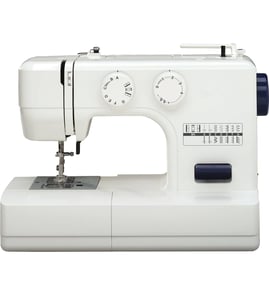

How do I know what model my Kenmore sewing machine is?
Your Kenmore sewing machine’s model number is printed on the machine’s identification plate, and it usually starts with a prefix like 385. For your machine, the model number you’ll use for manuals and parts lookup is 38516221301; confirm it by matching the number on the ID plate to the number shown in the owner's manual.
Where to find the model number on the machine
Check these common locations on Kenmore mechanical sewing machines:
- On the back of the machine near the power cord connection
- On the right side of the machine body near the handwheel
- On the front base; tilt the machine back to see the plate underneath
- On the underside of the machine base
- Near the light housing or accessory compartment (varies by design)
What the number should look like
Kenmore model numbers are typically a prefix plus digits. Many Kenmore sewing machines use the 385 prefix.
| What you see | What it means | What to do next |
|---|---|---|
| 385.16221XXX | Kenmore 385-series family (XXX varies) | Match every digit to your plate, then use that full model for parts and troubleshooting |
| 38516221301 | Full model number for this page | Use it to find diagrams, compatible parts, and settings in the manual |
Tips to avoid mix-ups
Use these checks so you do not order the wrong part or follow the wrong threading path:
- Copy the model number exactly as printed (all digits matter)
- Look for a separate serial number; do not use the serial number for parts lookup
- If the plate shows a range like 385.16221XXX, use the full number on your plate (the last three digits vary)
- Use the manual’s cover page model reference as a cross-check
Why it matters
The correct model number ties your Kenmore sewing machine to the right bobbin system, needle/threading path, foot controller compatibility, and troubleshooting steps. Using the exact model number prevents fit issues and stitch problems.
Last updated: February 2026
When did Kenmore stop making sewing machines?
Kenmore sewing machines, including the Kenmore 38516221301, are no longer manufactured as new products. Most Kenmore-branded sewing machine production effectively ended in the early-to-mid 2000s, although machines and parts continued to be sold for some time after that; today you typically find them used, vintage, or supported through replacement parts and service.
What this means for your Kenmore 38516221301
Even though new Kenmore sewing machines are not being produced, we still support repairs by helping you identify the correct components and maintenance steps for this model.
- Use the owner's manual to confirm threading, bobbin setup, and adjustment procedures
- Keep the hook race and shuttle area clean to prevent noisy operation and lockups
- Replace wear items as needed (needles, bobbins, belts, light bulbs)
- If the machine will not run, check power connection and the on/off and speed control functions
- If stitches are distorted or thread breaks, recheck threading path and tension settings
Quick timeline (practical guidance)
Because Kenmore sewing machines were produced by different manufacturers over the years, the most useful way to think about “when they stopped” is by the retail era rather than a single cutoff date.
| Era | What you typically see | What to do now |
|---|---|---|
| 1990s to early 2000s | Many Kenmore mechanical models widely sold | Maintain, clean, and replace wear parts |
| Early-to-mid 2000s | Production winds down; fewer new models introduced | Use model-based parts lookup and manual procedures |
| Late 2000s to today | No new Kenmore sewing machines manufactured | Repair and maintain existing machines |
If your question is really about parts availability
For the Kenmore 38516221301, the best approach is to identify the exact failed function first (won’t turn on, locks up, fabric not moving, skipping stitches), then match the repair to the correct component.
- For model-family troubleshooting, use Kenmore 385 error codes
- For feed and movement issues, follow sewing machine fabric not moving
- For binding or stiffness, follow sewing machine locks up
Why it matters
Knowing Kenmore sewing machines are discontinued helps set expectations: you are maintaining a durable mechanical platform, so correct cleaning, lubrication points, and adjustments from the manual often solve problems before parts replacement is needed.
Last updated: February 2026
How old is the Kenmore sewing machine model 38516221301?
The Kenmore sewing machine model 38516221301 is part of the Kenmore 385.16221XXX model family, which places it in the era when Kenmore 385 machines were widely produced (commonly mid-1960s through the 1980s). For the most accurate age estimate, we use the purchase date on your paperwork and the exact model labeling shown in the owner's manual.
How to estimate the age (practical methods)
Use these checks to narrow it down quickly:
- Look for the purchase date on your receipt, warranty card, or service paperwork.
- Confirm the exact model number on the machine’s ID plate (it should match 38516221301).
- Compare your machine’s included accessories and features to the diagrams and sections in the owner's manual.
- If your machine uses the listed foot controller types (commonly YC-482J-1 or TJC-150 for 385.16221XXX models), that supports the same model family and time period.
- If you have a Sears warranty document with a start date, that date is the best indicator of when the machine was new to you.
What the manual tells us (and why it matters)
The manual for this Kenmore family shows it is a mechanical sewing machine and references the 385.16221XXX series (where XXX represents 000 through 999). That series context helps date the machine to the broader production era for Kenmore 385 models, but your purchase date is what pins down how old your specific unit is.
Quick reference table
| What you have | What it tells you | Best use |
|---|---|---|
| Receipt or warranty start date | Exact age from when it was bought | Most accurate |
| Model tag: 38516221301 | Confirms the exact model | Prevents mismatched parts/info |
| Manual match to 385.16221XXX | Confirms the model family | Helps with setup and troubleshooting |
Why it matters
Knowing the approximate age helps us choose the right maintenance approach (cleaning, lubrication points, belt condition checks) and speeds up troubleshooting for issues like sluggish running, lockups, or fabric not feeding.
If you are troubleshooting a fault code on a Kenmore 385-series machine, use Kenmore 385 error codes to match the code to the most likely cause.
Last updated: February 2026
Is it worth repairing an old sewing machine?
Yes, repairing an older Kenmore sewing machine like model 38516221301 is usually worth it when the machine has a solid internal frame, the repair is a common wear item (belt, motor, switch, cleaning), and the total cost is less than replacing it with a comparable mechanical machine. Use the owner's manual to match the symptom to the right fix and maintenance steps.
Quick way to decide (cost vs. value)
Use this checklist before you spend money on parts or service:
- The handwheel turns smoothly by hand (with the machine unplugged).
- The machine forms stitches correctly after rethreading and a new needle.
- The issue is isolated (power switch, foot control, belt, motor, tension, feed dogs).
- You can still get the machine sewing after cleaning lint and re-oiling where specified.
- The repair estimate is comfortably below the cost of a similar new mechanical machine.
Common “worth it” repairs on this model type
These are the repairs we see most often on mechanical Kenmore machines, and they typically restore full function:
| Symptom | Most common cause | Typical fix |
|---|---|---|
| Won’t turn on | Bad cord, switch, foot control | Inspect cord, test switch, replace failed electrical part |
| Runs but needle won’t move | Jam, seized mechanism, belt issue | Clear jam, clean and lubricate, replace belt if worn |
| Fabric not moving | Feed dogs down, lint buildup, wrong presser foot pressure | Raise feed dogs, clean feed area, adjust settings |
| Locks up | Thread jam in hook/bobbin area | Remove needle plate, clear thread, rethread correctly |
For step-by-step troubleshooting by symptom, use sewing machine locks up or sewing machine fabric not moving.
Why it matters
A well-maintained mechanical sewing machine can deliver consistent stitch quality for years because it relies on durable mechanical timing and straightforward adjustments. Repairing also protects your investment in accessories and keeps you sewing on a machine you already know.
Safety and maintenance notes
Follow these basics from the manual before any inspection or repair:
- Unplug the machine before cleaning, servicing, or changing the light bulb.
- Keep ventilation openings and the foot controller free of lint and dust.
- Replace the sewing machine bulb only with the same type rated 15 watts.
Last updated: February 2026
What is the most trouble-free sewing machine?
A “trouble-free” sewing machine is a simple mechanical model that stays correctly threaded, clean in the bobbin area, and properly adjusted. Your Kenmore 38516221301 is a mechanical machine; following the routine care and setup steps in the owner's manual delivers the fewest jams, skipped stitches, and feeding problems.
What “trouble-free” means day to day
Most reliability complaints come from basic causes: threading, needle condition, lint buildup, or tension settings.
Common signs you are in the “low-hassle” zone:
- Fabric feeds smoothly without stalling or bunching
- Stitches form evenly on top and bottom
- The handwheel turns freely (no binding)
- The machine runs at a steady speed with the foot control
- The needle does not deflect or hit the needle plate
What to look for when choosing a reliable machine
Mechanical machines are typically the most dependable for many households because they have fewer electronic controls to diagnose.
| Feature | Best choice for reliability | Why it helps |
|---|---|---|
| Controls | Mechanical dials/levers | Fewer electrical failure points |
| Stitch needs | Basic utility stitches | Less complexity, easier setup |
| Maintenance access | Easy bobbin and feed dog access | Faster cleaning, fewer jams |
| Parts wear | Standard needles and bobbins | Easier to keep consumables correct |
How we keep a Kenmore 38516221301 running with fewer problems
Use this checklist as your baseline maintenance routine:
- Rethread the upper thread with the presser foot up so the thread seats in the tension discs.
- Replace the needle regularly; a bent or dull needle causes skipped stitches and thread breaks.
- Clean lint from the bobbin area and feed dogs on a schedule (more often with fuzzy fabrics).
- Use good-quality thread and the correct bobbin type for the machine.
- If fabric stops feeding, confirm the feed dogs are up and stitch length is not set to zero; see sewing machine fabric not moving.
Why it matters
A simple mechanical platform stays “trouble-free” when the stitch-forming path (needle, thread, bobbin, tension, and feed system) is kept clean and correctly set. That prevents the most common issues before they start.
Last updated: February 2026