Owner’s manual


What size is a Kenmore Model 11087572601 dryer?
Most Kenmore model 11087572601 dryers are full-size units; the cabinet is typically about 27 inches wide, 27 to 29 inches deep, and 43 to 44 inches tall. For the exact measurements for your specific configuration, we recommend confirming the spec section in the 11087572601 owner's manual.
Typical dimensions you can plan around
These are the most common exterior size ranges for a standard 27-inch-class Kenmore dryer like model 11087572601:
- Width: ~27 inches
- Height: ~43 to 44 inches
- Depth (cabinet): ~27 to 29 inches
- Depth (with door/handle clearance): often adds 2 to 5 inches
- Vent clearance behind dryer: commonly 3 to 6 inches (varies by venting setup)
Quick fit check (what to measure at home)
Use a tape measure and check these points before ordering a pedestal, stacking kit, or planning a tight alcove install:
- Measure widest point (often the control console or side edges)
- Measure deepest point (door closed, then include handle if it protrudes)
- Measure height to the top (include any raised console)
- Confirm door swing clearance (space to open fully)
- Confirm vent path (room for the duct to bend without kinking)
Size planning table
| Measurement | Typical for 11087572601 class | What can change it |
|---|---|---|
| Width | ~27 in. | Side clearance needs, trim, leveling feet |
| Height | ~43 to 44 in. | Leveling feet adjustment, floor slope |
| Depth | ~27 to 29 in. | Door style, rear vent elbow, handle clearance |
Why it matters
Dryer “fit” problems usually come from depth and vent clearance, not width. Leaving room for the exhaust duct helps airflow, drying performance, and helps prevent overheating issues that can affect components like the dryer thermal cut-off fuse kit 279973.
Last updated: February 2026
How to hard reset a Kenmore dryer?
To hard reset your Kenmore dryer model 11087572601, unplug it (or switch the breaker off) for 2 to 5 minutes, then restore power and press POWER to start fresh. This clears many temporary control glitches and gets the cycle selection back to normal; see the 11087572601 owner's manual for the exact control-panel steps.
Hard reset steps (safe and effective)
- Turn the dryer OFF.
- Unplug the power cord (or turn the circuit breaker OFF).
- Wait 2 to 5 minutes.
- Restore power.
- Press POWER, select a cycle, then press and hold START to run a test load.
If the panel is still unresponsive after the reset
A reset fixes control “hang-ups”, but it will not bypass a real safety or heating problem. Check these common causes next:
- Controls locked: look for a “Controls locked” indicator on the display.
- Door not fully closed: confirm the latch engages; a worn latch can prevent starting.
- Airflow restriction: clean the lint screen and confirm strong airflow at the outside vent.
- Overheat protection tripped: restricted venting can open a thermal cut-off.
- Heating performance issues: a failed heater or temperature sensor can cause odd cycle behavior.
Parts that commonly relate to “won’t start” or “won’t heat” symptoms
| Symptom | Common check | Example part for this model |
|---|---|---|
| Dryer runs but no heat | Heater circuit | Dryer heating element WP8544771 |
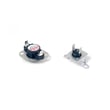
| Dryer overheats or stops heating | Safety cut-off | Dryer thermal cut-off fuse kit 279973 |
| Cycles end early or temps seem off | Temperature sensing | Dryer thermistor WP8577274 |
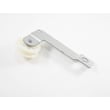
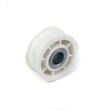
| Drum won’t turn, squeals, or slips | Belt drive support | Dryer idler pulley 279640 |
Why it matters
Resetting restores normal operation after a power glitch, but dryers also shut down or act “stuck” when airflow is poor or a safety device opens. Fixing venting and the underlying failed part prevents repeat shutdowns and long dry times.
Last updated: February 2026
What are common problems with Kenmore dryers?
Common problems on Kenmore dryer model 11087572601 include no heat, long dry times, the drum not turning, and loud squealing or thumping. Most of these issues trace back to restricted airflow (lint buildup), a failed heating component, or normal wear on drum support and drive parts; see the 11087572601 owner's manual for cycle and care basics.
Most common symptoms and what usually causes them
- Dryer runs but won’t heat: failed heater circuit parts such as the dryer heating element WP8544771 or a blown thermal cut-off
- Long drying times: clogged lint screen, restricted exhaust vent, blocked outside hood
- Drum won’t turn: worn belt/idler system, seized drum rollers, failed drive motor
- Loud noise (squeal, rumble, thump): worn drum support rollers, idler pulley, blower wheel
- Stops mid-cycle or overheats: airflow restriction, temperature sensing issues (thermistor)
Quick checks we recommend first (fast, no parts)
- Clean the lint screen before every load.
- Check airflow at the outside vent hood; it should be strong and steady.
- Run a timed cycle on High heat to compare performance.
- Listen for changes: squeal (idler/roller), grinding (roller), rattling (blower wheel).
- If the dryer is hot but clothes stay damp, focus on venting and lint buildup.
Parts that commonly fix these problems
| Symptom | Common wear item | Example part for this model |
|---|---|---|
| Squealing or thumping | Drum support roller | Support (roller) WPW10314173 |
| Squealing, drum drag | Idler pulley | Dryer Idler Pulley 279640 |
| No heat | Heater assembly | Dryer Heating Element WP8544771 |
| Overheating or no heat after overheating | Thermal cut-off kit | Dryer Thermal Cut-off Fuse Kit 279973 |
Why it matters
Airflow problems do more than slow drying; they also raise operating temperatures, which can trip thermal safety devices and shorten the life of parts like the heating element, blower wheel, and drum supports. The manual also calls out periodic vent cleaning as part of normal care.
Last updated: February 2026
What is the life expectancy of a Kenmore dryer?
A Kenmore dryer typically lasts 10 to 13 years. With consistent care on your Kenmore 11087572601 (especially lint and vent cleaning), it’s common to get 15 years or more of reliable drying performance.
Typical lifespan and what affects it
A dryer’s life is mostly determined by heat stress, airflow restriction, and wear on drum support parts.
- Airflow and lint control (biggest factor)
- Load size (overloading strains the drive motor and drum supports)
- Heat level and cycle choice (high heat all the time shortens component life)
- Vent length and restrictions (long runs and crushed flex vent raise temperatures)
- Routine maintenance (simple cleaning prevents many failures)
Maintenance that extends dryer life
Use the operating and care steps in the 11087572601 owner’s manual and focus on these habits:
- Clean the lint screen before every load
- Check and clean the exhaust vent path regularly
- Avoid overloading; dry bulky items in smaller batches
- Use Auto cycles when possible to reduce overheating
- Listen for early warning noises (squeal, thump, rumble) and address them promptly
Common wear items (and what they usually cause)
When a dryer is “wearing out,” it’s often a few serviceable parts, not the whole appliance.
| Symptom | Common cause | Example part for this model |
|---|---|---|
| Rattling, rumbling, thumping | Worn drum support rollers | Support WPW10314173 |
| Squealing, belt slipping | Worn idler pulley | Dryer idler pulley 279640 |
| Long dry times, overheating | Restricted airflow or heat system issue | Dryer thermal cut-off fuse kit 279973 |
| No heat (electric models) | Failed heater or heat circuit problem | Dryer heating element WP8544771 |
Why it matters
A dryer that runs hot or can’t move air efficiently wears out faster and can damage key components like the heating element, thermistor, and thermal cut-off. Keeping airflow strong is the simplest way to protect performance and lifespan.
Last updated: February 2026
How do I tell what model my Kenmore dryer is?
Your Kenmore dryer’s model number is printed on the appliance’s identification label; on most Kenmore dryers it’s found in the door opening (around the door frame), and it’s the key detail we use to match the correct parts, diagrams, and specifications for your exact dryer.
Where to look for the model number label
Check these common locations first (in this order):
- Inside the dryer door opening on the front frame (most common)
- On the back panel of the dryer cabinet
- Near the lint screen housing (some designs place the label nearby)
- On the side of the door opening or just behind the door
If you have Kenmore model 11087572601, you can also confirm operating details and cycle features in the 11087572601 owner’s manual.
What to write down (so parts match the first time)
When you find the label, record these items exactly as shown:
- Model number (example: 11087572601)
- Serial number (helps identify production run details)
- Type (gas or electric, if listed)
- Any suffix letters or additional digits (do not drop them)
Quick label-reading guide
| Label item | What it’s used for | Why it matters |
|---|---|---|
| Model number | Parts lookup and diagrams | Ensures the part fits your exact Kenmore dryer |
| Serial number | Production date range | Helps avoid ordering a version-specific part |
| Gas/electric | Heating system parts | Heating parts differ by fuel type |
Why it matters
Kenmore dryers often share similar styling across different series, but internal components (like the drive motor, dryer heating element, dryer thermistor, or dryer moisture sensor) can vary by model. Using the exact model number prevents ordering the wrong replacement part.
Last updated: February 2026
How to take off the front panel of a Kenmore dryer?
To remove the front panel on Kenmore dryer model 11087572601, we unplug power first, then release the top, remove the mounting screws (often inside the door opening and along the top edge), and lift the front panel up and off the lower retaining tabs. Use the 11087572601 owner's manual for model-specific access points.
Before you start (safety and prep)
- Unplug the dryer from the wall outlet.
- If it is a gas dryer, shut off the gas supply valve.
- Pull the dryer forward so you can reach the rear and vent.
- Wear cut-resistant gloves; cabinet edges can be sharp.
- Keep a small container for screws so nothing gets lost.
Typical front panel removal steps
- Remove the lint screen (if it is on the top panel) and check for screws near the lint screen housing.
- Release the top panel:
- Many Kenmore 110-style dryers use spring clips a few inches in from each front corner.
- Slide a putty knife under the front edge of the top to pop the clips, then lift the top.
- Remove front panel screws:
- Open the door and remove screws around the door opening that secure the front panel.
- Remove any screws at the top inside corners holding the front panel to the cabinet.
- Disconnect door switch wiring (if the harness is attached to the front panel). Note the connector orientation.
- Lift the front panel up and off the bottom tabs, then pull it forward.
What you can inspect once the front is off
| Symptom | Common area to check | Example part for this model |
|---|---|---|
| Squealing or thumping | Drum support rollers, idler area | Support WPW10314173 |
| Dryer runs but no heat | Heater circuit, thermostats, airflow | Dryer heating element WP8544771 |
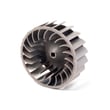
| Poor airflow, long dry times | Lint ducting, blower housing | Dryer blower wheel WP697772 |
Why it matters
Removing the front panel correctly prevents bent cabinet panels, broken plastic tabs, and pinched wiring. It also gives you safe access to the drum, belt path, blower wheel, and heating components for cleaning and repair.
Last updated: February 2026
How do I know if my Kenmore dryer thermal fuse is blown?
If your Kenmore dryer model 11087572601 won’t start at all, or it runs but stops heating, a blown thermal fuse is a common cause. The sure way to know is to unplug the dryer and test the fuse for continuity with a multimeter (no continuity means the fuse is blown).
Quick symptoms to look for
- Dryer will not start (no motor run) even though the controls light up
- Dryer tumbles but there is no heat (on some designs)
- Cycle ends early or heat drops out after a short time
- You recently had poor airflow (clogged lint screen or vent)
- Burning smell or unusually hot cabinet (often tied to restricted venting)
Confirm it with a continuity test (best check)
- Unplug the dryer (or switch off the breaker).
- Access the thermal fuse (commonly on the blower housing or exhaust duct).
- Remove at least one wire from the fuse terminal.
- Set your multimeter to continuity or lowest ohms.
- Touch probes to the fuse terminals.
Results guide
| Meter result | What it means | What to do next |
|---|---|---|
| Beep or near 0 Ω | Fuse is good | Keep troubleshooting (thermistor, heater, motor circuit, airflow) |
| No beep or OL | Fuse is blown | Replace the fuse and fix the airflow problem |
For access steps and safety notes specific to your dryer, follow the 11087572601 owner's manual.
Why the fuse blows (and how to prevent a repeat)
A thermal fuse usually opens because the dryer overheats from restricted airflow. The manual emphasizes cleaning the lint screen before each load and keeping the exhaust path clear.
- Clean the lint screen every load
- Check the outside vent hood for strong airflow
- Clear crushed, kinked, or overly long vent runs
- Vacuum lint buildup inside the lint duct when accessible
- Avoid running the dryer with the lint screen missing
Parts that often relate to overheating or no-heat complaints
These parts can be involved in heat and airflow issues on this model:
- Dryer thermal cut-off fuse kit 279973
- Dryer thermistor WP8577274
- Dryer heating element WP8544771
- Duct lint WPW10128606
Why it matters
Replacing a blown fuse without correcting venting and lint buildup often leads to another overheat and another blown fuse, plus longer dry times and higher energy use.
Last updated: February 2026
What are signs of a bad dryer heating element?
A failing heating element in our Kenmore dryer model 11087572601 usually shows up as no heat (dryer runs but clothes stay damp) or very long dry times. You may also notice a hot or “electrical” odor; confirm the diagnosis with a continuity test and basic airflow checks in the 11087572601 owner's manual.
Common symptoms you can see right away
- Dryer tumbles normally but produces little or no heat
- Loads take much longer than normal to dry
- Clothes come out damp at the end of an Auto cycle
- Burning smell during heating (stop the cycle and unplug the dryer)
- Cycle seems to run, but results vary widely from load to load
Quick checks before replacing parts
These checks help separate a heating-element problem from airflow or safety-device issues.
- Clean the lint screen before each load (restricted airflow causes long dry times)
- Check the exhaust vent and outside hood for lint blockage or a stuck flap
- Try a Timed Dry cycle on High to see if heat is consistent
- If the dryer overheats or shuts heat off, inspect venting first
- If you have a multimeter, test the element for continuity with power disconnected
Parts commonly involved in “no heat” complaints
| Symptom | Often involved | Example part for this model |
|---|---|---|
| Runs but no heat | Heating element or thermal cut-off | Dryer heating element WP8544771, dryer thermal cut-off fuse kit 279973 |
| Heat is weak or cycles oddly | Temperature sensing | Dryer thermistor WP8577274 |
Why it matters
A dryer that is not heating correctly often points to either a failed heater circuit or restricted airflow. Fixing the root cause restores normal dry times and helps prevent repeat failures of fuses, thermostats, and the heating element.
Last updated: February 2026
Is it worth replacing the heating element in a dryer?
Yes, it’s usually worth replacing the heating element in your Kenmore dryer model 11087572601 when the dryer still runs and tumbles normally but won’t heat; the repair cost is typically far less than replacing the entire dryer, and it often restores normal drying performance.
When replacing the heating element makes sense
- The drum tumbles and the controls work, but clothes stay cold or take much longer to dry.
- You’ve already cleaned the lint screen and confirmed strong airflow at the outside vent hood.
- The dryer heats intermittently (often points to a failing heater or heat-related wiring).
- The cabinet, drum, and door are in good shape with no major mechanical noise.
- You want to keep the same Kenmore unit and avoid the cost and hassle of replacement.
What to check first (fast, no-parts steps)
The use and care guidance for this dryer emphasizes basics like cleaning the lint screen and checking venting; restricted airflow is a top cause of “no heat” symptoms.
- Clean the lint screen before each load.
- Check the exhaust vent and outside hood for lint blockage or crushed ducting.
- Try a Timed Dry cycle with a heat temperature setting (Auto cycles manage heat differently).
- Avoid overloading; large loads can mimic heating problems.
Parts that commonly get replaced with (or instead of) the heater
A “no heat” complaint is often caused by a safety device opening due to overheating from poor airflow.
| Symptom | Common culprit | Example part for this model |
|---|---|---|
| Runs but no heat | Thermal cut-off or high-limit issue | Dryer thermal cut-off fuse kit 279973 |
| Runs but no heat, heater tests open | Heating element | Dryer heating element WP8544771 |
| Overheats or cycles heat oddly | Temperature sensing problem | Dryer thermistor WP8577274 |
Why it matters
A working heater depends on proper airflow. Fixing venting and replacing the correct heat-related part helps the dryer reach target temperature safely, dry faster, and reduce repeat failures.
For model-specific operating details and cycle behavior, use the 11087572601 manual.
Last updated: February 2026
How much does it cost to replace a heating element in a Kenmore dryer?
Replacing the heating element in your Kenmore dryer model 11087572601 typically costs $95 to $120 for the part plus any supplies; with professional service, the total is commonly $200 to $400 depending on labor rates and whether wiring or thermostats also need attention. See the 11087572601 owner’s manual for cycle and heat-setting guidance.
Typical cost breakdown
- Heating element part: usually $95 to $120 for this model’s style of element
- Optional wire kit (if terminals are heat-damaged): low-cost add-on
- Labor (if hiring a technician): commonly $100 to $250
- Service call / diagnostic fee: often $0 to $100 (may be rolled into labor)
| Scenario | What you pay for | Typical total |
|---|---|---|
| DIY element replacement | Part (and possibly connectors) | $95 to $140 |
| Pro replaces element | Part + labor | $200 to $400 |
| Pro replaces element + fixes overheating cause | Part + labor + venting cleanup or safety parts | $250 to $450 |
Parts that commonly get replaced with the element
If the dryer overheated or had a restricted vent, we often see additional parts fail soon after the element.
- Dryer heating element WP8544771 (the heater that produces heat)
- Dryer thermal cut-off fuse kit 279973 (opens if the heater housing overheats)
- Dryer thermistor WP8577274 (helps regulate temperature)
Why the total price varies
A heating element can fail on its own, but many “no heat” or “burned element” repairs trace back to airflow problems.
- Clogged lint screen or lint buildup in the ducting
- Crushed, kinked, or overly long exhaust vent run
- Blocked outside vent hood
- Heat-damaged wiring at the heater terminals
How to avoid repeating the repair
- Clean the lint screen before every load
- Check airflow at the outside vent while the dryer runs
- Keep the vent run short and free of sharp bends
- If drying times are long, correct venting before installing a new heater
Last updated: February 2026
What is the OEM part number 279838?
OEM part number 279838 is commonly used to identify a dryer heating element assembly used on many Whirlpool-built electric dryers. For Kenmore model 11087572601, the correct way to confirm the exact heating element part is to match your model’s parts list and heater housing style in the 11087572601 owner's manual.
How we confirm the correct heating element for 11087572601
Use your model number and the heater section diagram to identify the exact replacement part number for your dryer.
- Locate the model tag and confirm it reads 11087572601.
- Check whether your dryer is electric (heating element) or gas (burner and igniter).
- Compare the heater’s mounting bracket shape and terminal locations to the diagram.
- If your dryer has a no-heat complaint, inspect the element coil for breaks and the terminals for heat damage.
- Replace any overheated connectors at the same time using the dryer heating element wire kit 279457.
Parts that often fail with a no-heat or overheating problem
A failed heating element is common, but airflow and safety devices matter just as much.
| What you notice | What to check | Example part for this model |
|---|---|---|
| Runs but no heat | Thermal cut-off or high-limit protection opened | Dryer thermal cut-off fuse kit 279973 |
| Overheats or cycles heat oddly | Temperature sensing circuit | Dryer thermistor WP8577274 |
| Long dry times | Airflow restriction in lint ducting | Duct lint WPW10128606 |
Why it matters
Ordering by a generic OEM number can lead to the wrong heater style. Matching the heater assembly to the 11087572601 parts diagram prevents fit issues and helps you address root causes like restricted venting that can overheat the heater circuit.
Last updated: February 2026