Owner’s manual
 Error Codes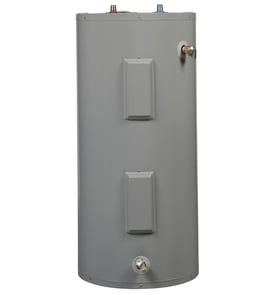




What is the average cost to replace a 30 gallon water heater?
Replacing a 30-gallon water heater like the American E2F30HD035V typically costs $1,000 to $2,500 installed, with a broader real-world range of about $700 to $3,000+ depending on electric vs. gas, labor rates, and whether plumbing or electrical upgrades are needed. For planning details, use the E2F30HD035V owner’s manual.
What drives the price up or down
- Fuel type and wiring/venting: Electric swaps are usually simpler than gas (no venting changes).
- Labor and access: Tight closets, attic installs, or code-required drain pans add time.
- Permit and inspection: Commonly required for water heater replacement.
- Valve and piping condition: Old shutoff valves, corroded fittings, or undersized wiring can add parts and labor.
- Sediment and maintenance history: Heavy sediment can mean more cleanup and related part replacements.
Typical cost breakdown (installed)
| Cost item | Typical range | Notes |
|---|---|---|
| 30-gallon tank (standard electric) | $350 to $900 | Higher for premium efficiency or specialty models |
| Labor | $400 to $1,500 | Varies by region and complexity |
| Permit/inspection | $50 to $300 | City and county dependent |
| Misc. materials | $50 to $300 | Connectors, shutoff valve, pan, pipe fittings |
Parts that commonly get replaced during installation
Even when the tank is new, installers often recommend updating wear items so the system is reliable.
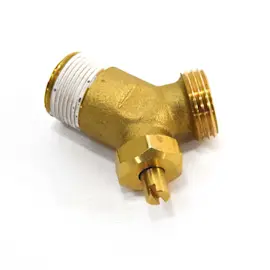
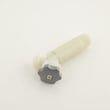
- Drain valve (example: drain valve 100109106)
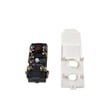
- Thermostat(s) if temperature control has been unstable (example: top t-stat 100108683)
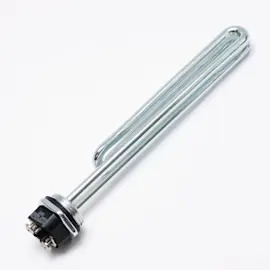
- Heating element(s) if the old unit had “no hot water” or slow recovery (example: element 100109629)
Why it matters
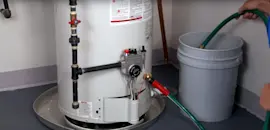
A like-for-like replacement (same size, same fuel type, similar location) is usually the most cost-effective. Costs jump when the job triggers electrical, plumbing, or safety upgrades. Ongoing maintenance also protects your investment; the manual recommends draining and flushing about every 6 months to reduce sediment buildup.
Last updated: January 2026
How long can I shower with a 30 gallon water heater?
With the American E2F30HD035V 30-gallon electric water heater, most households get about 8 to 15 minutes of comfortably hot shower time before the water turns lukewarm. Your exact time depends mainly on shower flow rate (GPM), incoming cold-water temperature, and thermostat setting.
Quick estimate (based on showerhead flow)
Use this as a practical rule of thumb for a single shower.
- 1.5 GPM (low-flow): ~12 to 20 minutes
- 2.0 GPM: ~9 to 15 minutes
- 2.5 GPM (standard): ~7 to 12 minutes
- 3.0 GPM (high-flow): ~6 to 10 minutes
What changes your shower time the most
- Incoming water temperature: colder winter water shortens shower time.
- Thermostat setting: higher settings increase usable mixed hot water (but raise scald risk).
- Sediment in the tank: reduces heat transfer and usable hot water.
- Heating element condition: a weak element can cause short or inconsistent hot water.
- Back-to-back hot water use: laundry or dishwasher can cut shower time fast.
Fast checks if hot water runs out too quickly
Start with safe, simple checks; then move to parts testing.
- Compare shower flow: fill a 1-gallon bucket and time it (seconds). 60 ÷ seconds = GPM.
- Confirm you are not seeing “stacking” (many short hot draws can create temperature swings).
- Drain and flush the tank to reduce sediment (recommended every 6 months).
- If recovery is slow or temperature fluctuates, test the thermostats and elements.
| Symptom | Most common cause | What we usually replace/test |
|---|---|---|
| Hot water runs out fast | Lower element not heating | Element 100109629 |
| Water temp swings | Thermostat out of range | Top t-stat 100108683 or lwr t-stat 100108421 |
| Rumbling/popping | Sediment buildup | Flush tank; inspect elements |
Why it matters
A 30-gallon tank is sized for moderate demand; keeping the tank flushed and the thermostats and heating elements working correctly helps you get the longest shower time and steadier temperatures. For model-specific maintenance and safety steps (including draining and flushing), follow the E2F30HD035V owner’s manual.
Last updated: January 2026
What can go wrong with an electric water heater?
On the American E2F30HD035V electric water heater, the most common failures are loss of power, a tripped high-temperature limit, a bad thermostat, or a failed heating element. Sediment buildup can also reduce hot water output and slow recovery. See the E2F30HD035V owner's manual for model-specific troubleshooting and safety steps.
Common problems and what you’ll notice
- No hot water: breaker tripped, high-limit switch open, failed upper thermostat, or wiring issue
- Not enough hot water: lower element failure, thermostats set too low, or heavy sediment in the tank
- Water too hot: thermostat out of calibration or stuck closed
- Slow recovery (takes too long to reheat): element problem or sediment insulating the element
- Water leaking from the tank area: loose fittings, valve issues, or internal tank corrosion
Quick checks we recommend (safe, homeowner-level)
- Confirm the tank is full of water before power is on (dry-firing destroys elements).
- Check the breaker/fuse and look for signs of a loose electrical connection at the access panel.
- Verify thermostat settings (many homes run best around 120°F).
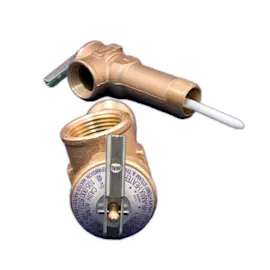
- If you see water at the discharge pipe, test the temperature and pressure relief valve lever; if it will not reseat and keeps releasing water, shut off power and cold water and use a qualified technician.
Parts that commonly fix these symptoms on this model
| Symptom | Likely part area | Example model-matched part |
|---|---|---|
| No hot water | Upper thermostat or element | Top t-stat 100108683 |
| Not enough hot water | Lower thermostat or element | Lwr t-stat 100108421 |
| Slow recovery | Heating element | Element 100109629 |
| Poor hot water delivery | Dip tube | Water heater dip tube 100112124 |
Why it matters
Electrical and overheating problems can damage heating elements, trip safety limits, and increase operating costs. Catching thermostat, element, and sediment issues early helps restore normal hot water and protects the tank.
Last updated: January 2026
How much does it cost to install a new 50-gallon electric water heater?
A new 50-gallon electric water heater installed typically runs $900 to $2,700 total (unit plus labor). Your American Water Heaters model E2F30HD035V is a different size, so use these numbers only as a 50-gallon benchmark and confirm requirements in the E2F30HD035V owner's manual.
What changes the installed price most
- Like-for-like swap vs. rework (moving the heater, changing venting, or resizing)
- Electrical updates (breaker, wire gauge, disconnect, bonding, bringing work up to code)
- Plumbing updates (shutoff valve, dielectric unions, expansion tank, piping changes)
- Permit and inspection (often required for replacement)
- Pan, drain line, and seismic strapping (common code items in many areas)
- Haul-away and disposal of the old tank
Typical cost ranges (50-gallon electric)
| Cost item | Typical range | What it includes |
|---|---|---|
| Water heater (50-gallon) | $450 to $1,400 | Tank, warranty tier, efficiency |
| Labor (standard replacement) | $400 to $1,200 | Remove old unit, set new unit, basic hookups |
| Materials and code items | $100 to $700 | Fittings, shutoff, expansion tank, pan, connectors |
| Permit, inspection, disposal | $0 to $400 | Varies by city and contractor |
How we recommend getting an accurate quote
- Match capacity and electrical rating to your home’s existing circuit.
- Ask for an itemized estimate separating heater cost, labor, permit, and materials.
- Confirm whether the quote includes code-required accessories (pan, expansion tank, strapping).
- If your current heater has temperature swings, include thermostat checks; parts such as the top t-stat 100108683 and lwr t-stat 100108421 are common service items on electric water heaters.
Why it matters
Water heater installs vary widely because code compliance and site conditions (tight closets, long piping runs, electrical upgrades) often cost more than the tank itself.
Last updated: January 2026