Owner’s manual
 Error Codes


What is the life expectancy of a LG dryer?
An LG dryer like model DLEX9000V typically lasts 10 to 15 years with normal household use. Consistent lint and vent maintenance, avoiding overloads, and fixing small wear items early are the biggest factors that help your dryer reach the high end of that range; see the maintenance guidance in the DLEX9000V manual.
What affects dryer lifespan the most
These habits usually make the biggest difference in how long a dryer runs reliably:
- Clean the lint screen before every load; replace a damaged screen such as the LG dryer lint screen ADQ73373201 if it no longer seals well.
- Keep the exhaust venting clear and as short as practical to reduce heat stress.
- Do not overload; heavy loads strain the drum support system and belt.
- Use the correct cycle and heat setting for the fabric.
- Address new noises quickly (squeal, thump, rumble) before they damage other components.
Common wear items that can shorten life if ignored
On DLEX9000V, these are typical parts that wear over time and can cause bigger problems if they fail:
| Symptom | Often involved system | Example part for this model |
|---|---|---|
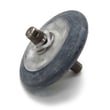
| Squealing or rumbling | Drum support | Dryer drum support roller (example: 4581EL2002L) |
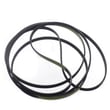
| Thumping or drum not turning smoothly | Belt and idler | Dryer drum belt (example: 4400EL2001D) |
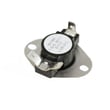
| Long dry times or overheating | Airflow and heat control | Dryer thermistor (example: AGM30045804) |
Why it matters
A dryer that is forced to run hot or with restricted airflow wears out faster and can also cause poor drying performance. Keeping airflow strong and replacing worn mechanical parts early helps protect the motor, heater circuit, and electronic controls.
Last updated: January 2026
What is the capacity of the LG dlex9000v?
The LG DLEX9000V dryer has a 9.0 cu. ft. drum capacity. That size is intended for bulky items and larger loads, but you will still get the best results when clothes can tumble freely; see loading and cycle guidance in the DLEX9000V manual.
How to use the full capacity effectively
- Do not pack the drum tight; airflow and tumbling are what dry clothes.
- For mixed loads, use sensor-dry cycles when available.
- For heavy fabrics (towels, denim), consider splitting the load if dry times increase.
- Clean the lint screen before every load.
- Keep the exhaust vent path clear and as short and straight as practical.
Capacity vs. load type (quick guide)
| Load type | Typical fit in a 9.0 cu. ft. dryer | Best practice |
|---|---|---|
| Everyday mixed laundry | Large load | Leave space for tumbling |
| Towels/denim | Medium to large | Split if items stay damp |
| Comforter/bedding | Often fits | Use bedding cycle if available |
Parts that can affect drying performance
If your DLEX9000V takes too long to dry even with proper loading and venting, these model-compatible parts are commonly involved:
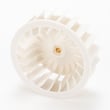
- Dryer blower wheel 5835EL1002A (moves air through the drum and vent)
- Dryer thermistor AGM30045804 (monitors temperature for cycle control)
- Dryer heating element 5301EL1001J (electric heat source)
Why it matters
Capacity impacts drying time, wrinkle control, and energy use. Even with a 9.0 cu. ft. drum, overloading restricts airflow and can leave damp spots or cause longer cycles.
Last updated: January 2026
What is the most common problem with LG dryers?
For the LG DLEX9000V dryer, the most common problems we see are long dry times (usually airflow restriction) and noise during tumbling (usually normal wear in drum support or belt-tension parts). For model-specific operating and care steps, use the DLEX9000V manual.
Most common symptoms and what they usually point to
- Long dry times or damp loads: lint buildup, crushed or long vent run, weak airflow, or a heating/control issue
- No heat or weak heat: heating circuit problem, temperature sensing issue, or a safety thermostat opening
- Rumbling, thumping, squealing: worn drum support parts, belt, or idler assembly
- Stops mid-cycle: overheating from poor airflow, or a sensor/control interruption
- Burning smell: lint accumulation near the heater or blower area
Quick checks we recommend first
- Clean the lint screen and wash off any fabric-softener residue.
- Check strong airflow at the outside vent hood while the dryer runs.
- Inspect the vent path for kinks, crushed flex duct, or heavy lint.
- Try a timed dry cycle to compare performance versus sensor cycles.
- If it is noisy, note whether the sound is rhythmic (roller) or squealing (belt tension system).
Parts that commonly relate to these problems on this model
If your symptoms match, these are examples from the DLEX9000V parts list that often relate to drying or noise complaints:
| Symptom | Likely area | Example compatible part from this model’s list |
|---|---|---|
| Rumbling or thumping | Drum support | Dryer drum support roller 4581EL2002L |
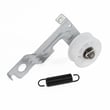
| Squealing | Belt tension system | Dryer idler assembly 4561EL3002A |
| No heat or weak heat | Heating circuit | Dryer heating element 5301EL1001J |
| Overheating or short cycling | Temperature limit | Dryer high-limit thermostat 6931EL3003D |
Why it matters
Airflow problems can cause poor drying and overheating, which can shorten the life of heating and thermostat components. Catching noise early can prevent belt damage and additional drum wear.
Last updated: January 2026