Installation guide
 Owner’s manual


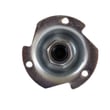
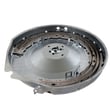
How to replace a GE dryer belt?
To replace the belt on your GE GTD65EBSJ0WS electric dryer, we unplug the dryer, open the cabinet, release belt tension at the idler pulley, remove the old belt, then route and tension the new belt around the drum and motor pulley before reassembling and testing.
Parts and tools we use
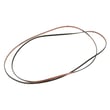
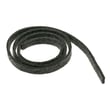
- Replacement belt: dryer drum belt WE03X29897 (part number WE12X21574)
- Phillips screwdriver and 1/4-inch nut driver
- Putty knife (for top clips on many GE cabinets)
- Work gloves
- Vacuum (to clean lint while the dryer is open)
Step-by-step: belt replacement (overview)
- Disconnect power: Unplug the dryer (or switch off the breaker).
- Open the cabinet: Remove the top and front panel (panel fasteners vary; follow the GTD65EBSJ0WS owner’s manual).
- Release belt tension: Reach under the drum and push the idler pulley to relieve tension; slip the belt off the motor pulley.
- Remove the drum: Lift the drum out carefully.
- Install the new belt:
- Wrap the belt around the drum with the ribbed side against the drum.
- Route the belt through the idler pulley and around the motor pulley.
- Reinstall drum and panels: Make sure the drum sits on its supports and turns freely.
- Test: Restore power and run a short timed cycle to confirm the drum tumbles smoothly.
Belt routing quick check
| What to check | What “right” looks like |
|---|---|
| Belt position on drum | Centered on the wear track, not twisted |
| Belt side against drum | Ribbed side against the drum |
| Idler pulley action | Spring tension holds belt snug |
| Drum movement | Drum turns by hand with steady resistance |
Why it matters
A worn or broken drum belt is a common reason a dryer motor runs but the drum will not tumble. Replacing the belt restores proper tumbling so clothes dry evenly and helps prevent extra strain on the motor and idler pulley.
Last updated: February 2026
What's the life expectancy of a GE dryer?
A GE electric dryer like model GTD65EBSJ0WS typically lasts about 10 years with normal household use. Consistent airflow (clean lint screen and clear venting), correct installation, and avoiding overloads are the biggest factors that help the motor, heater, and drum support parts last longer.
What affects lifespan the most
- Airflow and venting: restricted exhaust makes the heater and thermostats run hotter and longer
- Load size: frequent overloading strains the drum belt, idler pulley, and motor
- Maintenance habits: lint buildup increases drying time and wear
- Installation quality: crushed or long vent runs reduce performance
- Usage frequency: multiple loads per day shortens overall service life
Quick maintenance checklist (best ROI)
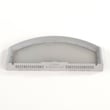
- Clean the lint screen every load; replace a damaged screen such as the GE dryer lint screen WE03X23881.
- Check and clean the vent path regularly (lint screen housing, duct, and outside hood).
- Keep the dryer level; an unlevel cabinet can increase noise and wear.
- Do not ignore new squealing or thumping; early belt or glide wear is easier to fix.
- Follow cycle and loading guidance in the GTD65EBSJ0WS owner's manual.
Common wear items and what they usually mean
| Symptom | Most common wear area | Typical result if ignored |
|---|---|---|
| Squealing, scraping | Drum glides/felt seal | Faster drum wear, poor tumbling |
| Thumping, drum not turning | Belt/idler pulley | No tumble, longer dry times |
| Long dry times, hot cabinet | Vent restriction or heat control issue | Overheating, shutdowns |
Why it matters
A dryer that is taking longer to dry is not just inconvenient; it runs hotter and longer, which accelerates wear on the heating system (heating element, thermistor, high-limit thermostat) and the drive system (belt, idler, motor). Keeping airflow strong is the simplest way to protect the dryer’s core components.
Last updated: February 2026
Why is my GE smart dryer not drying?
If your GE GTD65EBSJ0WS electric dryer isn’t drying, the most common causes are restricted airflow (lint screen or venting), a heat problem (power supply, heater circuit), or sensor-cycle learning and settings. Start with airflow and power checks, then move to heating components.
Quick checks that fix most “not drying” complaints
- Clean the lint screen before every load; replace it if it’s torn or warped (see GE dryer lint screen WE03X23881).
- Confirm the exhaust duct is clear and not crushed.
- Do not install a screen in or over the exhaust duct.
- Do not install a booster fan in the exhaust duct.
- Keep the duct run within the installation guide’s maximum length (see installation guide).
Heat and cycle issues to rule out
Even if the drum tumbles, an electric dryer can lose heat if only one leg of the 240V supply is present.
- Check the home breaker panel; most electric dryers use two breakers.
- Try a different heat setting (avoid “no heat/air” if you need drying).
- If you use Sensor Dry cycles, allow a few weeks for the dryer to “learn” your installation and usage profile (time estimates can change as it adapts).
Common symptoms and what they usually point to
| Symptom | Most likely cause | What to check next |
|---|---|---|
| Runs but clothes stay cool | Power or heater circuit issue | Breakers, heater assembly |
| Takes too long, clothes warm | Airflow restriction | Lint screen, vent path |
| Stops early on sensor cycles | Sensor learning or load type | Try Timed Dry, adjust dryness |
Parts that commonly affect drying performance
If airflow and settings are correct, these parts are frequent culprits in “no heat” or poor drying:
- GE dryer heater assembly WE11X21156 (complete heater circuit assembly)
- Dryer heating element WE11M10001 (open element causes no heat)
- Dryer high-limit thermostat WE04X26138 (can open if overheating occurs)
- Dryer heating element control thermistor WE4M398 (temperature sensing for heat control)
Why it matters
Drying depends on the right heat plus strong airflow. A clogged vent can make loads take much longer and can also overheat the dryer, which can trip safety thermostats and reduce performance.
Last updated: February 2026
Where is the thermal fuse on a GE GTD65EBSJ0WS?
On the GE GTD65EBSJ0WS electric dryer, the thermal fuse is typically mounted on the blower housing inside the cabinet, close to where the exhaust air leaves the drum. You access it by unplugging the dryer and removing the rear or front panel (depending on the service access path).
How to find it on this model
Use the wiring diagram and cabinet access steps in the GTD65EBSJ0WS owner's manual to identify the blower housing area and the safety devices mounted to it.
Common access path on GE electric dryers like GTD65EBSJ0WS:
- Unplug the dryer (240V) and pull it away from the wall
- Disconnect the vent duct from the outlet
- Remove the rear panel screws and lift off the rear panel
- Locate the blower housing near the vent outlet
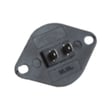
- Look for a small, flat safety device with two wires (often next to a thermostat)
What to check while you are there
A blown thermal fuse is usually a symptom of restricted airflow, not the root cause. We recommend checking these items before installing any replacement parts:
- Lint screen condition and fit (clean and seated correctly)
- Lint buildup in the lint chute and blower housing
- Vent duct length, kinks, crushed sections, or heavy lint buildup
- Exterior vent hood flap opening fully
- Blower wheel condition (cracked, loose, or packed with lint)
If you find damage or heavy lint at the blower, the dryer blower wheel WH16X34317 is a common wear item to inspect.
Quick symptom guide
| Symptom | What it often points to | What to do next |
|---|---|---|
| Dryer runs but no heat | Blown thermal fuse or heater circuit issue | Check airflow first, then test fuse and thermostats |
| Long dry times | Vent restriction or weak airflow | Clean venting and lint path end-to-end |
| Burning smell or very hot cabinet | Severe restriction or cycling issue | Stop using, clean venting, inspect blower housing |
Why it matters
The thermal fuse is a one-time safety cutoff designed to prevent overheating. If you replace it without fixing the airflow problem, the new fuse can blow again and the dryer can keep overheating.
Last updated: February 2026