Owner’s manual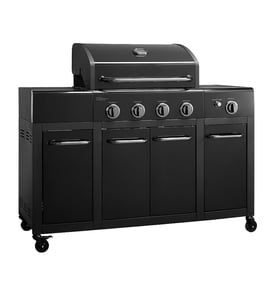


How do I find my Kenmore Grill model number?
On a Kenmore gas grill like model 41516123801, the model number is printed on the grill’s rating label. We typically find that label on the back of the grill base or inside the cabinet area; write down both the model and serial number before ordering parts or requesting service.
Where to look on the grill
Check these common label locations first:
- Back panel of the grill base (rear of the cart)
- Inside the cabinet (open the doors and look on side walls)
- Side panel near the control knobs (less common)
- Under the side shelf or near the LP tank area (less common)
What to record (and why)
The rating label usually includes more than just the model number. Capture these items:
- Model number (for example, 41516123801)
- Serial number (used to identify production run)
- Date purchased (helpful for warranty and service)
Quick reference table
| Label item | What it’s used for | When you’ll need it |
|---|---|---|
| Model number | Matching the correct parts diagram and parts list | Ordering burners, igniter parts, heat tents, grates |
| Serial number | Identifying the exact build/version | Service calls, confirming compatible replacement parts |
| Date purchased | Warranty timing and records | Warranty questions, proof of purchase |
Why it matters
Kenmore grills can look similar across model series, but parts like a burner, carryover tube, or electric igniter can vary by model. Using the exact model number from the rating label helps ensure you get the right replacement part the first time.
For diagrams and the full parts list for your grill, use the 41516123801 owner’s manual.
Last updated: January 2026
Who makes the Kenmore grill?
For Kenmore gas grill model 41516123801, the grill itself is a Kenmore-branded product, and the manufacturing is typically handled by an outside grill maker (an OEM) that builds the unit to Kenmore’s specifications. For model-specific identification details, we recommend checking the product information and parts diagram in the 41516123801 owner's manual.
How to identify the actual manufacturer on your grill
We see Kenmore grills produced by different OEMs over the years, so the most reliable way is to confirm what’s printed on your specific unit.
- Look for a rating label on the grill cart, firebox, or inside the cabinet area
- Check the label for the manufacturer name, address, or an ANSI/CSA certification listing
- Match the model number and any serial number exactly (including punctuation)
- Compare the parts list and diagram to your grill’s layout (burner count, side burner, ignition style)
- Use the manual’s parts diagram to confirm you are sourcing the correct replacement parts
Where this matters when ordering parts
Knowing the OEM helps because many Kenmore grills share similar-looking components, but the mounting points and dimensions can differ.
| What you’re replacing | What to match on the grill | Example part type for this model |
|---|---|---|
| Burner system | Burner length, venturi position, carryover alignment | Burner, carryover tube |
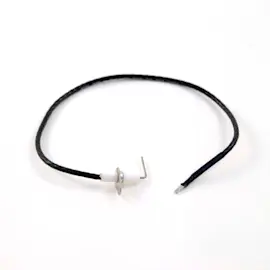
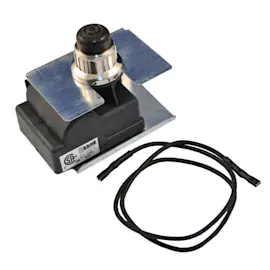
| Ignition | Battery/module style, wire routing, electrode location | Igniter module, igniter wire |
| Heat management | Heat tent shape and mounting tabs | Heat tent |
Why it matters
The correct manufacturer match helps prevent wrong-part fit issues, uneven heating, ignition problems, and premature wear. Using the manual’s parts list and diagram is the fastest way to confirm you’re buying parts that fit Kenmore model 41516123801.
Last updated: January 2026
Are Kenmore grills good quality?
Kenmore gas grills such as model 41516123801 are built for dependable outdoor cooking when they’re assembled correctly, maintained regularly, and used safely. This model’s Use and Care Guide also reflects long-term intent with a one-year full warranty and a five-year limited warranty on burners, which is a strong quality signal for the parts that see the most heat.
What “good quality” means for this Kenmore grill
Quality on a gas grill usually comes down to heat performance, durability of hot-zone parts, and how easy it is to keep clean.
- Burners and flame carryover: Consistent ignition and even flame depend on clean burners and a clear carryover path.
- Heat distribution: Heat tents and heat shields help reduce flare-ups and smooth out hot spots.
- Grease management: A clean grease cup helps prevent messy flare-ups and keeps airflow stable.
- Ignition reliability: Ignition issues are often maintenance-related (grease, corrosion, loose wires) rather than “bad grill” quality.
- Assembly and hardware: Tight, correctly installed fasteners reduce wobble and alignment problems.
Quick checks that improve performance and longevity
Use these steps as a practical “quality test” after assembly and during the season; we see these make the biggest difference.
- Preheat 10 to 15 minutes with the lid closed for stable temps.
- Keep burner ports clear (brush debris off when the grill is cool).
- Clean grease buildup routinely; empty and reinstall the grease cup correctly.
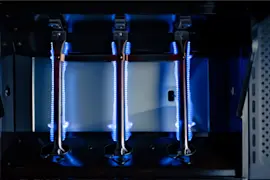
- Inspect flame pattern; uneven flames usually point to clogged ports or misalignment.
- Check for loose cart hardware and wheels; tighten as needed.
Common wear parts and what they affect
| Part area | What it does | When to service/replace |
|---|---|---|
| Burners | Create the flame and heat | Rust-through, weak/uneven flame |
| Heat tents | Shield burners, reduce flare-ups | Heavy corrosion, holes, severe warping |
| Ignition module/wiring | Creates spark for lighting | No spark, intermittent clicking |
| Grease cup | Collects grease safely | Cracks, missing cup, chronic overflow |
If you’re troubleshooting ignition or uneven heating, the 41516123801 owner’s manual is the best place to follow the model-specific safety and use guidance.
Why it matters
A grill can feel “low quality” when it’s really dealing with restricted gas flow, dirty burner ports, or grease buildup. Keeping the burner system, heat tents, and grease path clean helps your Kenmore grill heat faster, cook more evenly, and last longer.
Last updated: January 2026