Installation guide
 Owner’s manual
 Error Codes


How wide is a Kenmore side by side refrigerator?
Most Kenmore side-by-side refrigerators are about 33 inches to 36 inches wide; your Kenmore 10654586400 is in that typical range. For the exact cabinet width and required clearance for door swing, we recommend checking the dimensions section in the 10654586400 owner's manual.
When you need a “width” number for delivery, cabinetry, or replacement shopping, measure these three points:
- Cabinet width: main box, not counting handles
- Door and handle projection: how far the doors and handles stick out
- Clearance for door swing: space needed so doors open fully
If you are installing next to a wall, this model family commonly needs extra side clearance so the doors can swing open; the manual calls out leaving 2 inches minimum on the wall side (depending on the model).
- Measure across the front cabinet at the widest point (left edge to right edge)
- Measure again at the back (some cabinets are slightly different front to back)
- Include handles only if you need “overall width” for a tight doorway
- Confirm you have side clearance for door swing (especially next to a fixed wall)
- Level the refrigerator before finalizing fit; leveling affects door alignment and swing
| What you’re planning for | Typical width you’ll see | Notes |
|---|---|---|
| Standard side-by-side fit | 33 to 36 in. | Most common overall cabinet widths |
| Counter-depth side-by-side | 33 to 36 in. | Depth changes more than width |
| Tight alcove or wall install | Add clearance | Needed for door swing and airflow |
Width is only part of “will it fit.” Door swing clearance and ventilation space help prevent doors from binding, improve usability, and support proper cooling performance.
Last updated: February 2026
What are the most common problems with Kenmore refrigerators?
The most common problems we see on Kenmore refrigerators like model 10654586400 are cooling failures, water leaks, ice maker and dispenser issues, and unusual noises. These usually trace back to airflow restrictions (dirty coils or a failed fan), defrost system trouble, or water supply and sealing problems.
- Not cooling or warm temperatures: dirty condenser coils, failed evaporator fan, failed condenser fan, or a defrost problem causing ice buildup.
- Too much noise: normal operating sounds, a worn fan blade, or a failing fan motor.
- Water leaking or puddles: clogged defrost drain, loose water line, or a leaking inlet valve.
- Ice maker not making ice: water supply issue, clogged filter, or a failed ice maker.
- Doors hard to open or not sealing: dirty or sticky door gaskets, cabinet not level.
For model-specific operating checks and troubleshooting steps, use the 10654586400 owner's manual.
- Confirm the unit has power and the controls are set correctly.
- If your model has digital controls and it is not cooling, turn the unit OFF then ON to reset.
- Listen for fan operation; a failed fan often causes warm temps and odd noises.
- Check door alignment and level; an unlevel refrigerator can affect sealing.
- Clean sticky gaskets; dirty gaskets can make doors difficult to open.
| Problem | What to inspect | Part that commonly fixes it (if failed) |
|---|---|---|
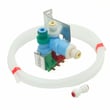
| No ice or slow ice | Water supply, filter, valve | Refrigerator inlet valve W10408179 |
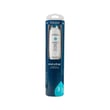
| Bad tasting water, slow dispense | Filter age, flow | Genuine Kenmore refrigerator water filter EDR3RXD1 |
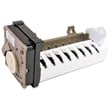
| Ice maker dead or inconsistent | Ice maker module | Refrigerator ice maker WPW10190965 |
| Frost buildup, warm fridge | Defrost heater and thermostat | Refrigerator heater WP2323198, refrigerator defrost bi-metal WPW10225581 |
Cooling, defrost, and water systems work together. A simple airflow issue (like dirty coils) can mimic a major failure, while a restricted water filter can look like an ice maker problem. Starting with the basic checks helps prevent unnecessary part replacement.
Last updated: February 2026
What's the average lifespan of a Kenmore refrigerator?
Kenmore refrigerators typically last 10 to 15 years. For a Kenmore side-by-side like model 10654586400, consistent maintenance (especially cleaning and airflow) and quick fixes for door-seal or cooling issues are what most often determine whether it reaches the high end of that range.
Most refrigerators fail early due to heat stress, poor airflow, or moisture problems that go unchecked.
- Keep condenser coils clean so the compressor runs cooler and less often
- Make sure doors close and seal fully; warm air causes longer run times and frost
- Maintain steady temperatures (avoid frequent warm-ups from propped doors)
- Fix water leaks quickly to prevent corrosion and ice buildup
- Replace worn parts promptly (fans, valves, gaskets) to avoid secondary damage
Use this as a simple baseline; the exact care steps for your unit are in the 10654586400 owner's manual.
| Task | How often | Why it matters |
|---|---|---|
| Clean condenser coils | Every 6 to 12 months | Reduces compressor heat and run time |
| Check/clean door gaskets | Every 3 months | Prevents air leaks, frost, and sweating |
| Verify temps (fresh food/freezer) | Monthly | Catches cooling drift early |
| Replace water filter (if equipped) | About every 6 months | Protects water flow and taste |
These symptoms usually mean the sealed system or airflow system is working too hard.
- Compressor runs almost constantly and temps still rise
- Repeated heavy frost on the evaporator cover
- Warm refrigerator section while freezer seems “okay”
- Water under the unit or recurring ice buildup
- Doors that will not stay aligned or seal consistently
A refrigerator that is struggling to cool uses more electricity and puts extra wear on the compressor and fans. Basic upkeep and early part replacement often adds years of service life.
Last updated: February 2026
Why is my Kenmore side by side ice maker not making ice?
If your Kenmore 10654586400 side-by-side refrigerator ice maker is not making ice, the usual causes are the ice maker being turned OFF, the freezer not being cold enough, the water supply being shut off, a jam in the ejector area, or restricted flow from a clogged filter.
- If the ice maker was just installed or reconnected, wait 72 hours for full production.
- Make sure the ice maker is ON (switch ON or wire shutoff arm down, depending on version).
- Confirm the freezer door closes fully; the ice maker stops when the door is open.
- Verify the household water shutoff valve to the refrigerator is fully open.
- Check the water filter for clogging or incorrect installation.
Some versions stop ice production if the storage bin is removed or not seated; a sensor cover (flipper door) must be closed.
- Reseat the ice bin so it locks in place.
- Look for a cube jammed in the ejector area; clear it with a plastic utensil.
- If ice melted and refroze around the auger in the bin, dump the ice, wash the bin, and let it restock.
| What you see | Likely cause | Next step |
|---|---|---|
| Ice maker mold is dry | Water not reaching ice maker | Check shutoff valve; consider refrigerator inlet valve W10408179 |
| Small cubes or slow output | Restricted water flow | Replace genuine Kenmore refrigerator water filter EDR3RXD1 |
| Ice clumps in bin | Melt/refreeze in bin | Empty and clean bin; allow 24 hours to restock |
Ice makers need steady water flow and a cold freezer to cycle. A partially closed shutoff valve, clogged filter, or bin/sensor issue can stop ice production even when cooling seems normal.
For control locations and ice maker/bin details specific to this refrigerator, use the 10654586400 owner's manual.
Last updated: February 2026