Owner’s manual
 Error Codes



Are bottom mount fridges better?
For many households, a bottom-mount refrigerator like the Maytag MBF1956HEW is the better layout because the fresh-food section sits at eye and waist level, so the items you use most are easier to reach while the freezer stays in a lower drawer.
What “better” usually means in day-to-day use
- Less bending for milk, produce, leftovers, and condiments
- Better organization for fresh food (more shelf visibility)
- Freezer storage is still roomy, but you access it by pulling out a drawer
- Often a good fit for cooks who use the refrigerator section more than the freezer
Tradeoffs to consider before you choose
Bottom-mount designs are not automatically best for everyone.
- If you use frozen foods constantly, you may prefer a top-freezer layout for quicker access
- Freezer drawers can hide items if you do not use bins or labels
- Some bottom-mount models feel heavier to open when the freezer is fully loaded
Quick comparison
| Layout | Best for | Common downside |
|---|---|---|
| Bottom-mount (freezer drawer) | Frequent fresh-food use, ergonomic access | Frozen items can be less visible |
| Top-freezer | Frequent freezer use, simple layout | More bending for fresh food |
| Side-by-side | Narrow door swing, balanced access | Narrower shelves for wide items |
Why it matters
Refrigerator layout affects comfort and food waste. When fresh food is easier to see and reach, it is more likely to get used before it spoils, and daily loading and unloading is less strain on your back.
Helpful model-specific tip
For setup and best performance, follow the clearance and leveling guidance in the MBF1956HEW owner's manual; proper airflow and a slight front-to-back tilt help the doors seal and the refrigerator run efficiently.
Last updated: January 2026
What is the average lifespan of a Maytag refrigerator?
Most Maytag refrigerators, including the Maytag MBF1956HEW bottom-mount style, typically last 10 to 15 years with normal household use. Consistent maintenance (clean airflow paths, good door sealing, and stable temperatures) is what most often separates a 10-year fridge from a 15-year one.
Typical lifespan and what affects it
Here are the biggest factors that influence how long a refrigerator runs reliably:
- Condenser airflow and cleanliness: dust buildup makes the compressor work harder.
- Door gasket condition: air leaks cause longer run times and temperature swings.
- Leveling and vibration: an unlevel refrigerator can vibrate and sound louder during normal operation.
- Ice maker and water system upkeep: mineral buildup and air in the line can reduce performance.
- How full it stays: very empty or overpacked compartments can reduce cooling efficiency.
Quick maintenance checklist (high impact)
We recommend these simple habits to extend service life:
- Keep food vents clear so cold air can circulate.
- Confirm doors close fully and seal all the way around.
- Set temperatures to typical targets (about 37°F fresh food, 0°F freezer).
- Clean spills promptly to prevent odors and corrosion.
- Replace water filters on schedule if your unit uses one.
What “end of life” usually looks like
Many refrigerators reach the end of economical repair when a sealed-system or major cooling component fails.
| Symptom | Common cause area | Typical next step |
|---|---|---|
| Warm fridge and freezer | Cooling system or controls | Diagnose temperatures and airflow first |
| Loud clicking, repeated starts | Compressor start components | Check start device and wiring |
| Frost buildup, poor airflow | Defrost system or evaporator fan | Inspect fan, defrost thermostat, airflow |
| No ice (select models) | Ice maker or water supply | Test fill, mold temp, and valve supply |
If you’re troubleshooting ice production on MBF1956HEW, the refrigerator ice maker D7824706Q is a common replacement part when the module or mold stops cycling.
Why it matters
A refrigerator that runs longer than necessary (from dirty airflow paths or leaky gaskets) puts extra wear on the compressor and control system. Keeping the unit level and sealing properly also helps reduce “normal operation” noises noted in the MBF1956HEW owner’s manual.
Last updated: January 2026
How to put shelves back in Maytag refrigerator?
To put shelves back in your Maytag refrigerator model MBF1956HEW, tilt the shelf up, set the rear hooks into the frame openings, then lower the front so the shelf settles and locks in place. Confirm the rear is fully seated so the shelf stays level and secure.
Reinstall standard shelves (Spill-Catcher or non-seamed)
Use this method for most fresh food compartment shelves.
- Remove food from the shelf so you can handle it safely.
- Tilt up the front edge of the shelf.
- Insert the rear hooks into the desired frame openings.
- Lower the front and let the shelf settle into place.
- Push gently at the back to confirm it is locked at the rear.
For the exact shelf style and positions used on MBF1956HEW, follow the steps in the MBF1956HEW owner's manual.
Reinstall the slide-out Elevator shelf (if your model has it)
Some MBF1956HEW configurations include an Elevator shelf that rides on vertical rails.
- Align the shelf with the frame rails.
- Push the shelf all the way back until it stops.
- If your shelf has a crank handle, use it to raise or lower the shelf after it is installed.
- Do not raise the shelf to the very top of the vertical rails (it can jam).
Quick comparison: standard shelf vs Elevator shelf
| Shelf type | How it locks in | Common mistake |
|---|---|---|
| Standard shelf | Rear hooks into frame openings | Rear hooks not fully seated, shelf tilts |
| Elevator shelf | Slides into frame, then adjusts by crank | Raising too high on rails, shelf jams |
Why it matters
A shelf that is not locked at the rear can tip when you slide items in or out, and it can also block airflow. Good airflow helps the refrigerator cool evenly and run efficiently.
If the shelf will not sit flat
- Check that the rear hooks are in matching left and right openings.
- Make sure no packaging, ice, or debris is stuck on the liner rails.
- Verify the shelf is not installed upside down.
- Avoid using foil, wax paper, or paper towels as shelf liners because they restrict airflow.
Last updated: January 2026
What is the most common problem with Maytag refrigerators?
On the Maytag MBF1956HEW bottom-mount refrigerator, the most common customer-reported issues are cooling performance problems (refrigerator or freezer too warm, or running too often) and ice maker problems. Many of these start with airflow, dirty condenser coils, door sealing, or control settings.
What to check first (fast, high-impact fixes)
- Confirm temperature settings: the manual notes adjusting the refrigerator or freezer control one step at a time (higher number = colder). See the MBF1956HEW owner's manual.
- Give it time after changes: after plugging in or changing settings, allow 8 to 12 hours for temperatures to stabilize.
- Reduce door openings: frequent or long door openings can make the refrigerator run more and warm up.
- Check door gaskets: a poor seal causes warm air leaks and longer run times.
- Clean condenser coils: dirty coils are a common reason a refrigerator runs too frequently and cools poorly.
Common symptoms and the most likely causes
| Symptom | Most common causes | What usually helps |
|---|---|---|
| Refrigerator too warm | Controls set too warm, doors opened often, dirty condenser coils | Adjust controls, improve airflow, clean coils |
| Freezer too warm | Controls set too warm, door not sealing, heavy warm food load | Adjust controls, check gasket, avoid overloading |
| Runs too frequently | High room heat/humidity, dirty coils, door not closing | Clean coils, improve door seal, level unit |
| Ice maker not making ice | Water supply issue, frozen fill path, ice maker failure | Check water supply, thaw, replace ice maker if needed |
When a part is commonly involved
If basic checks do not restore normal cooling or ice production, these model-matched parts are often involved in the repair:
- Refrigerator ice maker D7824706Q (no ice or poor ice harvest)
- Refrigerator control board WPW10503278 (erratic temps, inconsistent operation)
- Evaporator motor WPW10128551 or refrigerator evaporator fan blade WP2169142 (weak airflow, warm fresh food section)
- Refrigerator temperature sensor 12002355 (temperature sensing problems)
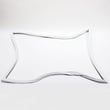
- Refrigerator door gasket WPW10443311 (warm air leaks, sweating, long run times)
Why it matters
Cooling and ice maker complaints usually trace back to airflow, sealing, and heat removal. Fixing those first prevents food spoilage, reduces noise from long run times, and helps the refrigerator operate efficiently.
Last updated: January 2026