Installation guide
 Owner’s manual
 Error Codes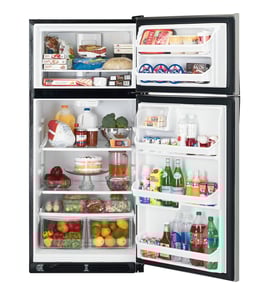


What are the disadvantages of a top mount fridge?
Top-mount refrigerators like the Frigidaire FRT17G4BWD are reliable and efficient, but the main disadvantages are less convenient fresh-food access (you bend more), fewer built-in organization features than many bottom-freezer designs, and fewer dispenser options on many models.
Common disadvantages (what most owners notice)
- Fresh-food section is lower: you reach down more often for everyday items.
- Freezer is at eye level: convenient for frozen foods, but it pushes the refrigerator compartment down.
- Fewer premium features: many top-mounts do not include external water or ice dispensing.
- Organization can be simpler: fewer adjustable bins, dividers, and specialty drawers on many models.
- Door swing and clearance needs: you still need space for doors to open fully and for airflow around the cabinet.
Installation and space considerations
Your refrigerator needs clearance for airflow and easier service access. The installation guidance for this style commonly calls for:
| Clearance area | Typical minimum clearance |
|---|---|
| Sides and top | 3/8 in |
| Back | 1 in |
For model-specific setup steps like leveling, toe grille removal, and door sealing checks, use the FRT17G4BWD installation guide.
Feature tradeoffs vs. other refrigerator styles
| Style | Main advantage | Main disadvantage |
|---|---|---|
| Top-mount (like FRT17G4BWD) | Usually lower cost, simple design | Fresh-food access is lower; fewer premium features |
| Bottom-freezer | Fresh food at eye level | Freezer access is lower; often higher cost |
| Side-by-side | Narrow door swing; easy freezer access | Narrower shelves; less wide-item storage |
Why it matters
Choosing a refrigerator style affects daily comfort (how often you bend), kitchen layout (door swing and clearances), and long-term satisfaction with storage features. If you prioritize fresh-food convenience and organization, a bottom-freezer layout often feels easier day to day.
Last updated: January 2026
What is the upper part of a fridge called?
On the Frigidaire FRT17G4BWD top-mount refrigerator, the upper section is the freezer compartment. It’s the coldest area of the appliance and is designed to keep foods frozen; on some setups it can also support an ice maker.
What the freezer compartment does
- Maintains below-freezing temperatures for long-term storage
- Helps keep the fresh food section cold by supporting overall cooling
- Houses freezer shelves/bins and the freezer door seal
- On ice-maker-equipped versions, provides the space and temperature needed for ice production
Freezer vs. fresh food section (quick comparison)
| Section | Typical use | Typical temperature range |
|---|---|---|
| Freezer compartment (upper) | Frozen foods, ice | 0°F to 5°F |
| Fresh food compartment (lower) | Refrigerated foods | 34°F to 40°F |
Why it matters
Knowing the correct name helps when you’re following setup steps, adjusting controls, or ordering parts for the right area of the refrigerator. For example, door sealing and leveling checks often reference the freezer door specifically.
Related setup tip for this model
During installation, we recommend confirming the freezer door is level and the door seal closes fully on all sides. The FRT17G4BWD installation guide walks through these final checks and basic leveling steps.
Last updated: January 2026
Which is better, top mount or bottom mount refrigerator?
A top-mount refrigerator like the Frigidaire FRT17G4BWD is usually the better pick if you want lower cost, simpler repairs, and strong efficiency. A bottom-mount is usually better if you want fresh-food items at eye level and easier access to the refrigerator section.
Quick comparison: top mount vs bottom mount
| Feature | Top mount (freezer on top) | Bottom mount (freezer on bottom) |
|---|---|---|
| Everyday access | Freezer is easiest to reach | Fresh food is easiest to reach |
| Typical cost | Lower | Higher |
| Repair complexity | Simpler design, fewer premium features | More complex (often more drawers, rails, sensors) |
| Organization | Basic shelves and bins | Often better drawer organization |
| Energy use | Often very efficient for the price | Can be efficient, but varies by design |
How to choose for your kitchen and habits
- If you use the freezer daily, a top mount keeps frozen foods at a comfortable height.
- If you cook with fresh foods daily, a bottom mount reduces bending for produce, dairy, and leftovers.
- If you want fewer “extras” to maintain, a top mount is typically the simplest long-term.
- If you want more drawer-style storage, a bottom mount usually wins.
- If you are tight on space, compare door swing and clearance requirements in the FRT17G4BWD installation guide.
Ownership and maintenance considerations
Even when two refrigerators cool equally well, the “better” choice often comes down to upkeep and usability.
- Cleaning and airflow: Keeping condenser coils clean helps either style run efficiently (your manual covers coil cleaning basics). See the FRT17G4BWD owner’s manual.
- Door sealing: A good gasket prevents temperature swings and moisture issues; replace a worn seal if the door does not close firmly.
- Common wear items: Shelves, bins, and rails are typical replacements over time on any configuration.
Why it matters
The refrigerator section is opened far more than the freezer for most households. Choosing the layout that matches your daily routine can reduce energy waste (less door-open time), improve food organization, and make the appliance feel “bigger” without changing capacity.
Last updated: January 2026
What is the most common problem with a Frigidaire refrigerator?
The most common Frigidaire refrigerator complaint is not cooling (fresh food section warm, freezer not freezing, or both). On the Frigidaire FRT17G4BWD top-mount refrigerator, the quickest wins are checking power, temperature controls, airflow, and frost buildup using the FRT17G4BWD owner's manual.
Most common issues we see (and what they usually point to)
- Not cooling or weak cooling: dirty condenser area, poor airflow, failed evaporator fan, sealed-system issue
- Frost buildup in the freezer: defrost problem (defrost thermostat, heater, timer/control)
- Runs constantly: warm room, door not sealing, heavy use, dirty condenser, airflow restriction
- Noisy operation: normal compressor and fan sounds can be louder on hard floors (some sounds are expected)
- Light not working: burned-out bulb or loose socket connection
Quick checks before replacing parts
Start with these simple checks because they solve many “not cooling” calls:
- Make sure the plug is fully seated and the breaker is on (the manual notes checking fuse/breaker and that the control is not set to “0”).
- Confirm the temperature controls are set correctly; allow 24 hours for temperatures to stabilize after changes.
- Keep vents clear inside both compartments; overpacking blocks airflow.
- Listen for the evaporator fan when the compressor is running; no airflow often means a fan issue.
- If you see heavy frost on the back freezer panel, suspect a defrost system problem.
Common symptoms and the most likely next step
| Symptom | What to check first | Parts that are often involved |
|---|---|---|
| Fresh food warm, freezer cold | Airflow from freezer to fridge | Air damper, evaporator fan |
| Both sections warm | Power, condenser airflow, compressor running | Compressor, sealed system |
| Frost blanket in freezer | Defrost system | Defrost thermostat |
| Interior light out | Bulb and shield | Light bulb |
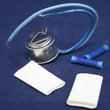
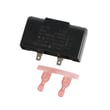
If you’re troubleshooting frost buildup, the refrigerator defrost bi-metal thermostat 5303918202 is a common component in the defrost circuit on this model family.
Why it matters
Catching “not cooling” early helps prevent food spoilage and can reduce strain on the compressor. The manual also notes that low voltage (about 10% or more variation) can affect performance and potentially damage the compressor, so stable power matters.
Last updated: January 2026