Installation guide
 Owner’s manual



What is the capacity of the Maytag model MGDB855DC4?
The Maytag gas dryer model MGDB855DC4 has an 8.8 cu. ft. drum capacity, which is considered a large-capacity dryer for bulky loads like comforters and towels. For cycle details and loading guidance, use the owner's manual.
What 8.8 cu. ft. means for everyday drying
A large-capacity drum helps reduce overdrying and long dry times by giving clothes room to tumble.
- Handles bulky items (comforters, blankets, winter coats) more easily
- Improves airflow through mixed loads (jeans plus shirts)
- Helps reduce wrinkling by preventing tight packing
- Lets you dry fewer, larger loads (often fewer cycles per week)
Quick loading guide (best results)
Use this as a practical rule of thumb for MGDB855DC4:
| Load type | How full to load the drum | What to watch for |
|---|---|---|
| Everyday mixed load | About 1/2 to 2/3 full | Items should tumble freely |
| Towels/denim | About 1/2 full | Heavy fabrics need more space |
| Bulky items | About 1/3 to 1/2 full | Avoid “balling up” and trapped moisture |
Why it matters
Capacity affects drying performance, energy use, and wear on parts like the belt, drum rollers, and blower system. Overloading commonly leads to longer dry times, hotter operating temps, and more strain on the drive system.
Related tip for long dry times
If the dryer seems to run but takes too long to dry, airflow is usually the first thing to check (lint screen, vent run, outside hood). The venting requirements and clearances are covered in the installation guide.
Last updated: February 2026
What's the life expectancy of a Maytag dryer?
A Maytag dryer like model MGDB855DC4 typically lasts 10 to 15 years with normal household use. Consistent airflow maintenance (lint screen and venting) and fixing wear items early (rollers, idler pulley) are the biggest factors in reaching the high end of that range.
Typical lifespan and what changes it
Most dryers fail early due to overheating, restricted exhaust, or neglected drum support parts. For a gas dryer, steady ignition and safe venting also matter.
Most common life-shorteners:
- Clogged lint screen or lint buildup inside the cabinet
- Long or crushed vent run, or too many elbows (restricted airflow)
- Running heavy loads that strain the drum support system
- Ignoring squealing, thumping, or burning smells
- Overheating events that trip a one-time safety fuse
Maintenance that helps you reach 15 years
Use these habits to reduce heat stress and wear:
- Clean the lint screen every load; replace it if torn or warped (see dryer lint screen (white) W10859086)
- Keep the vent path as straight and short as possible; avoid unnecessary 90° turns
- Make sure the dryer sits level so clothes tumble correctly (a sloped floor can affect sensor cycles)
- Vacuum lint from the lint chute and around the blower area periodically
- Address noise early by servicing drum support parts
Venting guidance (why airflow matters)
Your installation instructions warn that vent runs longer than specified reduce performance and can shorten dryer life. Use rigid metal venting when possible and avoid fasteners that protrude into the duct where lint can catch (details in the installation guide).
Parts that commonly extend dryer life
If your MGDB855DC4 starts squealing, rumbling, or takes longer to dry, these are frequent wear items:
| Symptom | Common cause | Example part on this model page |
|---|---|---|
| Squealing or chirping | Worn idler pulley | Dryer idler pulley W10837240 |
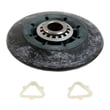
| Thumping or rumbling | Worn drum rollers | Dryer drum support roller WPW10314173 |
| No heat or intermittent heat | Weak gas valve coils or ignition sensing issue | Dryer valve coil kit 279834, dryer radiant sensor WP338906 |
Why it matters
A dryer that runs hot or runs too long wears out the motor, drum supports, and safety devices faster. Good airflow and quick repairs keep drying times normal, reduce energy use, and help the dryer reach its full service life.
Last updated: February 2026
Why is my Maytag Bravos XL dryer not drying?
If your Maytag gas dryer model MGDB855DC4 is not drying, the most common cause is restricted airflow from a crushed, kinked, or clogged vent; the dryer can also under-dry if it is not level (moisture sensor issue) or if the burner system is not heating consistently. Use the checks in the installation guide to pinpoint the cause.
Quick checks that fix most “not drying” complaints
- Clean the lint screen before every load; confirm air passes through it freely.
- Inspect the entire vent run for kinks, crushing, lint buildup, or a stuck exterior damper.
- Make sure the dryer is level side-to-side and front-to-back (leveling affects moisture sensing).
- Run a Timed Dry, heated cycle (not Air Only) to separate airflow issues from sensor-cycle issues.
- Verify the load is not overloaded and items are not coming out of the washer overly wet.
What to check based on the symptom
| What you notice | Most likely cause | What to do next |
|---|---|---|
| Clothes are warm but still damp | Vent restriction, poor airflow | Check vent routing, clamps, hood damper; clean venting |
| Clothes are cool, little or no heat | Gas heat system problem | Check gas supply is on; then test ignition components |
| Dries on Timed Dry but not Auto/Sensor | Dryer not level or sensor airflow issue | Level the dryer; confirm vent is clear |
Parts that commonly solve “no heat” or weak heat on this model
If airflow is good but heat is inconsistent or absent, these model-compatible parts are common fixes:
- Dryer valve coil kit 279834 (gas valve coils can fail and stop the burner from staying lit)
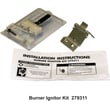
- Igniter 279311 (failed igniter prevents burner ignition)
- Dryer radiant sensor WP338906 (can prevent proper flame sensing)
- Dryer thermistor WP8577274 (temperature sensing issues can affect heat control)
- Thermal fuse W10909685 (a blown fuse can stop heat or operation depending on the circuit)
Why it matters
A restricted vent does more than slow drying; it overheats the dryer, can trip safety devices (like a thermal fuse), and makes cycles run longer. Getting airflow and leveling right restores normal drying performance and protects key components.
Last updated: February 2026
What is a Maytag Neptune DC?
“Maytag Neptune DC” most often refers to the Neptune Drying Center, an older Maytag laundry system that paired a dryer with an upper drying cabinet. Your Maytag MGDB855DC4 is a standard gas dryer model; use the MGDB855DC4 installation guide for the correct setup, venting, and gas connection requirements.
What “Neptune DC” usually means
When people say “Neptune DC,” they are typically talking about a specific Neptune-era product style, not a diagnostic code for MGDB855DC4.
- “DC” is used as shorthand for “Drying Center” in that Neptune product name
- It describes a two-section drying setup (tumble dryer plus an upper cabinet)
- It is associated with older Neptune product lines
- It is not a feature or configuration of the MGDB855DC4 gas dryer
How this relates to Maytag MGDB855DC4
For MGDB855DC4, “DC” is part of the model number and is not used to identify a Neptune Drying Center platform. The right way to identify your appliance is by the full model number on the tag inside the door opening.
| Term you searched | What it commonly refers to | What applies to MGDB855DC4 |
|---|---|---|
| Neptune DC | Neptune Drying Center product style | Not applicable |
| MGDB855DC4 | Maytag gas tumble dryer | Applicable |
| Installation requirements | Clearances, venting, gas hookup | Use the installation guide |
Why it matters
Dryer parts, wiring, and installation steps depend on the exact platform. Using Neptune Drying Center information for MGDB855DC4 can lead to wrong venting, incorrect gas hookup steps, or ordering the wrong replacement parts.
Helpful next steps for MGDB855DC4 owners
- Match the full model number exactly: MGDB855DC4
- Follow venting and clearance rules in the MGDB855DC4 installation guide
- If you are troubleshooting no-heat on a gas dryer, common wear items include the igniter and gas valve coils
- For a common gas-heat repair item used on many Maytag gas dryers, see the dryer valve coil kit 279834
Last updated: February 2026