Owner’s manual
 Error Codes
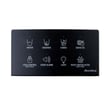

How to reset filter on GE side by side?
On the GE PSS26LSRESS side-by-side refrigerator, reset the water filter indicator by pressing and holding the RESET WATER FILTER pad on the dispenser for 3 seconds (on models that have that pad). After installing the new filter, flush water to clear air and carbon fines.
Reset and flush steps (recommended)
- Install the new filter and turn it to the right until it stops; do not overtighten.
- Dispense water for 3 minutes (about 1-1/2 gallons) to clear the system and reduce sputtering.
- Press and hold RESET WATER FILTER for 3 seconds (if your dispenser has that button).
- Check for steady water flow and normal ice maker fill.
- If water spurts right after replacement, keep flushing until the flow smooths out.
What if my dispenser does not have a reset button?
Some versions use a light that changes color and resets automatically after a filter change. If your model does not have a reset pad, focus on installing the filter correctly and flushing the line; the indicator behavior is covered in the owner's manual.
Common filter-related symptoms and what they usually mean
| Symptom | Most common cause | What to do |
|---|---|---|
| Slow water at dispenser | Clogged/old filter | Replace the filter and flush 3 minutes |
| Sputtering after change | Air in the line | Keep dispensing until steady |
| Ice maker slows down | Restricted water flow | Replace filter, confirm water supply is on |
| No water/ice after removing filter | Missing bypass plug | Install a filter or the bypass plug (if used on your setup) |
Why it matters
A proper reset and flush helps your PSS26LSRESS maintain normal dispenser flow and ice production, and it prevents trapped air from causing sputtering right after a filter change.
Last updated: February 2026
Are GE side by side refrigerators good?
Yes. GE side-by-side refrigerators like model PSS26LSRESS are a solid, long-lasting design with strong temperature control and convenient features (ice and water through the door). Expect normal operating sounds from the compressor and airflow system, especially after door openings or temperature changes; details are in the owner's manual.
What “good” usually means for this style
A side-by-side refrigerator is typically a good fit when you want easy access to both fresh food and frozen items without bending, plus steady airflow to keep temperatures even.
Common strengths:
- Consistent cooling when the controls are set correctly
- Good organization with shelves and door bins
- Convenient dispenser features (water and ice)
- Efficient operation, but it can run longer after frequent door openings
Noise and performance expectations (what’s normal)
Modern refrigerators often sound different than older units. For PSS26LSRESS, normal sounds can include humming, whooshing, and occasional clicks or pops as the system runs and pressures equalize.
| What you notice | What it usually indicates | What to do |
|---|---|---|
| High-pitched hum | Compressor running | No action needed |
| Whoosh when doors close | Pressure equalizing | No action needed |
| Longer run times | Doors opened often, temperature recovering | Allow time to stabilize |
How to get the best results from your PSS26LSRESS
We recommend starting with the factory settings and making small changes only after the unit has time to respond.
- Start at the factory preset of 5 for both refrigerator and freezer controls
- Allow 24 hours for temperatures to stabilize before judging performance
- After any adjustment, wait another 24 hours before adjusting again
- Avoid setting either control to 0 (it stops cooling in both compartments)
- Keep door openings brief to reduce long run times
Why it matters
“Good” performance depends heavily on setup and use. Correct control settings, stable door seals, and a properly working airflow and defrost system help prevent warm spots, freezer burn, and temperature swings.
Last updated: February 2026
Do they make small side-by-side refrigerators?
Yes. Side-by-side refrigerators are made in smaller widths and capacities for tighter kitchens, but they are still typically larger than compact or apartment-style top-freezer units. For fit, focus on overall width, depth, and door-swing clearance, then compare those measurements to your space and cabinetry.
What “small” usually means for side-by-side refrigerators
Most side-by-side models are built around standard kitchen openings, so “small” usually means a narrower cabinet width or a shallower depth.
- Width: many “smaller” side-by-sides are around 32 to 33 inches wide
- Standard width: many common side-by-sides are around 35 to 36 inches wide
- Depth: counter-depth versions sit closer to the cabinet line but often have less interior capacity
- Capacity: smaller side-by-sides often trade freezer and fresh-food space for a narrower footprint
How to choose the right size (and avoid install surprises)
Use these checks before you buy or move a refrigerator into place:
- Measure the narrowest doorway or hallway the refrigerator must pass through
- Measure the cabinet opening width and allow clearance for leveling and airflow
- Confirm door swing space so doors and drawers open fully
- Plan for water line routing if you have an ice maker or dispenser
- If an entrance is less than 38 inches wide, many side-by-side designs require door removal to get the unit through (a common install step)
Quick size comparison
| Type | Typical width | Typical depth | Best for |
|---|---|---|---|
| Smaller side-by-side | 32–33 in. | Standard or counter-depth | Tight kitchen, want side-by-side layout |
| Standard side-by-side | 35–36 in. | Standard depth | Most full-size kitchens |
| Top-freezer (apartment/compact) | 24–28 in. | Shallower | Smallest spaces, lowest capacity needs |
Why it matters
A side-by-side can look like it will fit, but door removal, water line connections, and tight entryways can turn delivery and installation into a problem. Planning measurements first prevents damage to floors, doors, and the refrigerator.
For model-specific handling and moving guidance for your GE PSS26LSRESS, use the PSS26LSRESS owner’s manual.
Last updated: February 2026
What is the most common problem with a GE refrigerator?
The most common issue we see with GE refrigerators like model PSS26LSRESS is a cooling complaint (fresh food too warm, freezer too warm, or temperatures that swing). In many cases, the root cause is restricted airflow or a component that supports cooling, such as a fan motor, temperature sensor, or a defrost-system part; our PSS26LSRESS owner's manual covers safe checks and normal operation details.
Quick checks that fix many “not cooling” complaints
- Make sure air vents inside both compartments are not blocked by food packages.
- Confirm the doors close and seal fully; frequent door openings can make the unit run longer.
- Listen for normal operating sounds (humming, whooshing, clicking) that can occur during cooling.
- If the unit runs a lot, check for airflow restrictions before assuming the compressor is bad.
- Unplug the refrigerator before cleaning or attempting any repair.
Parts that commonly affect cooling on PSS26LSRESS
If basic airflow checks do not help, these model-matched parts are common suspects:
- Refrigerator evaporator motor WR60X10307 (moves cold air through the refrigerator)
- GE profile refrigerator temperature sensor WR55X10025 (helps regulate temperature)
- Refrigerator defrost heater WR51X10055 (prevents frost buildup that blocks airflow)
- Refrigerator defrost thermostat WR50X10068 (controls defrost heater operation)
- Refrigerator main board WR55X10942C (can affect cooling logic and run times)
Symptom-to-cause guide (fast triage)
| Symptom | Most likely direction to check | Common related parts |
|---|---|---|
| Freezer cold, fresh food warm | Airflow problem from freezer to fresh food | Evaporator fan motor, air duct |
| Both sections warm | Cooling system not running correctly | Control board, compressor/start components |
| Frost/ice buildup, weak airflow | Defrost system problem | Defrost heater, defrost thermostat |
| Temps swing up and down | Sensing/control issue | Temperature sensor, main board |
Why it matters
Cooling problems usually get worse over time: poor airflow can force longer run times, create uneven temperatures, and lead to food spoilage. Catching a dirty-airflow or defrost issue early often prevents bigger repairs later.
Last updated: February 2026