Installation guide
 Owner’s manual


How to clean the inside of an Amana dishwasher?
To clean the inside of your Amana dishwasher model ADB1300AFW0, we recommend a vinegar rinse for light buildup and a monthly dishwasher cleaner tablet for hard water film. This removes odors, improves wash performance, and helps prevent spotting.
Quick inside-cleaning steps (vinegar rinse)
- Remove dishes, silverware, and any loose debris from the tub bottom.
- Place 2 cups (500 mL) of white vinegar in a glass or dishwasher-safe measuring cup.
- Set the cup on the bottom rack.
- Run a complete wash cycle using air-dry or an energy-saving dry option.
- Do not add detergent for this vinegar cycle.
Monthly deep clean for hard water film
If you see cloudy residue or hard water buildup, use a monthly maintenance tablet as described in the ADB1300AFW0 owner’s manual.
- Load the dishwasher (dishes with film can stay in).
- Place a dishwasher cleaner tablet in the main wash compartment.
- Choose a cycle/options intended for heavily soiled loads.
- Start the cycle and let it finish.
Vinegar rinse vs. cleaner tablet
| Method | Best for | How often | What to use |
|---|---|---|---|
| Vinegar rinse | Odors, light residue | As needed | White vinegar |
| Cleaner tablet | Hard water film, mineral buildup | Monthly | Dishwasher cleaner tablet |
Why it matters
A clean tub and spray path help water circulate correctly, which improves cleaning and drying. Regular interior cleaning also reduces spotting and filming, especially when your home has hard water.
Helpful related care tip
If the dishwasher is not draining well, check and clean the drain air gap (if your installation uses one). For more routine upkeep, follow the steps in how to clean and maintain your dishwasher.
Last updated: February 2026
Why is my Amana dishwasher not drying dishes?
On the Amana ADB1300AFW0, poor drying is usually caused by low or missing rinse aid, Heat Dry not being used, plastics holding water, or loading that traps water in cups and concave items. Start by confirming rinse aid level and using Heat Dry for the cycle (see the ADB1300AFW0 user guide).
Quick checks that fix most drying problems
- Fill the rinse aid dispenser to “Full” and lock the cap.
- Turn on the Heat Dry option; drying performance drops without rinse aid.
- Expect plastics and nonstick items to stay wetter; towel-drying may be needed.
- Load cups and glasses at an angle so water drains; avoid nesting.
- Unload the bottom rack first to prevent water dripping onto lower items.
- Confirm incoming hot water is about 120°F (49°C) before starting the cycle.
When a part problem is likely
If you have rinse aid filled, Heat Dry selected, and water is hot, then a heating or control issue becomes more likely. A common component to check is the heater circuit.
What to inspect
- Look for obvious damage on the heater area at the bottom of the tub.
- If you use a multimeter, check the heater for continuity (power must be off).
Relevant part for this model
| Symptom | What it points to | Model-matched part |
|---|---|---|
| Dishes consistently wet, Heat Dry used | Heater not heating | Element assembly W10518394 |
Why it matters
Drying depends on water sheeting off dishes during the final rinse and evaporating during the dry portion of the cycle. Rinse aid reduces droplets and improves drainage; Heat Dry boosts evaporation, especially on glass and ceramic.
Last updated: February 2026
Why is my Amana dishwasher leaking?
If your Amana dishwasher model ADB1300AFW0 is leaking, the most common causes are a loose or damaged drain connection, a door seal issue, or a leak at the pump and sump area (often from a worn seal or cracked housing). Start by checking for the exact leak location and tightening any hose clamps.
Quick checks that fix many leaks
- Stop the cycle and look for the source: front of door, left/right side, or underneath.
- Check the door closing and latch: a door that is not fully latched can let water escape during wash.
- Inspect the drain hose routing: kinks, a loose connection, or a split hose can drip during drain.
- Look for oversudsing: hand soap or too much detergent can create foam that pushes water past seals.
- Confirm the dishwasher is level: a forward tilt can cause water to spill at the door.
Parts that commonly cause leaks on ADB1300AFW0
Leaks from underneath usually point to the pump, sump, or hose connections. These model-matched parts are common suspects:
| Leak area you see | Most likely issue | Model-matched part to inspect |
|---|---|---|
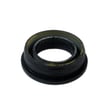
| Under the unit, near pump | Worn seal or leak at pump connection | Dishwasher pump grommet WPW10538166 |
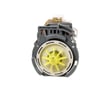
| Under the unit during fill | Valve seep or loose inlet connection | Dishwasher water inlet valve W11175771 |
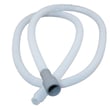
| Under the unit during drain | Split hose or loose clamp | Dishwasher drain hose 8269144A |
Step-by-step: find the leak location
- Turn off power at the breaker and shut off water to the dishwasher.
- Pull the toe-kick panel and place a towel under the front edge.
- Run a short cycle and watch with a flashlight (only after restoring power and water).
- If water appears only when draining, focus on the drain hose and drain pump area.
- If water appears during fill or early wash, focus on the inlet valve and sump area.
For model-specific access steps and safety notes, follow the ADB1300AFW0 owner's manual and the ADB1300AFW0 installation guide.
Why it matters
Even a small dishwasher leak can damage flooring and cabinets, and it can also lead to electrical issues if water reaches wiring or the junction box. Finding the leak source first prevents replacing the wrong part.
Last updated: February 2026