Owner’s manual
 Error Codes
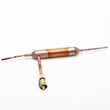


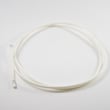
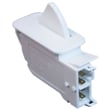
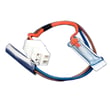
What are the common problems with Kenmore 79575544401 refrigerators?
Common problems on the Kenmore Elite 79575544401 bottom-mount refrigerator include no cooling or weak cooling, ice maker slow or not making ice, water dispenser leaks or low flow, doors that do not seal well, and frost buildup tied to defrost system issues. Use the 79575544401 owner's manual troubleshooting guide to narrow the cause.
Most common symptoms we see
- Refrigerator not cooling or temperature swings in the fresh food section
- Freezer not cold enough; ice production is slow (often needs 24 hours after hookup)
- Ice cubes are small or hollow (water supply restriction is common)
- Water dispenser or ice maker leaks, drips, or has low flow
- Doors are hard to open or do not close tightly (gasket contamination or alignment)
- Frost buildup or warm spots caused by defrost or airflow problems
Quick checks that solve a lot of calls
- Confirm controls are set correctly; allow 24 hours for temperatures to stabilize after changes.
- Make sure doors fully close and nothing is holding them open.
- Clean sticky/dirty door gaskets; a thin coat of appliance polish after cleaning helps reduce sticking.
- Verify the refrigerator has proper airflow around it and the condenser area is not packed with dust.
- If ice is slow or cubes are small, confirm the household shutoff valve is fully open and the water line is not kinked.
Parts that commonly relate to these problems
| Symptom | Likely area | Example part on this model |
|---|---|---|
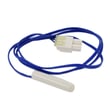
| Frost buildup, warm freezer | Defrost system | Refrigerator defrost sensor assembly 6615JB2005H |
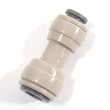
| Ice maker slow, small cubes, no water | Water supply/valve/tubing | Refrigerator water inlet valve 5221JB2006K |
| Interior light issues, door alarm behavior | Door switch | Refrigerator door push-button switch 6600JB1010A |
Why it matters
Catching airflow, door-seal, and water-supply issues early prevents food spoilage, reduces compressor run time, and helps the ice maker and dispenser work consistently.
Last updated: February 2026
What is the average lifespan of a Kenmore 79575544401 refrigerator?
A Kenmore Elite refrigerator like model 79575544401 typically lasts 12 to 15 years. Keeping condenser coils clean, maintaining good airflow around the cabinet, and fixing cooling or defrost issues quickly helps you reach that normal service life.
Typical lifespan and what affects it
Most bottom-mount refrigerators land in the 12 to 15 year range; the biggest factors are heat management, door sealing, and how hard the sealed system has to work.
- Keep condenser coils clean to reduce compressor run time
- Maintain proper air circulation around the refrigerator cabinet
- Make sure doors close fully and gaskets seal (warm air adds moisture and frost)
- Address temperature swings early (food safety and compressor wear)
- Replace failed defrost components promptly to prevent ice buildup
Maintenance checklist we recommend
Use your 79575544401 care and cleaning schedule as your baseline; the owner's manual covers cleaning tips and airflow guidance.
| Task | How often | Why it matters |
|---|---|---|
| Clean condenser coils | Every 6 to 12 months | Lowers heat load and extends compressor life |
| Check door seal and alignment | Every 3 to 6 months | Prevents warm air leaks and frost |
| Verify temps (fresh food and freezer) | Monthly | Catches cooling problems early |
| Clear vents and avoid overpacking | Ongoing | Keeps airflow steady for even cooling |
When a “short lifespan” is really a repairable issue
If your refrigerator is running constantly, warming up, or frosting over, it often points to a fixable problem (not end-of-life). Common culprits include defrost and airflow components.
A few model-relevant parts that can be involved in cooling and frost issues include:
- Refrigerator defrost sensor assembly 6615JB2005H
- Lg refrigerator defrost heater 5300JK1005D
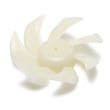
- Refrigerator evaporator fan blade 5901JA1021A
Why it matters
Hitting the normal 12 to 15 year lifespan usually comes down to reducing strain on the compressor and preventing moisture-related frost problems. Simple upkeep and timely part replacement protect food temperatures and help avoid expensive sealed-system wear.
Last updated: February 2026
What size is Kenmore refrigerator model 79575544401?
Kenmore Elite refrigerator model 79575544401 is a bottom-freezer style refrigerator; its exact exterior dimensions and capacity are listed in the specifications section of the owner's manual. If you are measuring for a kitchen opening, we recommend confirming width, height, depth, and required clearance before moving the unit into place.
How to measure the refrigerator correctly
Use a tape measure and record these numbers (in inches):
- Width: left side to right side at the widest point (often the doors)
- Height: floor to top of hinge cover (or highest point)
- Depth: front of doors to back (note if you include handles)
- Door swing clearance: space needed for doors and drawers to open fully
- Ventilation clearance: space behind and above for airflow
Typical size range for this style (helpful for planning)
Most Kenmore bottom-freezer refrigerators in this family commonly fall into these planning ranges:
| Measurement | Typical range (in.) | What can change it |
|---|---|---|
| Width | 32 to 34 | door design, trim, hinge covers |
| Height | 67 to 70 | leveling legs, hinge cover |
| Depth | 30 to 34 | handles, door thickness |
Clearances we recommend checking
Even when the cabinet opening looks wide enough, clearances can be the difference between an easy install and a tight fit.
- Leave room behind the refrigerator for the water line and airflow
- Confirm the refrigerator can pass through doorways and hallways
- Make sure the freezer drawer can pull out without hitting an island or wall
- Verify the unit can be leveled without raising it into an overhead cabinet
- If you have a water dispenser or ice maker, confirm the water line routing and slack
Why it matters
Correct sizing prevents door interference, poor airflow (warm temperatures), and water line kinks. It also helps avoid damage to flooring and cabinets during installation and leveling.
Last updated: February 2026
How to tell if a Kenmore refrigerator compressor is bad?
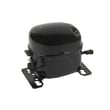
A bad compressor on your Kenmore Elite refrigerator model 79575544401 usually shows up as poor cooling with the unit trying to run, unusual clicking or repeated start attempts, or the compressor running hot while temperatures stay warm. First rule out normal “new fridge” sounds and airflow issues.
Quick checks we recommend first
- Confirm the refrigerator has power and the controls are set to cool (not OFF).
- Listen for the evaporator fan and condenser fan; fan airflow problems can mimic compressor failure.
- Check for normal operating sounds like gurgling, popping, and occasional clicking (these can be normal during cycling and defrost).
- Make sure the condenser area is not blocked by dust or items; restricted airflow can cause long run times.
- Verify doors close and seal well; warm air leaks cause constant running and poor cooling.
- If the compressor tries to start and you hear repeated clicking, suspect a start device issue before condemning the compressor.
Symptoms that point to compressor trouble
| What you notice | What it often means | What to do next |
|---|---|---|
| Fridge and freezer both warm, compressor silent | Not running or not getting power | Check outlet, breaker, control settings; then test start components |
| Repeated click every few minutes, little or no cooling | Start relay/overload failing or compressor locked | Inspect/replace start relay; if it still clicks, compressor may be locked |
| Compressor runs a lot, cooling is weak | Sealed system or compressor efficiency issue | Check condenser airflow and door seals; then consider sealed system service |
| Compressor very hot to the touch after trying to run | Overload tripping from hard start | Check condenser fan/coil cleanliness; evaluate start relay |
Parts that are commonly involved
If you have clicking and the compressor will not stay running, the start device is a common culprit. If the compressor itself is confirmed failed, it is replaced as an assembly.
Why it matters
The compressor is part of the sealed refrigeration system; when it cannot start or cannot pump efficiently, both compartments warm up. Many “bad compressor” complaints end up being airflow, dirty condenser coils, or a start device problem, so the quick checks above save time and cost.
For model-specific operating sounds and troubleshooting guidance, use the owner's manual.
Last updated: February 2026