 Owner’s manual
 Error Codes



Are all 24 inch dishwashers the same height?
Most 24-inch dishwashers are built to fit the same standard cabinet opening, so their overall height is usually very similar; however, they are not all exactly the same height. For your KitchenAid KUDI24SEBL1, confirm the exact cutout and leveling range in the owner's manual.
Even when the width is “standard,” height can vary based on leg adjustment, toe-kick design, and whether the unit is a tall-tub style.
- Most 24-inch built-in dishwashers are designed for a standard opening around 34 to 35 inches tall
- Adjustable leveling legs typically allow minor height changes to match the countertop
- Some models need a little extra clearance for insulation blankets or sound packages
- Flooring changes (tile, added underlayment) can reduce usable opening height
- The toe panel area can affect how the dishwasher sits and aligns with cabinetry
Measure the opening, not just the old dishwasher. Use a tape measure and check in multiple spots.
| Measurement | What to check | Why it matters |
|---|---|---|
| Opening height | Floor to underside of countertop | Prevents binding during install/removal |
| Opening width | Side-to-side at front and back | Ensures the tub clears the cabinet walls |
| Opening depth | Back wall to cabinet face | Confirms door closes flush and hoses fit |
| Leveling range | Leg adjustment available | Helps match countertop height and door alignment |
A dishwasher that is even slightly too tall can get stuck under the countertop, and one that sits too low can leak at the door or vibrate because it cannot be leveled correctly.
If you are reinstalling KUDI24SEBL1 and the unit will not sit correctly, these parts commonly come up during service:
- Toe panel (white) WP3379921 (toe-kick clearance and front alignment)
- Dishwasher drain hose WP3374077 (routing can push the unit forward if kinked)
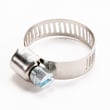
- Clamp WP596669 (secures hoses so they do not interfere with positioning)
Last updated: February 2026
What is the average lifespan of a KitchenAid dishwasher?
A KitchenAid dishwasher typically lasts 10 years. With normal home use and basic maintenance, many run 9 to 14 years. For your KitchenAid KUDI24SEBL1, consistent cleaning and correct loading help reduce wear on the pump, spray arms, and seals (see the care and maintenance section in the owner's manual).
- Water quality: Hard water speeds up mineral buildup on the wash system and heating circuit.
- Usage frequency: Multiple loads per day shortens overall life compared to 3 to 5 loads per week.
- Cleaning habits: Keeping filters and spray paths clear prevents strain on the pump motor.
- Detergent and rinse aid use: Correct amounts reduce residue and improve wash performance.
- Installation basics: Proper leveling and a solid floor reduce vibration and component stress.
- Run hot water at the nearest sink before starting a cycle (helps cleaning and reduces repeat washing).
- Make sure the upper and lower spray arms spin freely before you start.
- Periodically clean the drain air gap (if your plumbing setup uses one) when draining is slow.
- Inspect for leaks at the tub and door area; replace worn seals promptly.
| Symptom | What it can stress | Example part for KUDI24SEBL1 |
|---|---|---|
| Poor draining, water left in tub | Pump and motor | Dishwasher drain hose WP3374077 |
| Leaks at the door | Flooring, wiring, corrosion risk | Gasket W11196317 |
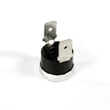
| Overheating or poor drying | Heating circuit | Thermostat WP661566 |
Dishwashers often fail early from avoidable issues like restricted spray, poor drainage, or small leaks. Staying ahead of those problems protects high-cost components such as the pump motor and helps you get the full expected service life.
Last updated: February 2026
What is the most common problem with KitchenAid dishwashers?
The most common KitchenAid dishwasher complaint is poor cleaning or poor drying, and on the KitchenAid KUDI24SEBL1 it is usually caused by loading issues, detergent or rinse aid problems, low incoming water temperature, or spray arm slowdowns from excess suds. We recommend checking these basics first using the owner's manual.
- Food soil left on dishes: improper loading, not enough water fill, or spray arms slowed by high suds
- Dishes not dry: water entering too cool (target at least 120°F), rinse agent empty, or overloading
- Won't start or stops mid-cycle: door not fully latched, cycle not set correctly, or a tripped breaker
- Not draining well: a clogged drain path or a dirty external drain air gap (if your setup uses one)
- Leaks at the door: worn or mis-seated door seal or foaming from the wrong detergent
- Use the right detergent: only automatic dishwasher detergent; avoid soap or laundry detergent.
- Confirm rinse agent is filled: it improves drying and helps prevent spotting.
- Verify hot water: set the water heater so incoming water is at least 120°F (49°C).
- Load for spray access: keep tall items from blocking spray arms; do not overcrowd.
- Check power and door closure: door must be tightly closed; confirm breaker and water supply are on.
- If draining is weak: inspect and clean the sink-top air gap (when installed by local code).
| Symptom | Most likely cause | What to do first |
|---|---|---|
| Dishes still dirty | High suds, poor loading, weak fill | Use correct detergent, reload, confirm 20 to 120 psi supply pressure |
| Dishes wet after cycle | Low water temp, no rinse agent | Set 120°F incoming water, fill rinse agent |
| Dishwasher does not run | Door not closed, breaker tripped | Latch door firmly, reset breaker |
| Not draining | Air gap clogged (if present) | Clean the air gap and check drain path |
If the basics check out and performance is still inconsistent, a failed temperature control or wash system component can be involved. For this model, common related parts include the thermostat WP661566 and the pump motor W10428773.
Cleaning and drying problems are often caused by setup and maintenance issues, not a major failure. Fixing detergent, loading, and water temperature first prevents unnecessary part replacement and restores normal wash performance faster.
Last updated: February 2026







