



What are the blades on a tiller called?
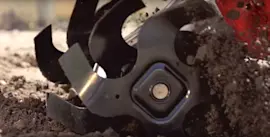
On the Craftsman 917292300 front-tine tiller, the “blades” are called tines. Tines are the rotating digging tools that break up, mix, and cultivate soil; different tine shapes are used depending on soil conditions and how aggressively you want to till.
Common names you will see
- Tines (most common)
- Tiller tines
- Cultivator tines
- Digging tines
Types of tines (what they are best for)
Most front-tine tillers use one of these common tine styles:
| Tine style | What it looks like | Best for |
|---|---|---|
| Bolo | Curved “spoon” shape | General garden soil, mixing amendments |
| Pick and chisel | More pointed, aggressive edges | Harder soil, breaking new ground |
| Slasher | More knife-like cutting profile | Cutting through roots and heavy debris |
When to replace tiller tines
Replace tines when you notice any of these:
- Rounded or worn leading edges (tiller “skips” or bounces)
- Bent or cracked tine arms
- Uneven tilling depth side-to-side
- Excessive vibration from a damaged tine set
For step-by-step help, we recommend how to replace the tines on a front tine tiller.
Why it matters
Using the right tine style and keeping tines in good condition helps your Craftsman 917292300 tiller dig consistently, reduces strain on the drive system, and improves soil texture for planting.
Last updated: February 2026
Where is the model number on a Craftsman tiller?
On a Craftsman tiller like model 917292300, the model number is printed on a product ID label (a sticker or metal tag). It’s most often located on the tine shield/guard area or on or near the fuel tank; some units place it on the front of the frame.
Common places to check first
Look for a rectangular label that includes the model number and sometimes a serial number. Check these spots:
- On the tine guard (tine shield) above or behind the tines
- On the frame near the engine mount
- On or near the fuel tank (side or top area)
- On the front of the tiller frame (especially on larger units)
- Near the handle support brackets
Quick tips to find it faster
If the label is dirty or worn, these steps usually help:
- Wipe the area with a damp rag; dried mud often hides the tag
- Use a flashlight and look from the side of the tine shield
- Check both sides of the frame rails
- If the sticker is faded, look for an embossed or stamped metal tag
Why it matters
The exact model number (for example, 917292300) ensures we match the correct Craftsman tiller parts, diagrams, and hardware sizes. That’s especially important for common wear items and fasteners such as a depth stake 532446066 or a control lever 584447601.
What the label typically looks like
| What you’ll see | What it’s used for |
|---|---|
| Model number (example: 917292300) | Matching parts and diagrams |
| Serial number | Identifying production run/version |
| Basic specs (varies) | Confirming configuration |
Last updated: February 2026
Are Craftsman tillers any good?
Yes. Craftsman tillers, including the Craftsman 917292300 front-tine tiller, are a solid choice for typical home garden work because they’re widely supported with replacement parts and are designed for straightforward maintenance. Like any tiller, long-term satisfaction depends on correct setup, belt/tine condition, and not overloading the machine in rocky soil.
What “good” usually means for a tiller
A tiller is doing its job when it consistently breaks up soil without excessive bouncing, belt slip, or stalling. For most homeowners, a “good” tiller delivers:
- Reliable tine engagement and consistent digging
- Manageable vibration and controllable handling
- Easy-to-find wear parts (nuts, pins, pulleys, idlers)
- Reasonable upkeep (tune-ups, belt checks, tine inspection)
Common strengths and common complaints (what we see most)
Craftsman tillers tend to earn praise for capability, but the same themes come up when users are unhappy.
| Area | Strengths | Common issues when neglected or worn |
|---|---|---|
| Tilling performance | Breaks up average garden soil well | Poor tilling when tines are worn or installed incorrectly |
| Serviceability | Parts support is strong | Small hardware loosens if fasteners are reused or not tightened |
| Durability | Holds up with routine maintenance | Premature wear if run with loose belts, bent tines, or misadjusted controls |
Quick checks that improve performance fast
If your 917292300 feels weak, hard to control, or inconsistent, these checks usually make the biggest difference:
- Inspect tines for rounding, bending, or missing hardware; replace as needed
- Verify the depth stake is set correctly for the soil (shallow passes first)
- Check belt-driven components for slip (glazing, burning smell, squeal)
- Confirm the tine control linkage moves freely; a worn lever can reduce engagement
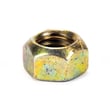
- Tighten and replace worn fasteners instead of reusing distorted lock nuts
Helpful DIY guidance: tiller common questions
Parts that often matter on older tillers
Wear items and linkage hardware are frequent culprits when a tiller “feels worn out.” For this model, examples include the control lever 584447601 and the depth stake 532446066.
Why it matters
A tiller can seem “bad” when it’s really just worn tines, a slipping drive system, or loose linkage hardware. Restoring proper engagement and depth control usually brings back the performance you expect.
Last updated: February 2026
What are the parts of a power tiller?
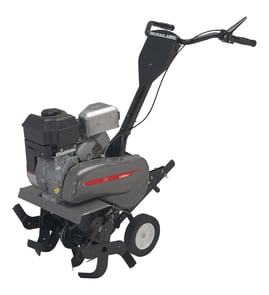
A power tiller (including the Craftsman 917292300 front-tine tiller) is built from an engine-driven powertrain that turns the tines, plus controls and hardware that let you steer, set depth, and keep everything secured. Common parts include the tine drive components, control levers/cables, pulleys/idlers, and fasteners.
Main assemblies you will typically find
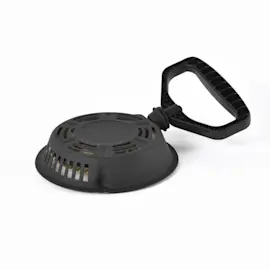
- Engine and starting system (recoil starter, fuel system, ignition)
- Drive system (belts, pulleys, idlers, and related brackets)
- Transmission/gearcase (transfers power to the tine shaft)
- Tines and tine shaft (the cultivating blades that break soil)
- Handle and controls (throttle, engagement lever, cable)
- Depth control (depth stake and its mounting hardware)
- Wheels/drag stake setup (varies by model and configuration)
Examples of real parts on the Craftsman 917292300
These are common “building block” parts you will see when servicing the tine drive and controls:
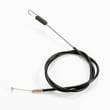
- Control lever 584447601 (tine engagement control)
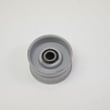
- Idler pulley 532161806 (helps maintain belt tension)
- Tiller idler arm 583005201 (positions the idler for proper belt tracking)
- Sheave transmission 532151223 (drive sheave that helps transfer power)
- Depth stake 532446066 (sets tilling depth)
Quick “what does what” table
| Part type | What it does | Common symptom when worn/loose |
|---|---|---|
| Control lever/cable | Engages tine drive | Tines do not engage or engagement feels sloppy |
| Pulley/idler system | Transfers power and maintains belt tension | Belt squeal, belt slipping, tines stop under load |
| Transmission sheave | Helps drive the transmission input | Poor tine power, abnormal vibration |
| Depth stake | Controls how deep the tines dig | Tiller hops, digs too deep, or barely scratches soil |
| Fasteners (nuts/pins) | Keeps assemblies tight and aligned | Rattling, misalignment, parts falling off |
Why it matters
Knowing the major tiller parts helps you troubleshoot faster. For example, “engine runs but tines will not turn” usually points to the belt, idler pulley/arm, engagement cable, or transmission drive components rather than the engine itself.
Helpful DIY guidance
- Use tiller common questions to match symptoms (tines not turning, poor tilling, rough running) to likely causes.
- If you are replacing worn cultivating blades, follow how to replace the tines on a front tine tiller for safe removal and correct tine orientation.
Last updated: February 2026