Installation guide
 Owner’s manual
 Error Codes


How do I tell what model my Kenmore dryer is?
Your Kenmore dryer’s model number is printed on the model and serial number label. For Kenmore model 11076642501, that label is located at the top inside the dryer door well; open the door and look along the cabinet frame near the opening.
Where to look (fast checklist)
- Open the dryer door and inspect the top edge of the door opening (door well)
- Check the cabinet frame just inside the door opening
- Look for a sticker or metal tag labeled Model and Serial
- Write down the full model number and serial number exactly as shown
- Keep the information with your purchase date for future parts and service reference (as noted in the owner's manual)
What the label looks like and what to copy
The tag typically includes several fields. Copy these exactly (including any letters or dashes):
| On the label | What it’s used for |
|---|---|
| Model number | Matching the correct Kenmore dryer parts list and diagrams |
| Serial number | Identifying production details for service and documentation |
| Purchase date (your records) | Warranty and maintenance history |
Why it matters
Kenmore dryers often have similar-looking cabinets, but parts like a door switch, drum belt, or igniter can vary by model. Using the exact model number helps us match the right diagrams and replacement parts the first time.
If the label is hard to read
- Wipe the tag gently with a damp cloth and dry it
- Use a flashlight at an angle to make faded printing easier to see
- Take a close-up photo and zoom in
- If the door-well label is missing, check the back of the cabinet near the top for an additional model/serial tag
Last updated: February 2026
What size is a Kenmore Model 11076642501 dryer?
Your Kenmore dryer model 11076642501 is a full-size 27-inch class dryer. The installation guide lists the cabinet at about 27 in. wide and about 43 in. tall, with depth varying by door style and vent clearance; see the installation guide for the exact dimension diagram.
Model 11076642501 dryer dimensions (from the installation guide)
These are the key measurements shown in the dimension diagram for this model:
- Width: ~27 in. (705 mm)
- Height: ~43 in. (about 1102 mm)
- Depth: varies by door configuration; plan for about 29 in. to 30 in. overall depth in most setups
- Rear clearance for venting: most installations need at least 5 in. behind the dryer for the exhaust vent and elbow
Quick reference table
| Measurement | What to plan for | Notes |
|---|---|---|
| Width | ~27 in. | Standard full-size footprint |
| Height | ~43 in. | Cabinet height shown in the diagram |
| Depth | ~29 to 30 in. typical | Depends on door style and how the vent is routed |
| Rear clearance | 5 in. minimum typical | Needed for vent elbow in many installs |
How to measure your installed depth correctly
Depth is the dimension that most often causes fit issues. Measure from the wall to the farthest point on the dryer:
- Include the door and handle (if applicable)
- Include the exhaust elbow and duct behind the dryer
- Add space so the dryer is not pinching or crushing the vent
- If installing in a closet, confirm the door can open fully
Why it matters
Correct sizing helps you avoid crushed venting (long dry times), door clearance problems, and installation headaches in closets, recessed areas, or mobile homes.
Last updated: February 2026
What is the life expectancy of a Kenmore dryer?
A Kenmore dryer typically lasts about 15 years. Your Kenmore model 11076642501 can often reach or exceed that lifespan when airflow is kept clear (lint screen and venting) and normal wear parts like the drum belt and drum support components are replaced as they wear.
Typical lifespan and what affects it
Most dryers land in a similar range, but these factors make the biggest difference:
- Vent restriction (long run, crushed duct, lint buildup) increases heat and run time
- Overloading strains the drive system and drum supports
- Skipped cleaning (lint screen, cabinet lint, exhaust vent) raises wear and safety risk
- Worn moving parts (belt, rollers, idler, blower wheel) cause noise and poor tumbling
- Gas ignition wear (on gas models) can lead to intermittent heat
Maintenance that extends dryer life (model-relevant)
Your manual calls out periodic lint removal inside the cabinet and exhaust vent; a good baseline is every 2 years, or more often with heavy use. Use the care and cleaning schedule in the owner's manual.
- Clean the lint screen every load
- Inspect and clean the exhaust duct and outside hood regularly
- Have lint removed from inside the dryer cabinet on a schedule
- Keep loads medium-sized so clothes tumble freely
- Stop using the dryer if you smell gas; shut off the gas supply valve and have it checked
Common wear parts to expect over time
If the dryer runs but will not tumble, squeals, thumps, or takes longer to dry, these parts are common fixes:
| Symptom | Common cause | Example part on this model page |
|---|---|---|
| Drum will not turn | Worn/broken belt | Dryer drum belt 341241 |
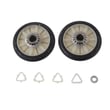
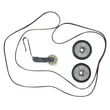
| Squealing or thumping | Worn drum support components | Dryer repair kit 4392065 |
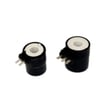
| Runs but heat is intermittent (gas) | Weak gas valve coils | Dryer valve coil kit 279834 |
Why it matters
A dryer that is clean, properly vented, and repaired promptly dries faster, runs cooler, and puts less strain on the motor, belt, and blower. That directly improves reliability and helps you get the full expected service life.
Last updated: February 2026