Owner’s manual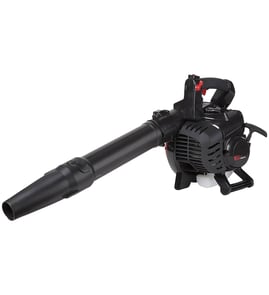




What is the life expectancy of a gas leaf blower?
A gas leaf blower like the Craftsman 316794791 typically lasts about 7 to 10 years with normal homeowner use and consistent maintenance (clean air filtration, fresh fuel mix, and periodic tune-ups). Heavy use, dusty conditions, and stale fuel can shorten that lifespan.
- Fuel quality and storage: old fuel and incorrect gas/oil mix cause hard starting and carburetor issues.
- Airflow and filtration: a dirty air filter makes the engine run rich and lose power.
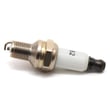
- Ignition wear items: a worn spark plug can cause misfires and poor starting.
- Operating habits: running wide open constantly and overheating shortens engine life.
- Maintenance timing: following the schedule in the 316794791 owner's manual prevents small issues from becoming major repairs.
Use this as a simple routine for a 2-cycle blower like the 316794791:
- Mix fuel exactly as specified in the manual; use fresh mix and do not store it long-term.
- Keep the air filter and housing clean; replace when it will not clean up well.
- Inspect and replace the spark plug on schedule (common tune-up item).
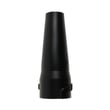
- Check that blower tubes are installed and locked before operation.
- Let the engine cool before refueling; fuel vapors are flammable.
| Symptom | Most common cause | Typical fix |
|---|---|---|
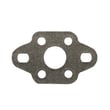
| Starts then dies | Fuel delivery restriction, carburetor gaskets | Clean fuel system; replace gaskets |
| Won’t start | Fouled plug, stale fuel | Replace plug; refresh fuel mix |
| Low power | Dirty air filter, exhaust restriction | Service air filter; inspect muffler |
| Excess vibration | Worn isolators or loose fasteners | Tighten hardware; replace isolator |
A leaf blower’s engine life is mostly determined by fuel system health and airflow. Staying on top of basic items like the spark plug and air filter keeps the 2-cycle engine running at the correct RPM range and reduces wear.
Last updated: February 2026
Are gas leaf blowers being phased out?
Yes, gas leaf blowers are being phased out in many areas through local noise and emissions rules, but they are not universally banned. Your Craftsman model 316794791 is still serviceable and repairable; we recommend checking your city or county rules before buying a new gas unit.
Most changes happen at the local level (city, county, or state) and typically focus on when and where gas blowers can be used, not an immediate nationwide stop.
Common policy approaches include:
- Noise limits (decibel caps) and restricted operating hours
- Seasonal restrictions (for example, during summer wildfire season)
- Emissions-focused rules that favor battery-electric equipment
- Limits for commercial landscaping crews first, then residential use
- Enforcement through nuisance or noise ordinances
If you keep using a gas blower, safe operation and maintenance matter more than ever for reliability and compliance.
Key steps we recommend:
- Operate outdoors only; exhaust fumes can be dangerous in enclosed areas
- Let the engine cool before refueling; gasoline vapors can ignite
- Use the correct fuel mix; this model uses a 40:1 fuel/oil ratio
- Make sure all blower tubes are installed and locked before starting
- Follow the starting procedure (primer presses, choke positions, warm-up) in the 316794791 owner’s manual
| Option | Best for | Typical tradeoffs |
|---|---|---|
| Repair your 316794791 | You want to keep current performance and avoid new-tool cost | Ongoing fuel mix, noise, local restrictions may apply |
| Switch to battery | Noise-sensitive neighborhoods, short jobs | Battery runtime and replacement batteries add cost |
| Switch to corded electric | Small yards near outlets | Cord management and limited range |
Local restrictions can affect whether you can legally run a gas blower at certain times, and good maintenance reduces smoke, hard starting, and excess noise. If your unit is running rough or hard to start, a tune-up item like the spark plug 794-00082 is a common first step.
Last updated: February 2026
How to find CRAFTSMAN leaf blower model number?
For Craftsman leaf blower model 316794791, the model number is printed on the unit’s model tag; on this backpack blower it’s typically on the blower housing or frame area where the harness mounts. Use the exact characters from the tag when ordering parts or checking specs in the 316794791 operator’s manual.
Check these common model tag locations first:
- Back of the blower housing (near the engine cover)
- Bottom of the unit near the base or stand area
- Frame area behind the air filter cover
- Near the fuel tank or recoil starter housing
- Harness mount area (where straps clip in)
Copy the information exactly as shown on the tag:
- Full model number (example: 316.794791 may appear with a dot)
- Any additional numbers/letters on the same label
- Serial number (helpful for production variations)
- Engine family/emissions label info (if present)
The same model can be printed in slightly different formats.
| What you see on the tag | What it means for parts lookup |
|---|---|
| 316.794791 | Same model; include the dot if a form asks for it |
| 316794791 | Same model; common for online search and parts ordering |
Craftsman blowers often share similar housings and tubes across model families, but parts like the carburetor, fuel tank, and ignition components can vary by model. Using the exact model number helps ensure the correct diagrams and parts list for your blower.
Last updated: February 2026
Who makes CRAFTSMAN leaf blowers?
Craftsman is a brand owned by Stanley Black & Decker; Craftsman leaf blowers (including model 316794791) are manufactured for the brand by outdoor power equipment makers, and the exact manufacturer can vary by model and production run. For model-specific identification details, we use the 316794791 operator's manual.
The most reliable way is to match the product labeling to the documentation and parts list.
- Check the model tag and any emissions label on the blower housing or frame
- Match the model number exactly: 316794791 (including punctuation on the label, if shown)
- Use the parts list in the manual to confirm you are servicing the correct unit
- Compare engine and fuel specs (for example, this model is a 2-cycle backpack blower)
- When ordering maintenance items, match by part number to avoid fit issues
The operator’s manual identifies this unit as a 2-cycle gas backpack blower and provides specifications and a replacement parts list for model 316794791.
| Detail | What to look for | Why it helps |
|---|---|---|
| Model identification | “316.794791” or “316794791” on the label | Confirms the exact product family |
| Engine type | 2-cycle | Narrows down fuel mix and tune-up parts |
| Fuel mix ratio | 40:1 | Confirms correct operation and maintenance |
| Fuel tank capacity | 20 oz (591 ml) | Helps with run-time expectations and refueling |
Knowing the correct maker and exact model number helps you get the right Craftsman leaf blower parts (like a carburetor gasket, air filter assembly, or spark plug) and follow the correct maintenance schedule. That prevents hard starting, poor performance, and premature wear.
Last updated: February 2026
What is the spark plug gap for a CRAFTSMAN leaf blower?
For the Craftsman gas leaf blower model 316794791, set the spark plug gap to 0.025 inch (0.635 mm). This gap helps the ignition system create a strong spark for easier starting, smoother idling, and better power under load.
The model 316794791 uses a 2-cycle engine with electronic ignition. For the correct plug type and service interval, follow the 316794791 owner's manual.
- Spark plug gap: 0.025 in. (0.635 mm)
- Fuel type: fuel/oil mixture
- Fuel/oil ratio: 40:1
- Typical plug service: inspect about every 25 hours of operation
| Item | Spec for Craftsman 316794791 |
|---|---|
| Spark plug gap | 0.025 in. (0.635 mm) |
| Fuel/oil ratio | 40:1 |
| Ignition type | Electronic |
Use a feeler gauge (preferred) so the measurement is accurate.
- Let the engine cool completely.
- Pull the spark plug boot straight off.
- Remove the plug with a 5/8-inch spark plug socket.
- Check the gap with a feeler gauge; adjust to 0.025 in.
- Reinstall the plug snugly (do not overtighten).
Replace the plug if it is cracked, heavily carbon-fouled, or the electrode is worn.
- Hard starting even with fresh fuel mix
- Engine misfires or surges at throttle
- Poor idle or stalling
- Noticeable loss of power
If you need the correct replacement, match the part number listed for this model, such as the spark plug 753-05784.
A spark plug gap that is too wide can cause weak spark and misfires; too tight can reduce ignition efficiency. Keeping the gap at 0.025 in. supports reliable starting and consistent performance.
Last updated: February 2026
Why does my CRAFTSMAN leaf blower keep dying?
If your Craftsman leaf blower model 316794791 starts but keeps dying, the most common causes are fuel delivery problems (stale fuel, restricted tank vent, clogged filter/lines), a dirty carburetor, or an ignition issue such as a worn spark plug. A quick tune-up and fuel-system check usually fixes repeated stalling.
- Replace old fuel; drain the tank and refill with fresh, properly mixed fuel (if your unit is 2-cycle, use the correct oil-to-gas ratio listed in the 316794791 owner’s manual).
- Confirm the choke setting: start on full choke, then move to partial and finally to run as the engine warms up (running too long on choke can make it stall).
- Inspect and service the air intake and air filter; restricted airflow can cause bogging and stalling.
- Check the fuel cap vent: loosen the cap slightly after it starts; if it runs better, the cap may not be venting.
- Check the spark plug condition and gap; replace if fouled or worn.
These are frequent wear items tied to “dies under load” or “won’t stay running” symptoms:
| Symptom | Most likely area | What to do |
|---|---|---|
| Starts, then dies in seconds | Fuel delivery | Refresh fuel; check cap vent; inspect lines |
| Idles but dies on throttle | Carburetion/airflow | Clean air filter; carb service |
| Misfires, hard restart | Ignition | Replace spark plug |
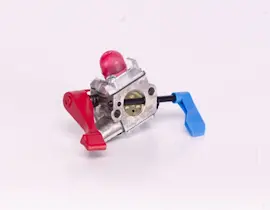
If you’re due for basic ignition maintenance, start with the spark plug 794-00082. If the unit still stalls after fresh fuel and airflow checks, the carburetor may need service or replacement such as the leaf blower carburetor 753-05633.
A gas blower that repeatedly dies is usually running too lean (not enough fuel) or too rich (too much fuel from choke or a dirty carb). Fixing it early prevents hard starting, plug fouling, and poor performance.
For maintenance, we follow the manual’s guidance: work on a cool unit and disconnect the spark plug wire before servicing. See the maintenance and safety sections in the 316794791 owner’s manual.
Last updated: February 2026
What is the best gas-powered leaf blower on the market?
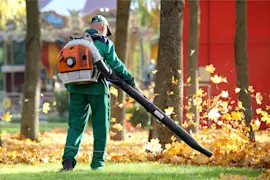
The “best” gas-powered leaf blower is the one that matches your workload and feels comfortable to run for the time you need. Your Craftsman model 316794791 is a 2-cycle backpack blower, which is the right style for larger yards and longer sessions; use the 316794791 operator's manual to confirm the operating setup and maintenance schedule.
- Blower type: handheld for quick cleanup; backpack for long run times and less arm fatigue
- Performance: compare CFM (air volume) and MPH (air speed) for the debris you move most
- Comfort: harness padding, weight balance, and vibration control matter on backpack units
- Starting and controls: primer bulb, choke positions, and cruise control improve consistency
- Serviceability: easy access to the air filter, spark plug, and fuel system reduces downtime
| Feature | Handheld gas blower | Backpack gas blower (like 316794791) |
|---|---|---|
| Best for | Small yards, spot cleanup | Large yards, extended use |
| Fatigue | More arm strain | Weight carried on shoulders/hips |
| Typical power | Moderate | Higher, more sustained airflow |
| Storage | Easier | Bulkier |
Backpack blowers perform best when they start reliably and maintain strong airflow. That comes from correct fuel handling and routine tune-ups.
- Mix fuel and 2-cycle oil to the exact ratio listed for 316794791 in the manual
- Keep the air filter and housing clean; restricted airflow reduces power
- Replace a worn plug during tune-ups; use the correct spark plug 794-00082
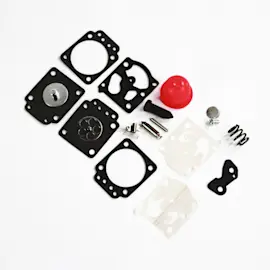
- If it surges or won’t stay running, inspect fuel system sealing parts like the carburetor gasket 791-181709
Choosing the right blower style and keeping ignition and fuel parts in good shape prevents hard starting, weak airflow, and premature engine wear, especially on high-output backpack models.
Last updated: February 2026