Owner’s manual
 Error Codes


Do you remove cardboard from the bottom of a Whirlpool refrigerator?
No. On the Whirlpool GB2FHDXWQ05 bottom-mount refrigerator, the cardboard-like panel under the cabinet is a protective air-flow cover for the machine compartment; it should stay in place during normal use. Use the GB2FHDXWQ05 owner's manual for model-specific handling and access guidance.
What that bottom cardboard panel does
- Helps direct airflow across the condenser area for proper cooling efficiency
- Protects wiring and components from dust, bumps, and debris
- Reduces the chance of rattles by covering the lower compartment opening
- Keeps pets and small objects from contacting hot or moving parts
When you might remove it (and when you should not)
You typically only remove a lower cover temporarily for service access, then reinstall it.
| Situation | Remove it? | What to do instead |
|---|---|---|
| Routine cleaning around the fridge | No | Vacuum exterior vents and clean floor around the unit |
| Diagnosing a cooling problem | Sometimes | Unplug first; reinstall cover after checks |
| Water leaking/puddles | Sometimes | Check the defrost drain path and drain tube |
| Shipping/packing material inside compartments | Yes | Remove all interior tape, foam, and cardboard only |
Quick checks if you are unsure what you are seeing
- If it is attached with screws and sits under the compressor area, it is a cover and stays.
- If it is loose, taped, or inside the fresh food/freezer compartments, it is packing material and should be removed.
- If you have water on the floor, focus on the drain system; the refrigerator drain tube W10619951 is a common part involved in drain routing.
Why it matters
Leaving the bottom cover installed helps your refrigerator cool correctly and protects key components like the compressor and condenser area from damage and dirt buildup.
Last updated: January 2026
How do I remove the base grille on my Whirlpool refrigerator?
On the Whirlpool GB2FHDXWQ05 bottom-mount refrigerator, the base grille (kickplate) typically releases from side locking tabs or a small set of screws. We remove it by opening the doors, checking for screws first, then pulling the grille forward (and slightly up) to pop the tabs free without cracking the plastic.
Steps to remove the base grille
- Unplug the refrigerator (or switch off power at the breaker) for safety.
- Open both fresh food doors so you can access the grille ends.
- Look for fasteners first:
- Check the left and right ends for Phillips or 1/4-inch hex-head screws.
- If screws are present, remove them and pull the grille straight forward.
- If there are no screws, release the locking tabs:
- Place your hands near both ends of the grille.
- Pull outward from the bottom edge, then lift slightly to disengage the tabs.
- Use steady pressure; avoid bending the grille sharply.
- Set the grille aside and keep any screws in a cup so they do not get lost.
Tips to avoid damage
- Pull from both ends instead of yanking from the center.
- If it feels stuck, re-check for hidden screws before applying more force.
- If you need a little leverage, use a plastic putty knife (not a metal screwdriver) to protect the finish.
- When reinstalling, align the tabs first, then press until it snaps in evenly.
Quick check: tabs vs. screws
| What you see | What it usually means | What to do |
|---|---|---|
| Screws at the ends | Grille is fastened | Remove screws, pull forward |
| No screws, tight fit | Snap-in locking tabs | Pull forward and slightly up |
Why it matters
Removing the base grille gives you access for cleaning condenser airflow areas and for basic checks near the bottom front of the refrigerator. Better airflow helps the compressor run more efficiently and can reduce warm-temperature complaints.
For model-specific diagrams and any special release points, use the GB2FHDXWQ05 manual.
Last updated: January 2026
What's the average lifespan of a Whirlpool refrigerator?
Most Whirlpool refrigerators, including the Whirlpool GB2FHDXWQ05 bottom-mount, typically last 10 to 20 years. In real-world use, many owners see about 10 to 15 years, and consistent maintenance (especially airflow and cleaning) is what most often separates a shorter life from a longer one.
Typical lifespan ranges (what to expect)
Lifespan depends on how hard the sealed system works, how clean the condenser area stays, and how often doors are opened.
- 10 to 15 years: common for everyday household use
- 15 to 20 years: achievable with good airflow, clean coils, and stable temperatures
- Under 10 years: more likely with heavy use, poor ventilation, or recurring cooling/defrost issues
| What affects lifespan most | What it does | What we recommend |
|---|---|---|
| Condenser cleanliness | Raises compressor run time and heat | Clean dust from the condenser area regularly |
| Door seal condition | Causes warm air leaks and frost | Keep gaskets clean and sealing evenly |
| Defrost performance | Prevents ice buildup that blocks airflow | Address frost buildup early |
| Power quality | Surges stress controls and compressor | Use a proper surge protector if needed |
Maintenance that helps a Whirlpool refrigerator last longer
These steps reduce strain on the compressor, evaporator fan, and electronic control.
- Keep the refrigerator level so doors close fully
- Maintain space for airflow around the cabinet (especially the back and bottom)
- Clean spills quickly to prevent odors and gasket damage
- Avoid overpacking; leave room for air circulation
- If you see frost buildup or warming, troubleshoot early instead of letting it run for weeks
Parts that commonly impact longevity
When cooling performance drops, these are frequent culprits on bottom-mount designs.
- Refrigerator electronic control WPW10503278: can cause temperature swings or intermittent cooling
- Refrigerator evaporator fan motor W11024089: weak airflow can warm the fresh food section
- Refrigerator defrost heater WP12729128: failed defrost can lead to heavy frost and poor cooling
Why it matters
A refrigerator that runs longer than it should (due to dirty coils, air leaks, or frost blockage) puts extra wear on the compressor and controls. Fixing airflow and sealing issues early is usually the most cost-effective way to extend service life.
For model-specific care and operating guidance, follow the GB2FHDXWQ05 owner's manual.
Last updated: January 2026
What is the most common problem with Whirlpool refrigerators?
The most common Whirlpool refrigerator problem is a cooling complaint: the fresh food section gets warm, temperatures swing, or the unit runs constantly. On Whirlpool GB2FHDXWQ05, the most frequent root causes are airflow restrictions, dirty condenser coils, or a failing fan or defrost component; start with the basics in the GB2FHDXWQ05 owner’s manual.
Most common symptoms (what you’ll notice)
- Refrigerator section warm but freezer still cold
- Frost buildup on the freezer back wall (airflow blocked)
- Loud humming or rattling (fan or blade noise)
- Runs almost all the time, or cycles too often
- Ice maker slow, hollow cubes, or no ice
Quick checks that fix many “not cooling” calls
- Set temperatures to normal ranges (refrigerator about 37°F, freezer about 0°F).
- Clean condenser coils and confirm the condenser area has good airflow.
- Make sure vents inside the refrigerator are not blocked by food packages.
- Check door gaskets for gaps and confirm doors close fully.
- If you see heavy frost, suspect a defrost problem (heater, control, or airflow).
Parts that commonly solve the underlying issue
If basic checks do not help, these model-matched parts are often involved:
- Evaporator airflow issues: refrigerator evaporator motor W11024089 and refrigerator evaporator fan blade WP2169142
- Defrost frost buildup: refrigerator defrost heater WP12729128
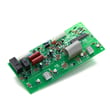
- Temperature control or cycling issues: refrigerator electronic control WPW10503278
- Ice maker or water supply problems: refrigerator ice maker D7824706Q and refrigerator water inlet valve assembly WP2315576
Common problem vs. likely cause (fast reference)
| Problem you see | Most likely area to check first | Typical next step |
|---|---|---|
| Fresh food warm, freezer OK | Airflow/evaporator fan | Inspect fan operation; clear frost/obstructions |
| Frost on freezer back wall | Defrost system | Test defrost heater and controls |
| Runs constantly | Coils, door seal, control | Clean coils; check gaskets; verify temps |
| No ice or slow ice | Ice maker or inlet valve | Check fill, water supply, and valve |
Why it matters
Cooling and ice maker problems usually start small (restricted airflow or heat not being rejected at the condenser). Fixing them early helps protect the compressor, improves food safety, and reduces energy use.
Related help: Whirlpool refrigerator error codes
Last updated: January 2026