
How to decode Briggs and Stratton engine model number?
On a Briggs 42E707-2631-E1 lawn and garden engine, the engine ID is typically split into three fields: model, type, and code. The model identifies the engine family, the type narrows down the exact configuration, and the code is the production date information used to match the correct parts.
What each section means
Briggs engine identification is commonly shown like this:
| Field | What it tells you | Why you use it |
|---|---|---|
| Model | Basic engine design and specs family | Confirms the correct parts breakdown for the engine |
| Type | Exact build configuration (shaft, governor, carb setup, etc.) | Prevents ordering a part that fits a different variant |
| Code | When the engine was built | Helps match running changes and superseded parts |
How to decode a number like 42E707-2631-E1
Use the hyphens to separate the fields:
- 42E707 = model
- 2631 = type
- E1 = suffix/variation identifier (often treated as part of the type or revision)
On many Briggs engines, the code is printed on the same label but may appear on a separate line or in a different position than the model and type.
Quick tips to avoid ordering the wrong part
- Copy the engine ID exactly as stamped or printed; one character difference can change the parts list.
- Use the full model number 42E707-2631-E1 when looking up parts.
- If you are doing a tune-up, match the air filter style first; for this engine, common filter-related parts include the Briggs & statton filter 394358S and the Briggs & statton cartridge 394019S.
- If the engine backfires or won’t start after a sudden stop, check the flywheel key; a common match is the Briggs & statton key 222698S.
Why it matters
Briggs engines often have multiple “type” variants under the same model. Using model plus type (and code when available) ensures you get the correct carburetor, ignition, charging stator, gaskets, and seals for your exact build.
Last updated: February 2026
How to tell how old a Briggs and Stratton engine is?
You can tell how old a Briggs engine is by reading the engine’s code (date) number stamped on the blower housing or valve cover. On a Briggs 42E707-2631-E1, the code is typically YYMMDDxx: year, month, day, then assembly/plant digits.
Where to find the date code on a 42E707-2631-E1
Look for a stamped or printed number near the model-type-code information on the engine shroud.
- Check the blower housing (recoil starter shroud area)
- Check the valve cover area
- Wipe off oil and grass buildup so the stamp is readable
- Write down the full string (model, type, and code)
- If the label is missing, use the engine’s parts to confirm the exact build family (air filter, carburetor, ignition)
How to decode it (with an example)
Most Briggs date codes read like this:
| Code digits | Meaning | Example: 990115xx |
|---|---|---|
| 1-2 | Year | 99 = 1999 |
| 3-4 | Month | 01 = January |
| 5-6 | Day | 15 = 15th |
| 7-8 | Plant/assembly info | varies |
So 990115 means the engine was built on January 15, 1999.
Why it matters
Knowing the manufacture date helps us match the correct Briggs parts for tune-ups and repairs, especially when there were mid-run changes to items like the carburetor, charging system stator, or air filter setup.
Parts that commonly vary by build date
- Air filter and pre-filter style (see Briggs & statton filter 394358S)
- Air cleaner cartridge design
- Carburetor version and linkage
- Flywheel key and ignition timing parts
Last updated: February 2026
What are common B&S engine problems?
Common Briggs engines like the Briggs 42E707-2631-E1 usually act up because of fuel delivery (stale gas, varnished carburetor), air restriction (dirty filter), ignition issues (spark plug problems), or charging and starting faults. Most no-start, surging, and rough-running complaints trace back to basic maintenance and a few high-wear parts.
Most common symptoms and likely causes
- Won’t start or starts then dies: stale fuel, clogged carburetor jets, restricted air intake
- Surging or hunting at idle: dirty carburetor, air leak at gaskets, partially plugged fuel circuit
- Runs rough, lacks power: dirty air filter, fuel restriction, low compression (valves/rings)
- Backfires or kicks back on start: sheared flywheel key, ignition timing shifted
- Battery not charging (electric start setups): alternator/stator issue, wiring/connector damage
Quick checks we recommend first (fast and low-cost)
- Drain old fuel and refill with fresh fuel; replace the fuel filter if equipped.
- Inspect and service the air cleaner; replace the filter element if it is oil-soaked or packed with debris.
- Check spark and plug condition; replace the plug if fouled.
- Look for loose, cracked, or disconnected fuel lines and vacuum leaks.
- If it backfires or has sudden timing issues after hitting an object, inspect the flywheel key.
Parts that commonly solve these problems
| Problem you see | Part that often fixes it | Example from this model’s parts |
|---|---|---|
| Hard starting, black smoke, surging | Carburetor or carb cleaning/rebuild | Briggs & statton carburetor 694056 |
| Poor airflow, rich running, power loss | Air filter element | Briggs & statton filter 394358S |
| Backfire, kickback, no-start after impact | Flywheel key | Briggs & statton key 222698S |
| No charge to battery | Alternator/stator | Briggs & statton stator 592831 |
Why it matters
Small engine problems usually get worse quickly: a restricted air filter can foul the plug and load up the carburetor, and a sheared flywheel key can make starting unsafe and unreliable. Catching the root cause early helps protect the crankshaft, starter, and internal engine components.
Last updated: February 2026
What engine is in the Briggs and Stratton 42E707-2631-E1?
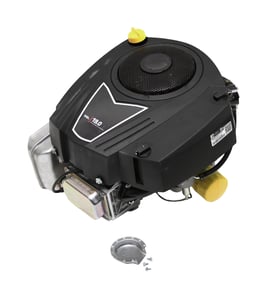
The Briggs 42E707-2631-E1 is the engine model itself; it identifies a specific Briggs single-cylinder, vertical-shaft lawn and garden engine configuration used on riding mowers and similar equipment. To match parts correctly, use the full 42E707-2631-E1 code when selecting items like the carburetor, air filter, or flywheel key.
What the model number tells you
Briggs engine numbers are used to pinpoint the exact build so you get the right parts and specs.
- 42E707: the engine family/type (base engine series)
- 2631: the trim/specification (equipment-specific configuration)
- E1: the version/revision of that trim
Common parts you may need for this engine
If you are servicing a Briggs 42E707-2631-E1, these are frequent maintenance or repair items to check first:
- Air intake filtration: Briggs & statton filter 394358S
- Carburetion and fuel delivery: Briggs & statton carburetor 694056
- Ignition timing after a sudden stop or blade strike: Briggs & statton key 222698S
- Charging output issues (battery not charging): Briggs & statton stator 592831
- Oil leaks at a shaft area: Briggs & statton oil seal 391086S
Quick identification checklist (before ordering parts)
Use this checklist to avoid mismatches between similar Briggs engines:
- Confirm the engine code is 42E707-2631-E1 (not just 42E707)
- Match the part by part ID (for example, 694056) when multiple carburetors appear
- Compare mounting style and linkage connections on the old part before removal
Why it matters
Many Briggs engines share the same base series (like 42E707), but the trim number and revision control details such as governor linkage, charging system output, and carburetor calibration. Using the full 42E707-2631-E1 model number helps ensure the replacement part fits and performs correctly.
Last updated: February 2026
What is the valve clearance of the Briggs and Stratton 42E707-2631-E1?
For the Briggs 42E707-2631-E1 lawn and garden engine, set valve clearance on a cold engine with the piston at top dead center (TDC) on the compression stroke (both valves closed). Use the exact intake and exhaust lash values specified for your engine’s type code.
Correct spec for your exact engine
Briggs & Stratton valve lash is specified by model plus type code; the type code is what locks in the exact intake and exhaust clearance numbers for 42E707-2631-E1.
- Find the TYPE and CODE stamped on the blower housing or valve cover area
- Match that TYPE to the correct spec chart for 42E707-2631-E1
- Set lash cold; recheck after tightening the lock nut
- If lash will not hold, inspect rocker hardware and valve stem condition
| What you have | What it controls | What you should do |
|---|---|---|
| Model: 42E707-2631-E1 | Engine family | Use it to start the lookup |
| TYPE code | Exact valve lash spec | Use it to select the correct intake and exhaust values |
| CODE (date) | Production date | Helps confirm the correct service info |
Quick adjustment steps (OHV V-twin)
- Remove spark plug wires and disable starting
- Rotate to TDC compression for the cylinder you are adjusting
- Slide a feeler gauge between rocker arm and valve stem
- Adjust to the specified clearance; tighten lock nut; recheck
- Repeat for the other cylinder
Why it matters
Correct valve lash keeps compression and valve timing where they belong. Too tight causes hard starting and loss of power; too loose causes valve train noise and accelerated wear.
If the engine suddenly started backfiring after a blade strike, also check the flywheel key; a partially sheared key can mimic valve timing problems. The correct replacement is the Briggs & statton key 222698S.
Last updated: February 2026
What kind of oil does a Briggs and Stratton 42E707-2631-E1 take?
For the Briggs 42E707-2631-E1 lawn and garden engine, we use a high-quality 4-cycle detergent oil; 10W-30 is the most common all-temperature choice, and SAE 30 is a solid option for consistently warm weather. Check oil level on the dipstick and keep it at the full mark.
Recommended oil type (what to use)
- 10W-30: best all-around choice for most mowing temperatures
- SAE 30: best for steady warm-weather operation
- Use 4-stroke (4-cycle) detergent oil that meets modern engine oil service ratings
- Avoid mixing oil types if you can; if you must top off, use the same viscosity already in the crankcase
Oil capacity and fill guidance
Oil capacity varies by engine family and sump configuration, so we recommend filling by level rather than by ounces.
- Park on level ground and let the engine cool
- Remove dipstick, wipe, reinsert fully, then read level
- Add oil slowly, rechecking often; do not overfill
- If you accidentally overfill, drain to the correct level (overfilling can cause smoking and leaks)
Quick reference table
| Temperature range | Best viscosity | Notes |
|---|---|---|
| Varying temps (spring to fall) | 10W-30 | Most common choice for lawn tractors and riders |
| Mostly hot weather | SAE 30 | Helps maintain viscosity in heat |
Why it matters
Correct oil viscosity helps the 42E707-2631-E1 start easier, lubricate the crankshaft and connecting rod properly, and reduce wear under load. Too-thick oil can make cold starts harder; too-thin oil can increase consumption and heat-related wear.
Parts that often go with an oil change
If you are doing routine maintenance, these parts are commonly replaced at the same time:
- Briggs & statton filter 394358S (oil filter)
- Briggs & statton oil seal 391086S (replace if you see oil seepage around a shaft)
- Briggs & statton plug 690946 (oil drain plug if the head is rounded or leaking)
Last updated: February 2026