Installation guide
 Owner’s manual
 Error Codes


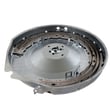
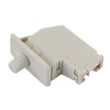
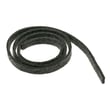
What are the main parts of a dryer?
In your GE GTD45EASJ1WS electric dryer, the main parts work together to tumble clothes, move air, create heat, and safely vent moisture outdoors. The core systems are the drum and drive, the heating and temperature-safety controls, the airflow and lint system, and the controls and door switch.
Main dryer parts (what they do)
- Drum and support: Holds and tumbles the load; supported by glides/bearings so it turns smoothly.
- Drive system: Motor turns the drum through a belt and idler pulley; keeps proper belt tension.
- Heating system (electric): Heating element produces heat; thermostats regulate temperature and prevent overheating.
- Airflow and venting: Blower moves air through the drum and out the exhaust duct; proper venting is required for performance and safety.
- Lint collection: Lint screen captures lint before it enters the blower and duct.
- Controls and switches: Timer or control panel selects cycles; start button and door switch enable safe operation.
Common GTD45EASJ1WS parts you may replace
These are frequently serviced items for this model:
- Dryer heating element WE11M10001 (no heat, weak heat)
- Dryer high-limit thermostat WE04X26139 (overheating protection)
- Dryer safety thermostat WE04X25194 (temperature safety)
- Dryer idler pulley WE03X31620 (squealing, belt tension issues)
- GE dryer lint screen WE03X23881 (torn or missing screen)
Quick “system to symptom” guide
| If you notice this | Main parts involved | What to check first |
|---|---|---|
| Long dry times | Venting, blower, lint system | Lint screen and exhaust duct for clogs |
| No heat | Heating element, thermostats | Airflow first, then heating circuit parts |
| Squealing or scraping | Drum glides/bearings, idler pulley | Listen while drum turns; inspect wear parts |
| Won’t start | Door switch, start button, timer/control | Door fully closed, then switch/button |
Why it matters
Knowing the main parts helps you troubleshoot faster and avoid replacing the wrong component. For example, a partially clogged exhaust duct can make an electric dryer run longer and use more energy, even when the heating element is good.
Helpful references for this model
- Use the owner's manual for care, cleaning, and operating basics (including lint filter and exhaust duct cleaning guidance).
- Use the installation guide for venting and electrical connection requirements (especially for 4-inch metal ducting and proper grounding).
Last updated: February 2026
Where is the part number on a GE dryer?
On your GE GTD45EASJ1WS electric dryer, the model and serial information is printed on a label on the front of the dryer behind the door. Use that label information to match the correct replacement parts for your exact dryer configuration; then locate the specific part number in the parts list.
Where to look on the dryer
Check these common label locations first:
- Open the dryer door and look on the front cabinet frame (around the door opening)
- Look just behind the door on the front panel area (label is typically easy to spot)
- If you do not see it immediately, scan the door opening area from top to bottom with a flashlight
Model/serial vs. part number: what’s the difference?
The label on the dryer usually shows model and serial numbers, not every individual part number. Once you have the model number, you can identify the correct part number for what you need to replace.
| What you’re looking for | Where it’s found | What it’s used for |
|---|---|---|
| Model number (GTD45EASJ1WS) | Label behind the door | Ensures parts match your exact dryer |
| Serial number | Same label behind the door | Helps confirm production details for service/parts lookup |
| Part number (example: WE11X21156) | Parts list for the model | Orders the exact replacement component |
Tips for finding the right replacement part number
After you confirm the model number from the label, match the symptom to the part category:
- No heat or weak heat: heating circuit parts such as the GE dryer heater assembly WE11X21156 or thermostats
- Long dry times: airflow parts like the GE dryer lint screen WE03X23881 and venting
- Won’t start: start switch and control components
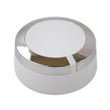
- Knob missing or cracked: dryer timer knob (white) WE01X24552
Why it matters
GE dryers can look similar across model series, but internal components (heater assembly, timer, harness, drum supports) can vary by model. Using the GTD45EASJ1WS label behind the door helps us match the correct GE parts the first time.
For diagrams, label references, and operating details, use the GTD45EASJ1WS owner’s manual.
Last updated: February 2026
What is the most common problem with a GE electric dryer?
On the GE GTD45EASJ1WS electric dryer, the most common issue we see is no heat or long dry times caused by restricted airflow (lint buildup or venting problems) or a failed heating circuit part (heating element or thermostat). A close second is the drum not tumbling due to wear in drive components.
Most common symptoms and what they usually point to
- Tumbles but no heat: often a tripped house breaker (many electric dryers use 2 breakers), a failed heating element, or a thermostat issue.
- Takes too long to dry: usually a clogged lint screen, lint buildup in the lint chute, or an overly long or crushed vent.
- Won’t start: power supply issue, start switch problem, or timer/control issue.
- Stops mid-cycle or overheats: airflow restriction that overheats the heater housing and trips safety controls.
- Squealing or scraping noises: worn drum glides or bearing surfaces.
Quick checks we recommend first (fast, high-impact)
Use the safety and venting guidance in the installation guide and the troubleshooting section in the owner's manual.
- Clean the lint screen before every load; replace it if it is torn or warped.
- Confirm strong airflow outside at the vent hood while the dryer runs.
- Verify you have full 240V power (both breakers/fuses on); the dryer can run but not heat on half power.
- Make sure the vent is 4-inch rigid metal or UL-listed transition duct; avoid plastic venting.
- Keep the vent run as short and straight as possible; remove any screens in the duct.
Parts that commonly fix “no heat” and “not drying”
If airflow is good and power is correct, these model-matched parts are common fixes:
| Symptom | Common part to check/replace | Example part on this model page |
|---|---|---|
| Tumbles, no heat | Heating element | Dryer heating element WE11M10001 |
| Overheats, shuts down | High-limit thermostat | Dryer high-limit thermostat WE04X26139 |
| Intermittent heat or safety trip | Safety thermostat | Dryer safety thermostat WE04X25194 |
Why it matters
Airflow problems do more than slow drying; they can overheat the heater area and trigger safety thermostats. Fixing venting and lint buildup first often prevents repeat failures of heating parts.
Last updated: February 2026
How long is the belt on the GTD45EASJ1WS?
The GE GTD45EASJ1WS electric dryer uses a long, ribbed drum drive belt that typically measures about 89.5 inches around. For the exact belt specification and routing diagram for your dryer, we recommend checking the GTD45EASJ1WS installation guide.
What to know about the GTD45EASJ1WS dryer belt
A dryer belt wraps around the drum and drive motor pulley, then rides on an idler pulley to maintain tension. If the belt is stretched, cracked, or broken, the dryer may run but the drum will not turn.
Common belt-related symptoms:
- Drum will not tumble but the motor runs
- Squealing or thumping as the drum turns
- Burning rubber smell (belt slipping)
- Dryer stops shortly after starting (some models sense no drum movement)
Quick checks before you order a belt
These steps help confirm the belt is the issue and not a door switch, motor, or idler problem.
- Unplug the dryer; confirm the drum turns by hand (it should turn with some resistance)
- Listen for the motor running with no tumbling (often a broken belt)
- Inspect the lint screen and venting; overheating can shorten belt life
- If you open the cabinet, check the idler pulley for binding or wobble
- Look for black belt dust near the motor pulley or base
Related parts that often fail with the belt
If you are already opening the cabinet, we recommend inspecting these wear items because they can cause noise, drag, and premature belt wear.
| Part | What it affects | When to replace |
|---|---|---|
| Dryer idler pulley WE03X31620 | Belt tension and tracking | Pulley squeals, binds, or wobbles |
| Dryer drum glide bearing WE03X37319 | Drum support at the front | Scraping noise, uneven drum support |
| Dryer drum glide bearing, upper WE03X37320 | Drum support and alignment | Worn pads, metal-on-metal rubbing |
Why it matters
Using the correct belt length and routing on the GTD45EASJ1WS keeps proper drum speed and airflow. A belt that is too long can slip and overheat; a belt that is too short can overload the motor and idler.
Last updated: February 2026