Owner’s manual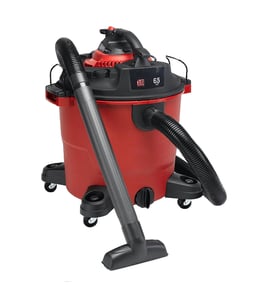
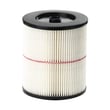



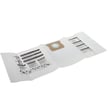
How do you remove the filter from a Craftsman wet dry vac?
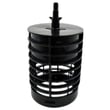
To remove the filter on a Craftsman wet/dry vacuum model 12516825-2013, we first unplug the vac, remove the powerhead (motor lid), then pull the filter straight off its cage or mount. If it feels stuck, gently twist while pulling so you do not crack the filter frame.
Safe filter removal steps
- Unplug the vacuum and let the motor cool.
- Release the latches and lift off the powerhead.
- Locate the filter on the filter cage or float assembly area.
- Pull the filter straight off; use a slight twist if needed.
- Tap loose debris into a trash bag before carrying it through the shop.
- Reinstall by pushing the filter fully seated and refit the powerhead.
Dry pickup vs. wet pickup (important)
Many wet/dry vacs use different setups depending on what you are vacuuming. Use the table below as a quick guide.
| Task | Filter installed? | What to check before starting |
|---|---|---|
| Dry debris (sawdust, drywall dust) | Yes | Filter seated, hose clear, canister empty enough |
| Water pickup | Often no (or use a wet-rated filter) | Float moves freely, canister not overfilled |
| Fine dust | Yes (clean filter often) | Filter not clogged, seals tight |
For the exact configuration recommended for your unit, follow the 12516825-2013 owner's manual.
When to replace the filter
A clogged or damaged filter is the most common cause of weak suction and dusty exhaust. Replace the filter if it will not clean up well, has tears, or the frame is warped.
- Loss of suction even with an empty canister
- Dust blowing out of the exhaust
- Filter media looks torn or separated
- Strong odor that returns immediately after cleaning
For this model, the correct replacement is the filter 551006114.
Why it matters
Removing the filter correctly prevents air leaks and broken filter frames, which helps your Craftsman wet/dry vacuum maintain strong airflow and protects the motor from debris.
Last updated: January 2026
Where to find model number on Craftsman Wet Dry Vac?
On a Craftsman wet/dry vacuum like model 12516825-2013, the model number is typically printed on a rating label (sticker) on the powerhead or lid area. Look for a label that includes “MOD” or “MODEL”, then use that exact number when ordering parts or checking the manual.
Where to look first (fast checks)
- Check the top lid/powerhead near the handle or switch
- Look around the rear exhaust area (near the diffuser)
- Inspect the side of the tank near the latches
- Check the underside of the lid/powerhead (lift it off the drum)
- If the label is dirty, wipe it with a damp cloth and let it dry before reading
What the label usually looks like
Most Craftsman wet/dry vacs use a rectangular sticker or plate that lists key identifiers.
| Label field | What it means | What to write down |
|---|---|---|
| MOD / MODEL | The model number | The full model (example: 12516825-2013) |
| Serial / S/N | The serial number | Helpful for service, not required for most parts |
| Electrical | Volts/amps | Useful for troubleshooting power issues |
Why it matters
We use the model number to match the correct parts diagram and ensure you get the right fit for items like the hose connection, exhaust components, and filters. Even small model changes can affect which filter or port parts fit.
If the label is missing or unreadable
- Check your owner paperwork or saved receipt for the model number
- Compare your vacuum’s key parts to the diagram in the 12516825-2013 owner’s manual
- If you are replacing a common maintenance item, confirm the filter style and fit; for this model, a common replacement is the filter 551006114
Last updated: January 2026
Why do shop vacuums lose suction?
Shop vacuums like the Craftsman 12516825-2013 most often lose suction because airflow is restricted (clog, full tank, or dirty filter) or because there is an air leak at the hose, port, or lid seal. Restoring suction usually comes down to clearing restrictions and sealing leaks.
Quick checks that fix most suction problems
- Empty the tank and confirm the lid is seated evenly.
- Inspect the hose and wand for a clog; remove packed debris near bends.
- Check the filter; clean it if reusable or replace it if damaged or heavily loaded.
- Look for air leaks at the hose connection and vacuum inlet.
- Confirm the exhaust path is not blocked (diffuser or outlet area).
Parts on this model that commonly affect suction
If airflow is restricted or leaking at the inlet or exhaust, these model-specific parts are the first places we check:
| Symptom | Most likely area | What to do |
|---|---|---|
| Weak suction, fine dust blows back | Filter | Clean or replace the filter 551006114 |
| Whistling or poor pickup at inlet | Inlet connection | Inspect/replace the vacuum port assembly 551001110 |
| Loud exhaust, reduced airflow | Exhaust outlet/diffuser | Inspect/replace the air and noise diffuser 551109129 |
Why it matters
A clogged filter or blocked hose makes the motor work hotter and harder, which can shorten motor life. Fixing suction early also improves pickup and keeps dust from bypassing the filtration path.
Best practice for preventing suction loss
- Use the correct filter for the job (dry pickup vs. wet pickup) and keep it clean.
- Avoid vacuuming fine drywall dust without the proper filtration setup.
- Store the hose without sharp kinks and clear it after heavy debris pickup.
- Follow the maintenance and setup steps in the 12516825-2013 owner’s manual.
Last updated: January 2026
Can you vacuum up drywall dust with a shop vac?
Yes, but only if you set up your Craftsman model 12516825-2013 correctly for fine dust; drywall sanding dust is extremely fine and can quickly clog a standard filter and let abrasive dust reach the motor if the filter is missing, damaged, or not sealed.
Best practice for drywall dust
- Use a clean, properly seated cartridge filter before you start.
- Empty the tank frequently; fine dust reduces airflow fast.
- Keep the hose and nozzle clear; clogs spike motor load.
- Avoid running without a filter; that can damage the motor.
- If you need to capture very fine dust, use a drywall dust bag or a pre-separator (when compatible) to reduce filter loading.
Filter choice and maintenance
For this model, the filter is the first line of protection. If suction drops quickly or you see dust blowing out the exhaust, replace the filter and check the seal.
| Situation | What you will notice | What to do |
|---|---|---|
| Filter is loading with drywall dust | Suction drops, motor sounds strained | Stop and clean or replace the filter |
| Filter is torn or not sealing | Fine dust exhaust, dusty smell | Replace the filter and reseat it |
| Tank is overfilled with dust | Poor pickup, frequent clogs | Empty tank and clear hose/nozzle |
Recommended model-matched part: filter 551006114.
Why it matters
Drywall dust is abrasive and can bypass or overwhelm a dirty or incorrect filter; that dust can score the fan, contaminate bearings, and shorten motor life. Using the right filtration and keeping airflow high protects suction performance and the motor.
For model-specific setup, filter installation, and operating cautions, follow the 12516825-2013 owner's manual.
Last updated: January 2026