Owner’s manual


How do I know if my Kenmore dryer thermal fuse is blown?
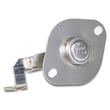
A blown thermal fuse in your Kenmore electric dryer model 11060832990 usually shows up as a dryer that will not run at all, or runs but will not heat (depending on the circuit design). The sure way to confirm is a continuity test with a multimeter after unplugging the dryer.
- Dryer will not start even though the door is closed and you press Start
- Dryer runs but produces no heat (some models show this when one house fuse trips)
- Cycle seems normal but clothes stay damp and exhaust airflow feels weak
- You recently had a clogged vent, crushed vent, or heavy lint buildup
- Unplug the dryer (or switch off the breaker).
- Access the fuse location using the disassembly steps in the 11060832990 owner's manual.
- Pull one wire off the thermal fuse terminal (so you do not read through the circuit).
- Set your multimeter to continuity (or the lowest ohms setting).
- Touch a probe to each terminal.
Result guide:
| Meter result | What it means | What to do next |
|---|---|---|
| Beep / near 0 ohms | Fuse is good | Keep troubleshooting airflow, heat circuit, or controls |
| No beep / OL / infinite | Fuse is blown | Replace the fuse and correct the overheating cause |
A thermal fuse is a one-time safety device; it opens when the dryer overheats. Overheating is most often caused by restricted airflow.
- Clean the lint screen and housing
- Check the vent for kinks or crushing behind the dryer
- Confirm strong airflow at the outside exhaust hood (the manual recommends checking air movement)
- Replace plastic venting with rigid or heavy metal venting when needed
If overheating is suspected, we commonly inspect these items on Kenmore 110-series dryers:
- Cut-off kit 279816 (thermal cut-off components that can open from high heat)
- Dryer thermostat WP3977767 (high-limit thermostat that helps control temperature)
- Dryer blower wheel WP694089 (a damaged wheel can reduce airflow)
Running a dryer with poor airflow can cause long dry times, repeated blown safety parts, and no-heat complaints. Fixing the venting and lint buildup first prevents repeat failures and restores normal drying performance.
Last updated: February 2026
How do I tell what model my Kenmore dryer is?
Your Kenmore dryer’s model number is printed on the model and serial number plate; on model 11060832990, it’s the same plate you use to record the model and serial for service and parts ordering. You’ll typically find that plate on the dryer cabinet, most often just inside the door opening.
Check these common locations on Kenmore electric dryers like 11060832990:
- Inside the door opening on the cabinet frame (most common)
- On the back of the dryer cabinet near the top
- Along the door opening edge where the door closes
- Occasionally behind the lower access panel (if equipped)
For the exact plate location and how it’s referenced in documentation, use the 11060832990 owner's manual.
Record both numbers exactly as shown on the plate:
- Model number (example format: 110.60832990)
- Serial number (unique to your unit)
- Date of purchase (helpful for service history)
| Item | What it does | Why it matters |
|---|---|---|
| Model number | Identifies the exact dryer design | Ensures correct parts diagrams and fit |
| Serial number | Identifies your specific unit | Helps match production changes |
Kenmore dryers often share similar styling across multiple model series, but internal parts like the heating element, timer, door switch, and drum belt can vary by model. Using the correct model number helps us match the right replacement part the first time.
Last updated: February 2026
What is the PF code on a Kenmore dryer?
PF on a Kenmore dryer means power failure; the dryer detected that incoming power was interrupted during a cycle. On Kenmore model 11060832990, clear the display by pressing Stop/Cancel, then restart the cycle once steady power is restored.
- Press Stop/Cancel to clear PF.
- Re-select your cycle and press Push to Start (the dryer will not run with the door open).
- If the load is still damp, run Timed Dry for a few minutes to finish.
- If PF returns, stop using the dryer until you confirm the power supply is stable.
- Loose plug or worn outlet: Make sure the cord is fully seated and the receptacle grips tightly.
- Tripped breaker: Electric dryers typically use a 2-pole breaker; reset it fully (OFF then ON).
- Power cord/terminal block issue: Look for heat damage, discoloration, or a burning smell at the cord connection.
- House voltage drop: Other high-draw appliances on the same circuit can cause brief dips.
- Intermittent internal connection: Less common, but possible if the dryer shuts off randomly.
| What you notice | Most likely issue | Best next step |
|---|---|---|
| PF happens once during a storm | Utility interruption | Clear PF and restart |
| PF happens when the dryer heats up | Weak breaker/outlet or cord connection | Check breaker, outlet grip, cord/terminal block |
| PF happens with no other lights flickering | Dryer connection or control issue | Inspect cord/terminal block; then follow manual troubleshooting |
A repeated PF code is more than an inconvenience; it often points to an electrical connection problem that can overheat and damage wiring. Fixing the power issue also prevents nuisance shutdowns and incomplete drying.
- Use the 11060832990 owner’s manual for operating steps and troubleshooting guidance.
- If your dryer uses electronic controls, the Kenmore 110 series electronic control model dryer error codes guide helps you interpret other codes that may appear after a power interruption.
Last updated: February 2026