Owner’s manual
 Error Codes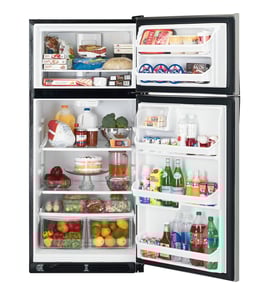


What are the disadvantages of a top mount fridge?
Top-mount refrigerators like Kenmore model 10674953400 are reliable and efficient, but the main disadvantages are convenience and organization: fresh-food items sit lower (more bending), freezer space can be less flexible, and premium features like in-door ice and water are less common.
- More bending for daily use: the refrigerator section is below the freezer, so produce, drinks, and leftovers are lower.
- Less “grab-and-go” freezer access: the freezer is easy to reach, but baskets and pull-out organization are often limited.
- Fewer built-in dispenser options: many top-mount designs do not include an external water or ice dispenser.
- Airflow can be easier to block: overpacking can block vents and cause temperature and moisture issues.
- Door swing and clearance needs: you may need extra side clearance for full door swing, especially if an ice maker is installed.
Use these habits to get better performance and day-to-day convenience:
- Keep frequently used items at eye level on the main shelves.
- Avoid blocking freezer and refrigerator vents with food packages.
- Leave recommended clearance around the cabinet for ventilation and door swing.
- If ice production is important, confirm your ice maker setup and water supply quality.
- Adjust the front rollers so doors close easily and seal consistently.
| Feature | Top-mount refrigerator | Bottom-freezer refrigerator |
|---|---|---|
| Fresh-food access | Lower, more bending | Higher, easier access |
| Freezer organization | Often simpler shelves | Often more drawers/baskets |
| Dispenser availability | Less common | More common |
| Cost and simplicity | Often lower, simpler | Often higher, more features |
Most “problems” with a top-mount fridge are usability issues, not cooling issues. Good airflow and proper clearances help prevent warm spots, moisture problems, and odor transfer between the freezer and refrigerator sections.
For model-specific operating tips (airflow, controls, door closing, and clearances), follow the 10674953400 owner's manual.
Last updated: January 2026
What is the average lifespan of a Kenmore Elite refrigerator?
Most Kenmore Elite refrigerators average 10 to 15 years of service life with normal household use. If you keep temperatures stable, clean the condenser area regularly, and maintain good door sealing, many units reach the upper end of that range.
- Condenser airflow and cleanliness (dust buildup makes the compressor work harder)
- Door gasket sealing (warm air leaks increase run time and frost)
- Defrost system health (heavy frost can restrict airflow and strain components)
- Ice maker and water system upkeep (clogs and leaks create secondary damage)
- Ambient conditions (hot garages and tight enclosures shorten life)
Use the guidance in the owner's manual for your Kenmore refrigerator and focus on these habits:
- Keep the refrigerator at about 37°F and the freezer at about 0°F
- Clean door gaskets and the surfaces they touch; a light coat of paraffin wax can reduce sticking
- Leave proper clearance for ventilation around the cabinet
- If the unit wobbles, level it so doors close consistently
| Symptom | Common cause | What we typically check first |
|---|---|---|
| Warm fridge, freezer OK | Airflow issue | Evaporator fan, frost buildup |
| Frost on back freezer wall | Defrost problem | Defrost thermostat, defrost timer |
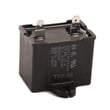
| Clicking, won’t start | Start components | Run capacitor, compressor circuit |
| Water leaking or no ice | Water supply issue | Inlet valve, tubing, filter path |
A refrigerator usually gets replaced when a major cooling-system repair is needed or when poor airflow and sealing have forced the compressor to run excessively for years. Preventive care reduces run time, stabilizes temperatures, and protects expensive components.
Last updated: January 2026
What are the common problems with Kenmore Elite refrigerators?
Kenmore Elite refrigerators most often have cooling, frost/ice buildup, water and ice maker, and noise complaints; the same categories apply to Kenmore model 10674953400. We use the troubleshooting and “normal sounds” guidance in the 10674953400 owner's manual to separate normal operation from a part or airflow problem.
- Not cooling or warm temperatures: blocked air vents, dirty condenser area, evaporator fan issue, or sealed-system trouble
- Excessive frost or ice: defrost system problem (heater, thermostat, timer) or a door not sealing
- Water leaks or puddles: clogged defrost drain, loose water line, or inlet valve seepage
- Ice maker not making ice: water supply issue, inlet valve problem, or ice maker failure
- Unusual noises: normal operating sounds vs. fan blade rubbing, compressor start issues, or vibration
- Confirm controls are set correctly and allow 24 hours after changes.
- Make sure food packages are not blocking vents; the manual stresses proper air circulation.
- Listen for the sound type and location; the manual lists normal sounds so you can rule out expected humming/clicking.
- Inspect door gaskets for gaps, tears, or sticking; clean the gasket and the surface it touches.
- If the cabinet wobbles or doors don’t align, level the refrigerator and adjust doors as outlined in the manual.
| Symptom | Likely system | Example part for this model |
|---|---|---|
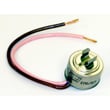
| Frost buildup, warm fridge | Defrost | Defrost timer WP2304099, defrost bi-metal WP4387503 |
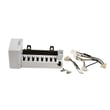
| No ice | Ice maker | Ice maker assembly 4317943 |
| Water won’t fill ice maker | Water supply | Refrigerator inlet valve WP2188808 |
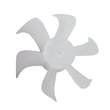
| Rattling or scraping | Fan area | Fan blade WP2163777 |
Cooling and frost problems usually get worse over time; catching airflow, door seal, or defrost issues early helps protect food temperatures and prevents heavy ice buildup that can block airflow.
Last updated: January 2026